INTRODUCTION
Upper extremity injuries are a significant health concern among baseball pitchers that can lead to significant time-loss from sport.1 Across all levels of play, combined injury incidence rates have ranged from 0.98 to 5.8 injuries per 1000 athlete exposures,2 with the greatest proportion of injuries occurring in the shoulder and elbow. These injuries have negative physical, social, and psychological consequences, and can result in an estimated cost of $1.9 to 3.8 million dollars per player per year based on annual income loss at the professional level.3 Preventing shoulder and elbow injuries is a high priority among players, coaches, clinicians, and training staff to improve baseball pitcher health and improve performance.
A training approach utilized to prevent these injuries is to monitor training load and fatigue responses. Training load is theoretically represented by pitch volume, from a single outing4 to the duration over a season,4 and also comprises intensity measures including velocity and measurements of elbow varus torque.5 Furthermore, athletes that continue to pitch despite reports of fatigue demonstrated 36 times the odds of reporting an upper extremity injury compared to those who did not report pitching with fatigue.4 This finding indicates the need for fatigue monitoring as an essential aspect of training to keep pitchers healthy.4 To monitor training load and related fatigue responses, comprehensive tools and strategies are necessary.
Two novel biomechanical devices have been developed to track workload and fatigue in baseball pitchers, including a biomechanical pitching sleeve to track pitch volume and intensity measures,6 and a portable force plate to measure force outputs as a proxy for monitoring fatigue and recovery.7 The pitching sleeve implements the tracking capabilities into the fabric of the sleeve and a portable force platform. The new instrumented fabric-based sensors should eliminate potential barriers to use, such as censor location and portability. To ensure that these devices are used by athletes and training staff efficaciously, research is needed to understand the implementation context of the biomechanical devices to improve adaptation of the devices, as recommended by the Translating Research into Injury Prevention Practice (TRIPP) framework.8 This includes engagement with knowledge users, defined as individuals who used the proposed tool and would benefit from the results of the research study to make informed training decisions.9 By engaging with knowledge users to understand the implementation context, this will allow for discernment of barriers, factors that inhibit use of these devices, and facilitators which encourage use of the devices.10
The objective of this qualitative descriptive study was to determine the barriers and facilitators of implementing two biomechanical devices among collegiate baseball pitchers and training staff (i.e., coaches, support staff) during the collegiate summer and fall seasons. This study allows for a proactive approach by working with players, coaches, and support staff to inform biomechanical device use. Findings from this study may be used to identify strategies for dissemination and adoption of these tools among baseball players and training staff.
MATERIALS AND METHODS
Study Design
A qualitative descriptive study was conducted to investigate barriers and facilitators of implementing two biomechanical training devices among collegiate baseball pitchers involved in a summer developmental league between June 2023 to August 2023. This investigation was nested within a prospective repeated measures implementation pilot study investigating the use of novel biomechanical devices among collegiate baseball pitchers. The research for this qualitative study was conducted between July 2023 and November 2023. Study reporting was informed by the Consolidated criteria for reporting qualitative research (COREQ).11 This study underwent institutional review board review and approval through the Wake Forest University School of Medicine Ethics Board (IRB00095826).
Paradigm, Theory, and Research Characteristics
The research investigators utilized a pragmatist paradigm to account for multiple potential view points and unique experiences among investigators12 The Consolidated Framework for Implementation research (CFIR) was used to inform the development of the interview guide for the semi-structured focus groups and initial coding schemes (specifically, the domains of innovation and inner setting, outer setting, and general implementation).10
The senior author (GSB) that moderated each focus group or interview was involved in the planning of the prospective repeated measures implementation pilot study, is a physical therapist, and was a former collegiate and professional baseball player. This unique perspective allowed for in-depth knowledge on the nuances of the biomechanical device use and the real world setting that the devices were implemented in that was beneficial for conducting interviews. The first author is a physical therapist and former collegiate softball player and coach, which also provided an insider-outsider perspective during the data analysis process.13
Research Context
The biomechanical devices consisted of a 1) wearable pitching sleeve (Nextiles Inc., Brooklyn, New York) that is able to track workload and performance variables (i.e., pitch/throw counts, arm velocity, elbow varus torque), and 2) a portable force plate (Nextiles Inc., Brooklyn, New York) that measures a counter movement jump task (i.e., jump height, ground reaction force, pressure asymmetries). For the pitching sleeve, all throwing and pitching workouts were tracked. Data were extracted weekly from the data interface and stored in a de-identified player file by outing. Force plate sessions consisted of weekly testing to perform a counter movement jump test (CMJ) using previously described methods7 and as described in Supplemental File 1.
Participant Recruitment and Sampling
Convenience sampling was used to identify pitchers from two teams during a summer collegiate developmental league. Coaches and support staff involved with the implementation of the biomechanical devices were also recruited. To provide more diverse perspectives and ensure data saturation, additional recruitment for players, coaches, and support staff was performed using a convenience sample of collegiate baseball players at a Division I university during November 2023 who selected to use the biomechanical pitching sleeve. Recruitment was discontinued data saturation was reached when no new themes emerged in the data.14
All pitchers, coaches, and support staff were invited to participate in semi-structured focus groups with no group size limitation. To account for scheduling, potential influence of power dynamics, and to ensure that all participants could voice perspectives freely, players were grouped separately from coaches and support staff. This resulted in a combination of semi-structured focus groups with either players or support staff, and semi-structured individual interviews with coaches. The final combination of semi-structured focus groups and interviews for all participating teams were seven groups of two to five pitchers (16 total players), two groups of two support staff (four total support staff), and two individual interviews with two coaches.
Data Collection
Participant self-reported demographic information (sex, age, height, weight, hand dominance), sport characteristics (pitching role, team, collegiate division level, innings pitched previous and current season), and injury history (previous season, surgical history) were collected for all pitchers.
One author (GSB) moderated all focus groups and interviews between July 2023 and November 2023. The interview guide was reviewed by the research investigators who also had qualitative experience (JBM, LT, JU). A detailed interview guide can be found in Supplemental File 2. Eight focus groups were conducted in person, and one focus group was conducted via video conferencing due to scheduling conflicts. All focus groups and interviews were audio recorded. The discussion focused on questions across three areas of implementation: (1) innovation and inner setting (i.e., overall experience using each device, knowledge gained, how participants used each device to inform pitching, training, injury prevention during the season,), (2) outer setting (i.e., challenges or benefits of using at their Universities or other leagues, influence on desire to play at a higher level related to device use), and (3) general implementation process (i.e., experience wearing/retrieving data, challenges with use for each device).
Data Analysis
Focus groups and interviews were transcribed verbatim and de-identified with an anonymous naming schematic (i.e. Participant 1, Data Coordinator 2) to ensure confidentiality. Dedoose (Version 9.0.107, Los Angeles, CA) was used for data management coding. Data analysis was led by the first author (CLM) with meetings with research investigators to discuss initial impressions (JT, KE, JBM, GSB), review of code schemes, code reports with transcripts (KE, GSB), and inferences (KE, JT, GSB). An initial deductive coding approach using the CFIR framework was performed grouping ‘barrier’ and ‘facilitator’ codes into CFIR domains (domain 1: inner setting; domain 2: outer setting; domain 3: implementation process; domain 4: individuals; domain 5: innovation).15 Although this initial coding scheme served to organize the data by CFIR implementation domains, this structure was too limiting to capture the scope of the focus group findings. For example, participants often provided in-depth elaboration of how they used the devices that did not fit into CFIR domains of “individuals” within the construct of knowledge and beliefs of the innovation (i.e., attitudes or beliefs about the device) or within the ‘Innovation’ domain to describe relative advantages with other similar available tools.
This initial deductive approach limited a nuanced exploration of the data. Therefore, after this initial organization of codes into CFIR frameworks, an inductive content analysis was performed to determine common patterns across the initial codes grouped by the CFIR domains. This allowed the authors to identify a richer understanding of the barriers and facilitators of the biomechanical devices, resulting in the final themes being data-driven. This inductive analytical approach involved the following steps (1) data immersion through repeated reading of the transcripts combined with memoing to identify initial impressions (CLM); (2) manual coding for barriers and facilitators using the Dedoose platform; (3) development of subthemes and themes of the initial codes to explore and identify common response across all participant groups (players, coaches, support staff); (5) Reviewing themes identified with research investigators and providing adjustments based on inferences of the codes generated from the inductive content analysis approach.16
Rigor
Trustworthiness was promoted a detailed audit trail of analytic decisions, memoing, and regular meetings with research team to discuss coding strategies.17,18 Acknowledgment and reflection of investigator backgrounds and the influence this may incur on the interview process and interpretation was acknowledged. Personal reflexivity was accomplished through reflection on positionality related to the background via shared experiences with the participants and current roles of the primary investigator and lead author. The primary investigator (GSB) was a former professional baseball player who experienced sport related injuries and is currently a physical therapist. The lead author (CLM) was a former collegiate throwing athlete and coach who also experienced sport related injuries and is a current physical therapist. These backgrounds influenced additional pertinent probing questions (GSB), initial impressions and further analytical interpretation (GSB, CLM) given familiarity with athlete sport and injury experience.19
RESULTS
Participant Characteristics
Participant characteristics are summarized in Table 1. Sixteen pitchers with an age range of 19-22 years of age participated. Sixty percent (n=12) of pitchers were right hand dominant. Training staff included two coaches and four support staff. Coaches reported 13-15 years of coaching experience at the time of the interviews. Support staff (n=4) consisted of three sport scientists, each with two years of experience, and one player development specialist with six years of combined coaching and sport science experience. Focus groups ranged from 20-45 minutes and were conducted within two weeks of the end of the season.
Themes
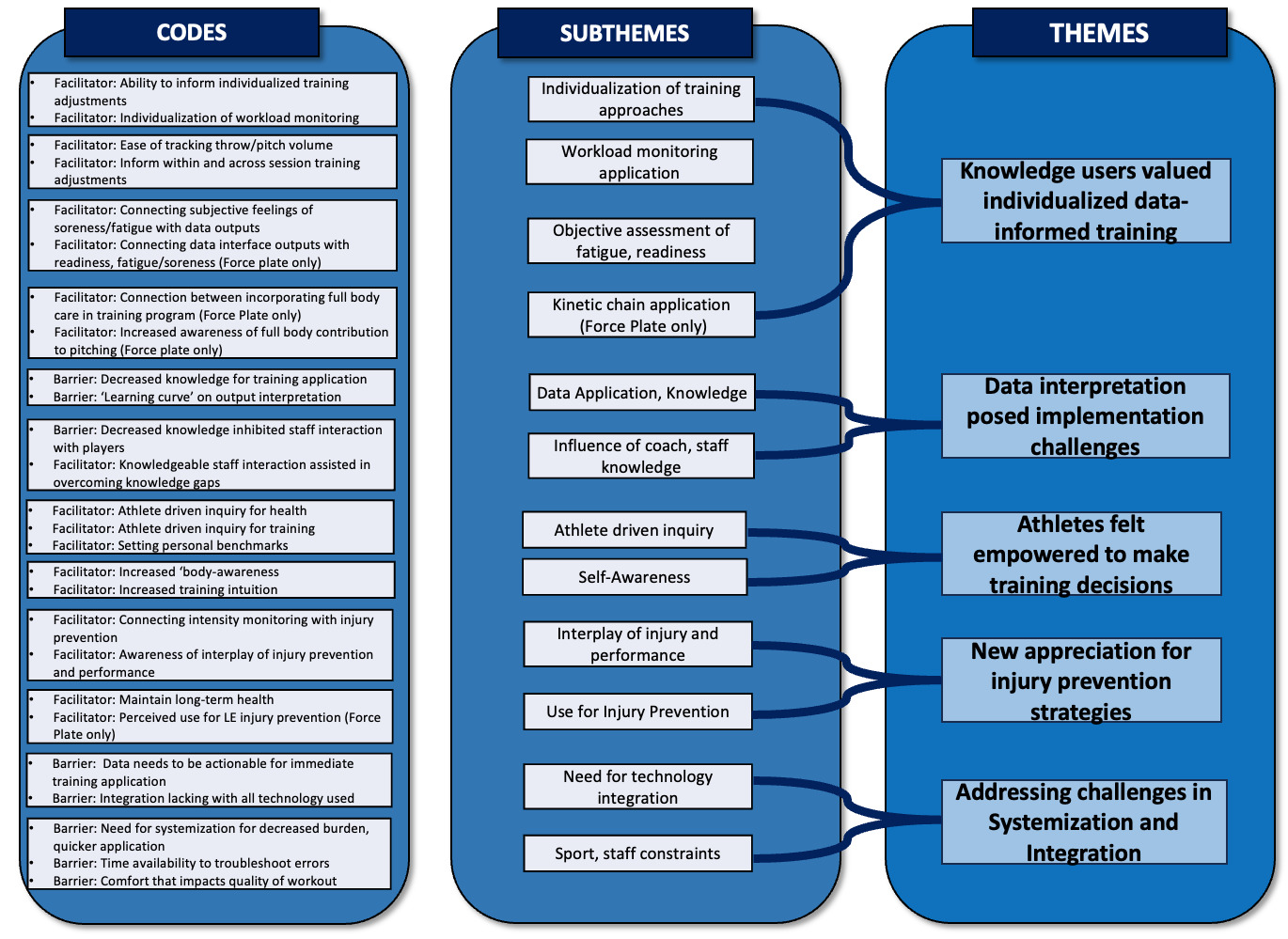
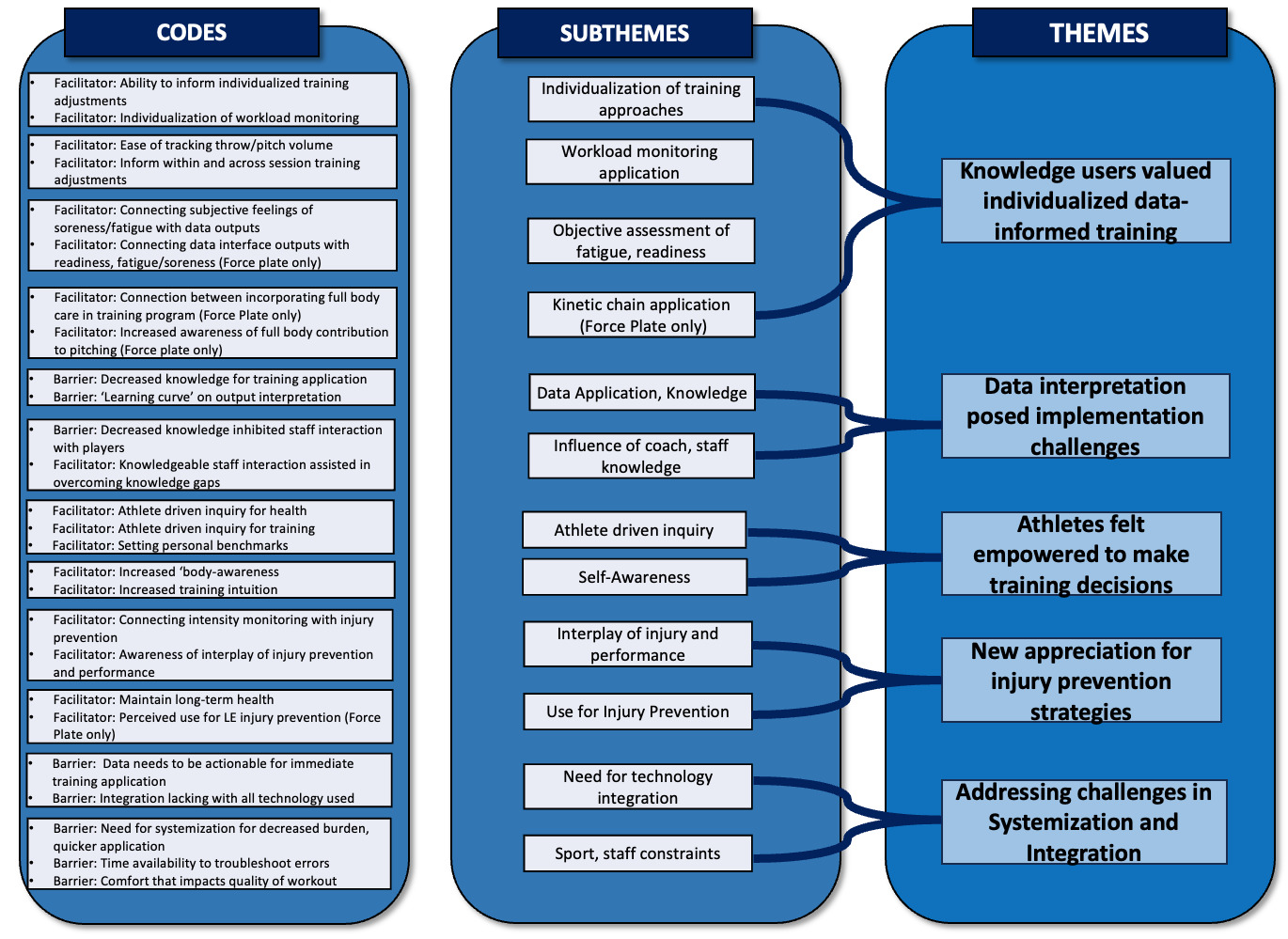
Five overarching themes emerged during data analyses: 1) Knowledge users valued individualized data-informed training; 2) Athletes felt empowered to make training decisions; 3) New appreciation for injury prevention strategies; 4) Comprehension and implementation; and 5) Addressing challenges in systemization and integration. A summary of the coding process is represented in Figure 1. An overview of each theme is represented in Tables 2-5, with a detailed description of themes and exemplar quotes.
The theme most consistently discussed across players, coaches, and support staff was ‘Knowledge users valued individualized data-informed training’ (Table 2). Players noted an increased awareness on factors that contributed to workload, including repetitions and intensity as a facilitator for use of the biomechanical sleeve. As player 8 described:
“One of the big things for me was [understanding] my intensity every day. I would go too hard and wonder why I was sore. But then going back and looking at the app and realizing that I went over the amount of throws I was supposed to and the intensity, it was easy to gauge the next throwing session and then using it in game, I could understand where my torque range is around and then using it next time and seeing if it went up or down.”
When using the force plate, players noted a new recognition of the interplay of recovery and fatigue when utilizing the force plate to perform countermovement jumps weekly. Players provided examples on how they approached experimentation with training adjustments, including decreasing intensity of throws during low volume days, and a test-retest approach for force plate use to inform recovery training day approaches. Specific to the force plate, players described value in using the portable device to longitudinally track fatigue. Players also reported new discernment of the importance of ‘whole body care’ versus ‘arm care’ during training and recovery periods due to the contribution of the entire kinetic chain.
The second most cited theme across players and support staff was ‘data interpretation posed implementation challenges’ (Table 3) which was described as a barrier for pitch sleeve and force plate use. A lack of data knowledge and application was a cited issue amongst players, coaches, and support staff who had previously not had access to technology. Players and support staff expressed challenges in understanding interface results and expressed a need for further training or knowledge to improve data interpretation and application to weekly regimens. Support staff 1 discussed a need for deeper knowledge in biomechanics to discern the numbers: “[The challenge was] just being able to understand the numbers. I would definitely need to come from a […] more biomechanical background.”
Staff that were newly exposed to wearable and portable technology reported not feeling qualified to apply interpretation of the data outputs to assist players with training decisions, which influenced their ability to interact with players. In contrast, players, coaches, and support staff reported prior technological exposure facilitated positive interactions between players and staff to comprehend and apply the data to training regimens were able to strategize through perceived knowledge gaps.
A third theme that emerged was ‘Athletes felt empowered to make training decisions’ specifically among the pitchers (Table 4) and represented a facilitator. Although interrelated with the theme ‘Knowledge Users Valued Individualized Data-Informed Training’, this theme went beyond just describing the potential for or examples of how the tools could promote individualization. Rather, this theme described further steps that athletes took to create goals (i.e. setting benchmarks), provided more distinct examples of connecting objective with subjective fatigue (i.e., increased self-awareness), and specific lived examples of applying the data and training adaptations (versus just describing perceived application benefits). Pitchers provided examples of how the data equipped them with knowledge to make in session adjustments to training when using training implements (i.e., weighted balls), allowed for goal setting to stay, and exploration of new training methods to improve recovery strategies.
A fourth theme that emerged was ‘New appreciation for injury prevention strategies’ (Table 5) and was described as a facilitator. Athletes did not solely focus on use of the pitching sleeve for performance related factors, but also noted injury prevention was a reason they would utilize the tool. Athletes and coaches also discussed how the pitching sleeve provided data points that reflect the interplay of injury and performance. Both coaches and players reported example use of the pitching sleeve to inform appropriate building of volume and intensity for a throwing program following injury or to aid in improved practice management of mild symptomology the athlete reported experiencing in practice.
A final theme, ‘Addressing challenges in Systemization and Integration’ emerged later in the focus groups solely amongst coaches and support staff (Table 6). This theme was primarily represented as a barrier as these participants discussed the challenges of integrating another form of technology amongst other data collection systems within their program already being used, and the need for immediate, actionable data to decrease staff burden. As Coach 2 described:
‘You have a very limited amount of time to get everything done. And when you are troubleshooting on the fly, in your workout, like how to connect [the pitching sleeve] back to your phone [data interface], or it’s falling off my arm, you’re taking away from the quality of the workout, which is everything.’
Coaches and players also noted player pitching sleeve preference and already habitual training regimens that may play a role in reduced use of the devices.
DISCUSSION
Understanding barriers and facilitators for devices that seek to track training load and fatigue measures is important to inform training and injury prevention strategies that are athlete- and coach-informed. The current findings demonstrate an emergence of important facilitators, including the ability to utilize novel technology to apply data informed individualization of training, appreciation for the potential to prevent injuries, and technological applications that empower the athlete to make training adjustments. In contrast, important barriers emerged that may impact use of the devices, including a knowledge gap for data comprehension and implementation, and a lack of systemization and integration of new technology with existing technology that may increase user burden.
Facilitators to Biomechanical Device Use
All participants described the ability to apply data informed individualized training approaches through a myriad of applications as an important facilitator. For the pitching sleeve this included features to be able to monitor elbow varus torque within and across training sessions and personal validation of perceived fatigue or soreness with interface outputs. The force plate provided new insight on connecting perceived fatigue or pitch readiness with repeated testing of vertical jump height during the prescribed counter movement jump testing during the season. The need for individualized training approaches has been highlighted in International Olympic Committee consensus statements for load monitoring in athletes that are sport specific using sound scientific methods and validated technology.20 In baseball, prior quantitative studies suggest the need for individualized training approaches based on observed variability in elbow varus torque across pitchers based on upper extremity, trunk, and lower body kinematics, different pitcher demographics, and differences observed while performing an interval throwing program.21 However peer reviewed studies seeking to discern athlete, coach, or support staff perceptions of devices developed to individualize training approaches are nonexistent in baseball. Among runners, qualitative studies have highlighted individual training metrics that runners value that may encourage tracking of running related injury risk.22 Similar to the current study findings, runners have acknowledged using wearable device data outputs alongside self-assessments to better inform daily holistic training approaches.22
An overlapping, but distinct theme from ‘Knowledge users valued individualized data-informed training’ that emerged in this study was ‘Athletes felt empowered to make training decisions,’ which went further to describe examples of training strategies they newly explored to improve recovery. Athletes highlighted examples of personal goal setting and how the technology improved training intuition, or ‘body awareness’. Training approaches that equip the athlete with self-management training strategies have been shown to improve training engagement23 and rehabilitation intervention adherence24 across a myriad of athletic populations. These findings suggest that baseball coaches, clinicians, and researchers seeking to utilizing these biomechanical devices should emphasize not only the individual training features, but also implement strategies to engage and collaborate with the athlete to promote intentional use of the devices.24
Athletes not only highlighted how they valued and used the data interface results for the pitching sleeve for training and performance, but also acknowledged a primary reason for using the device was for the ‘New appreciation for injury prevention strategies’, a third theme that emerged as a facilitator. Pitchers highlighted using the sleeve ‘primarily to prevent injury’ or highlighted lived experiences of using the device during return to throwing programs to track intensity and volume following injury. The risk of upper extremity injuries in baseball pitchers is multifactorial and dynamic, including changes in training load, musculoskeletal tissue changes, biomechanical factors, performance variables and fatigue.25 Pitchers in the current study highlighted a new discernment for how biomechanical and performance variables that the pitching sleeve provided them coincided with the dynamic nature of minimizing injury risk.
Barriers to Biomechanical Device Use
Despite multiple facilitators that participants highlighted, barriers were acknowledged by participants for using the pitching sleeve and portable force plate. A lack of knowledge on how to interpret and implement the interface results of both devices were reported, particularly among pitchers and support staff who acknowledged not having previous access to similar data or technology. Given that this was the second most coded theme, a lack of knowledge may have played a role in inhibiting use of the devices. This highly endorsed theme may be an important driver in the low to moderate adherence and uptake observed in this study population in previously published data (uptake: force plate: 0.32, 95% CI: 0.14, 0.55; pitching sleeve: 0.55, 95% CI: 0.32, 0.76; adherence: force plate: 0.46, 95% CI: 0.31, 0.70; pitching sleeve: 0.13, 95%CI: 0.09, 0.17).26 Although technology development has become an integral part of athlete development and performance and is often viewed positively among institutions, steps to ensure barriers for technology literacy must be addressed.27 Ringuet-Riot et al.'s framework for a structured approach for technology innovation in sport highlights the need to discern technology literacy gaps, baseline use of technology, and needs of the technology to be adapted to ensure facilitators are highlighted and essential knowledge barriers are addressed when adopting technology.27
Research in educational settings seeking to integrate technology have also highlighted different types of barriers for technology integration exist.28 First level barriers are external that include a lack of access to technology, insufficient time to learn required skills to adapt the technology, or inadequate support, whereas second level barriers are internal factors related to individual knowledge, self-efficacy, and attitudes or beliefs about the technology.28 In the current study, athletes and coaches were given the technological tools and technical support to adapt the biomechanical devices (first level). However, findings revealed that second level barriers need to be addressed to ensure adequate training on use of novel technological devices or interpretation of the data outputs are needed to ensure the devices are adopted for training load management and injury prevention. Additionally, on-boarding procedures was provided with all sport-scientists that were a part of the study to instruct how to implement the training devices and troubleshoot technical challenges. However, future onboarding training should also include targeted education on data interpretation that allows for immediate feedback to the athlete that is actionable, in order to improve use of the devices.
A second theme of barriers that emerged distinctly from ‘Data interpretation posed implementation challenges’ was ‘Addressing challenges in systemization and integration.’ This theme was expressed among coaching staff and support staff who had attempted integration of technology systems that informed pitching and strength and conditioning training plans. This difference in exposure to biomechanical and performance data was likely due to inherent differences across teams as well as differing experience levels across support staff. Of the more experienced staff participants, ongoing efforts were described to ‘figure out’ how to use the pitching sleeve for training purposes, suggesting potential gaps in data knowledge and implementation. However, the support staff participants also went a step further to describe new barriers of systemizing the novel device alongside other forms of technology to make individualized training decisions for their pitchers. Although the pitching sleeve in this study can provide important training load metrics, adding additional forms of technology and substantial amounts of data to integrate into existing data systems has trade-offs including additional data repositories needing to be accessed and analyzed increasing user burden. Further development of application programing interface systems, real-time dashboards that allow for streamlined, validated data outputs for this tool or other similar forms of technology may be necessary. Furthermore, participants described constraints when attempting to integrate the technology during practice including connectivity issues and general preferences to wear a pitching sleeve due to comfort that may have inhibited use. This finding is consistent with prior research in physical activity trackers citing ‘application glitches’ as a common barrier for technology adherence.29 Along with addressing technological glitches, future updates of both biomechanical devices may need to consider development and research on integrating testable dynamic joint models for actionable data to decrease user burden within the context of all forms of technology used for decision making.30,31
Strengths and Limitations
Although steps were taken to ensure rigor in the methodological approach, this study is not without limitations. First, the results are based on the investigators’ interpretation of qualitative data collected; participants did not have the opportunity to review or reflect on their responses. Second, following initial collegiate developmental league recruitment, further recruitment was necessary to ensure diverse perspectives were represented as themes emerged which utilized a convenience sampling method. Third, due to scheduling needs, and need to account for social dynamics to ensure that participants could speak freely by ensuring that players were only grouped with other players, differing numbers of individuals in semi-structured focus groups were present, and one to one semi-structured interviews of coaches were performed. This may have influenced how participants responded due to the influence of social desirability. However, steps to minimize social desirability bias through specific techniques including providing assurances prior to the focus group or interview, probing with follow-up questions if generic responses were given, asking for example scenarios when using the technology.32 Fourth, given the shared athletic background of primary investigator/moderator, and first author with participants, this may have created an insider-outsider dynamic that may have influenced responses. For example, familiarity of the topic area could reduce in-depth probing, or may have shaped participant response through perceived professional authority. To mitigate this, reflexive journaling and de-briefing of the research team were conducted. Finally, athletes, coaches, and support staff were representative of experiences among collegiate university and summer league settings. The barriers and facilitators identified within the themes highlighted may not reflect the experiences of youth baseball or professional league athletes and affiliates which represent different levels of access to similar forms of technology in sport. Further research may be needed that represents baseball pitchers from different divisions and geographic regions.
CONCLUSION
Barriers and facilitators were identified in the implementation of a biomechanical pitching sleeve and portable force plate among collegiate baseball pitchers and training staff. Balancing the need for individually prescribed training regimens that are athlete centered while also addressing knowledge gaps in technology or data system burden is important to ensure that these technologies are adapted with improved adherence. Future studies aiming to develop, test, and implement similar forms of wearable and portable technology among baseball players should consider amplifying these facilitators, while ensuring that knowledge gaps and integration of the novel technology within the training environment are adequately addressed. Clinicians and sport scientists that desire to integrate biomechanical devices with teams or in the clinic should provide/be provided education on evidence-based data interpretation that connects to individualized, athlete empowered training approaches. Developers of biomechanical devices must also consider sport-specific context that ensures technology is easily integrated into existing systems or consider means of real-time dashboard to allow data to be actionable.
Financial Disclosure
This project was funded by Major League Baseball.
Conflicts of Interest
All authors report no conflicts of interest.