INTRODUCTION
Throwing-related shoulder and elbow injuries are a major concern in baseball, with over 20% of high school athletes reporting throwing-related pain.1 Specific throwing mechanics and biomechanical factors associated with injury prevention and treatment are not yet fully understood. The biomechanics of the torso have garnered significant interest because of the trunk’s central role in the kinetic chain connecting the lower limbs, trunk, and upper limbs.2,3
Contralateral trunk tilt (CLT) during maximal external rotation (MER) has been identified using 3-dimensional (3D) motion analysis as a kinematic factor that increases torque on the shoulder and elbow during pitching.4,5 While 3D analysis is considered the gold standard for capturing complex pitching mechanics, it often requires expensive equipment and controlled laboratory environments that may lack sufficient space for a standard 18.44-meter pitching distance. In contrast, 2-dimensional (2D) video analysis provides a highly practical and reliable alternative for field-based screening.6 Using 2D analysis is crucial as it prioritizes ecological validity, allowing clinicians and researchers to assess pitchers in their actual practice environment at the regulation distance. Kinematically, CLT refers to the lateral lean of the trunk toward the non-throwing arm side. In evaluating CLT movement pattern, 2D motion analysis is as reliable as 3D methods, rendering it a practical alternative in field settings where advanced equipment is often unavailable.7 In the pitching cycle, MER occurs at the end of the late cocking phase.8 Before reaching this position, the trunk rotates backward.9 Excessive CLT is considered a compensatory strategy for limited trunk rotation. Although this motion may increase ball velocity, it simultaneously exerts greater mechanical stress on the shoulder and elbow joints.4,7
Although the mechanical stress associated with excessive CLT is well-established, the specific physical dysfunctions underlying this compensatory movement pattern remain unclear. Although one study has examined the correlation between trunk muscle strength and contralateral tilt, the role of rotational flexibility has not been adequately studied.10 Although limited epidemiological evidence supports an association between diminished trunk rotational mobility and throwing injuries,11,12 the evidence remains inconclusive. During the cocking phase of the pitch cycle, driven by forward pelvic rotation (toward home plate), adequate reverse thoracic rotation (away from home plate) is essential to create separation between the pelvis and upper trunk.13 This separation facilitates efficient energy transfer during the subsequent acceleration phase.14 These findings underscore the need to evaluate kinematic trunk rotation patterns, rather than focusing solely on flexibility. The hand-to-knee (HtK) position is commonly used in clinical evaluation to evaluate trunk rotational flexibility and facilitation of rotation.15
However, clinical observations indicate that the HtK position—which requires active pelvic stabilization in a quadruped posture—often allows compensatory movements, such as lateral shifting of the lumbar spine or trunk tilt. This active stabilization recruits core muscles, such as the abdominal obliques and lumbar multifidus, thereby effectively simulating the active muscular control demands required during the actual pitch cycle. These clinical observations are commonly performed visually with the naked eye during daily clinical practice. An alternative posture—the elbow-to-knee in the lumbar-locked position (LLP)—offers a more accurate assessment of thoracic rotational mobility (e.g., lower serratus posterior and thoracic multifidus), as it restricts compensatory lumbar motion.16 For the LLP, a rotational mobility of 40° ± 10° is generally considered normal,16 whereas normative values for the HtK test are not yet established. In throwing, limitations in trunk rotation observed in the HtK position may reflect poor rotational patterns during the pitching motion.
Therefore, this study aims to compare trunk rotational mobility and compensatory lateral flexion between pitchers with high and low CLT, and to examine the relationships between these factors, player characteristics, ball velocity, and elbow valgus torque. The hypothesis was that pitchers with limited trunk rotation may compensate by increasing lateral trunk tilt in the HtK position, which could potentially contribute to excessive CLT during the pitching motion. Elbow valgus torque, ball velocity, and player characteristics—including age, height, weight, and years of pitching experience—were also assessed, as each can be quantified in a field-based setting.
MATERIALS AND METHODS
This study utilized a cross-sectional, observational design. A priori power analyses were conducted using G*Power (Version 3.1) to determine the required sample sizes. For the unpaired t-test comparing the low and high CLT groups, an estimated 42 participants were required to detect a large effect size (d = 0.80) with an α level of 0.05 and a power of 0.80. This large effect size was selected based on previous literature evaluating thoracic rotational mobility, which demonstrated that differences between mobility groups can yield Cohen’s d values of 3.9 for right rotation and 1.7 for left rotation.17 Considering that these reported values significantly exceed the standard criteria for a large effect, a threshold of 0.80 was considered a reasonable and conservative estimate for identifying clinically significant kinematic differences in high school pitchers. Furthermore, for the Pearson product-moment correlation analysis, a total of 29 participants was required to detect a large effect size (r = 0.5) under the same conditions (α = 0.05, power = 0.80, two-tailed).
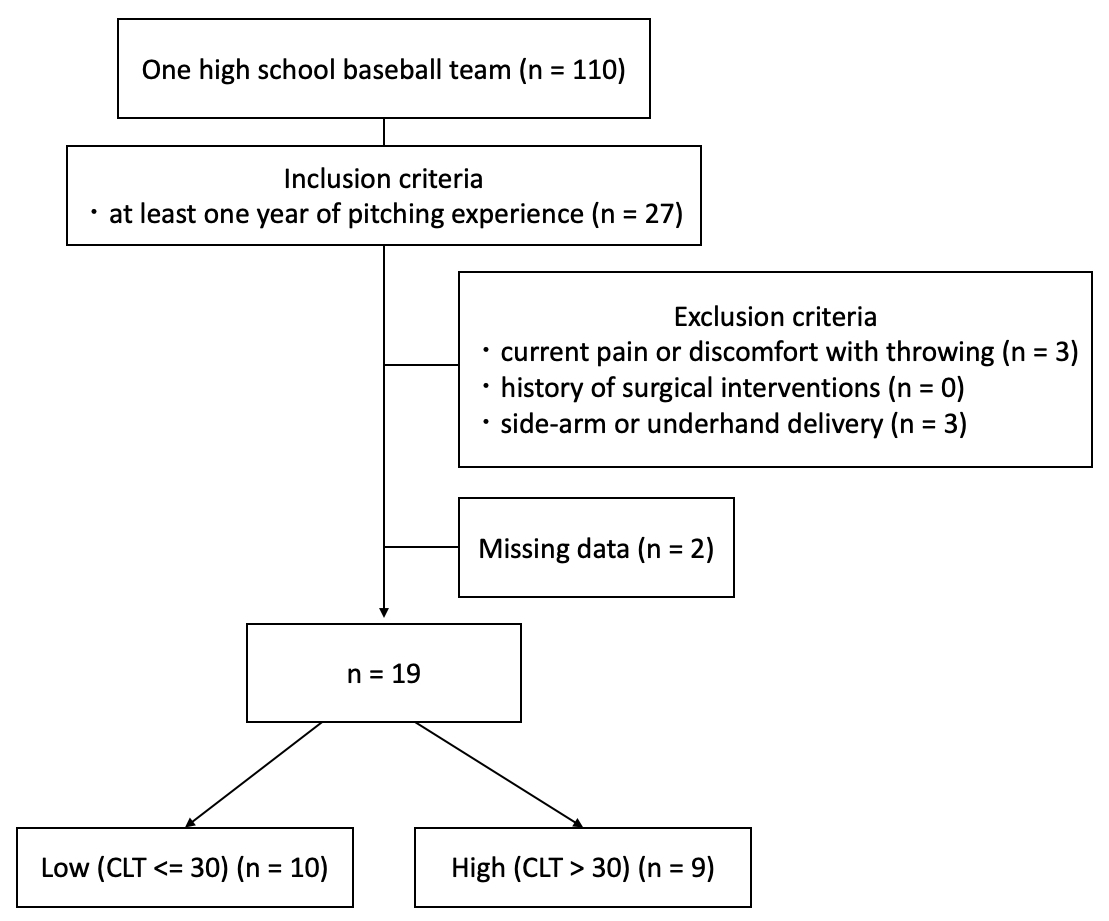
Participants: Participants were recruited via convenience sampling from a single high school baseball team comprising 110 members (Figure 1). The primary researcher provided weekly medical support for this team, which facilitated the acquisition of full consent from the head coach for research cooperation. The inclusion criteria were as follows: male pitchers with at least one year of pitching experience; no current pain or discomfort; no history of surgical interventions for their entire body (e.g., knee or spine surgery), not limited to the throwing arm; and an overhand or three-quarter arm slot (defined as trunk contralateral flexion angle at MER ≥ 0°). The presence of current pain or discomfort was assessed using a simple Yes/No verbal questionnaire before participation. Consequently, pitchers utilizing sidearm or underhand deliveries (CLT < 0°) were excluded from the analysis. This exclusion criterion was applied to maintain a relatively homogeneous sample regarding upper extremity kinematics and to specifically focus on high-slot pitchers. While previous biomechanical research has demonstrated differences in shoulder kinematics at ball release among various arm slots, the degree of contralateral trunk tilt is a primary determinant of arm slot height.18 Therefore, rather than categorically comparing overhand and three-quarter pitchers, this study focused on evaluating the effect of trunk tilt within this specific overall high-slot population.
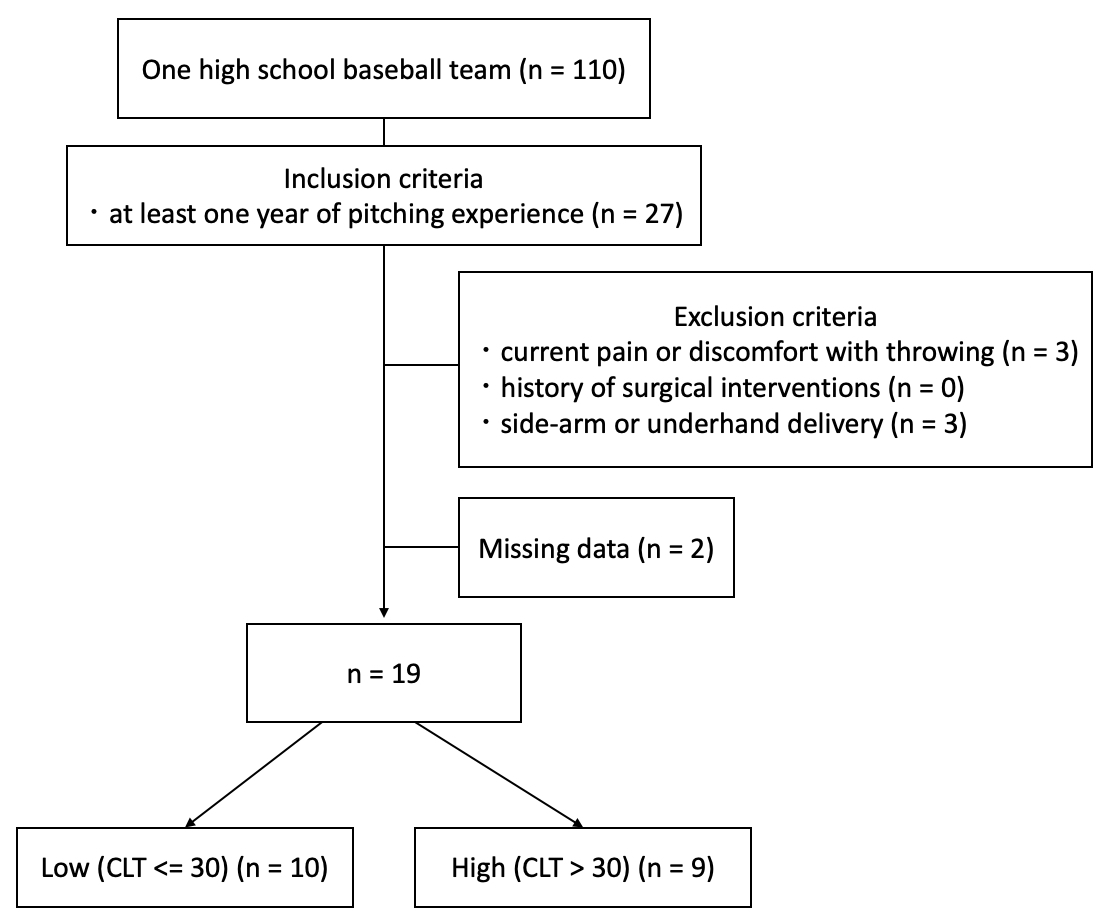
Initially, 27 pitchers were available for the study. Following the screening process, three pitchers were excluded for utilizing sidearm or underhand deliveries. Another three participants were excluded because, although they were physically capable of throwing a baseball, they were experiencing shoulder or elbow pain specifically during the pitching motion at the time of the study, which could potentially alter their normal pitching mechanics. Additionally, two participants completed the initial mobility assessments but were excluded from the data analysis because an unexpected change in their team’s practice schedule prevented them from participating in the pitching motion capture, resulting in a final sample of 19 participants for statistical analysis. The potential impact of this limited sample size on statistical power is addressed in the Limitations section. This study was approved by the Ethics Committee of the Yokohama Sports Medical Center (approval number: R-2024-003) and conducted in accordance with the latest edition of the Declaration of Helsinki. Written informed consent and assent were obtained from all participants and their parents or guardians prior to participation.
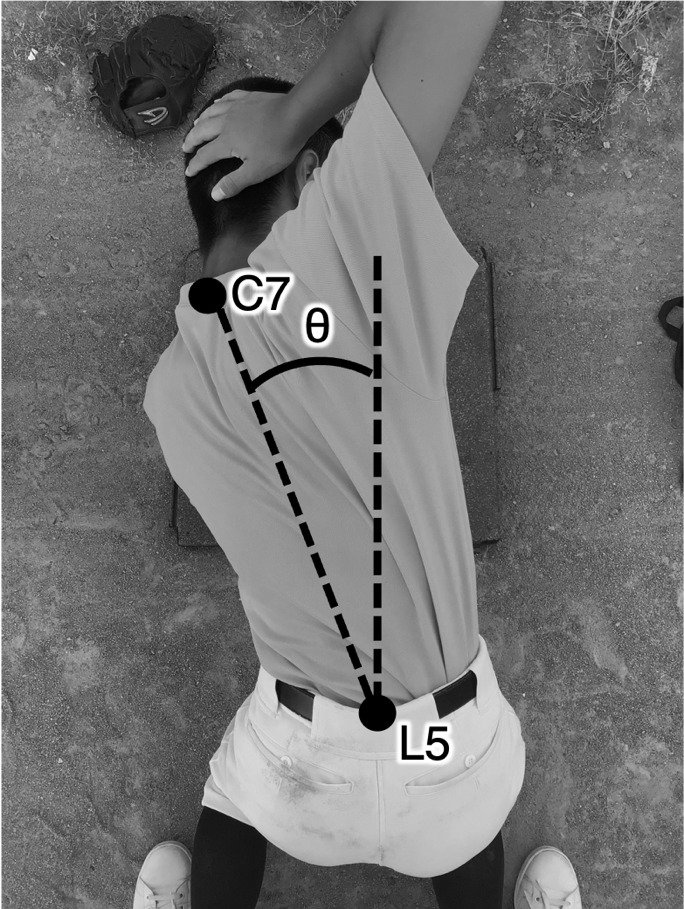
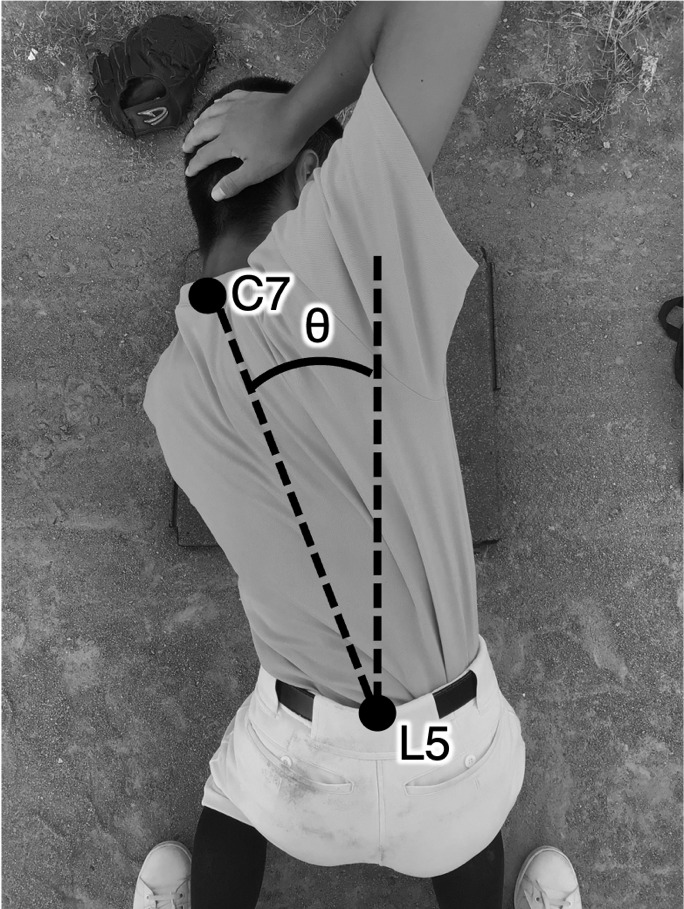
Data Collection Procedures: Data were collected occurred during the regular season (June to October 2024). Participants completed a standardized warm-up comprising stretching and playing catch. The standardized warm-up consisted of 5 minutes of running and 20 minutes of combined static and dynamic stretching during their regular practice. Before measurements, participants engaged in a throwing warm-up of up to 30 pitches at a maximum distance of 60 m, followed by approximately 15 practice pitches under the exact experimental conditions (18.44 m distance). After the warm-up, trunk rotational mobility and hip internal rotation were evaluated. Hip internal rotation was assessed with participants positioned supine on a mat. A licensed physical therapist with five years of clinical experience measured internal rotation angles bilaterally with the hip at 90° of flexion, utilizing a conventional goniometer. Trunk rotational mobility was assessed in a standardized sequence using a digital inclinometer positioned at the T1–T2 level, identified by palpating the C7 spinous process. First, mobility in the HtK position was measured. Participants assumed a quadruped position with their knees directly below the greater trochanters and their hands directly below the acromia, while keeping their lower legs parallel. At the point of maximal rotation during the HtK assessment, a photograph was captured using an iPad positioned 150 cm directly above the participant to evaluate compensatory contralateral trunk flexion (Figure 2). Mobility in the LLP was measured next. For this assessment, participants assumed a quadruped position with their buttocks on their heels and their elbows on their knees, maintaining their forearms and lower legs in a parallel orientation. Pitching motions were subsequently recorded, and kinematic data were collected. Participants threw on flat ground from a regulation distance of 18.44 m without a pitching rubber, until at least three successful strike pitches were recorded. Participants were instructed to throw only 4-seam fastballs. A successful strike was strictly defined based on official Major League Baseball rules adapted for the average height of Japanese high school males (170.0 cm): the pitch had to pass over home plate (width: 43.2 cm) between an upper limit of 91 cm (53.5% of average height) and a lower limit of 46 cm (27% of average height). A high-speed video camera (EX-100PRO, CASIO, Japan) was positioned behind the catcher, equipped with a 7.6× zoom and oriented toward the pitcher’s face.10 A radar gun (BSG-1Basic; Yupiteru Inc., Japan) placed behind the catcher was used to measure ball velocity. Pitching motions were recorded using digital cameras set to a frame rate of 240 fps and a resolution of 512 × 384 pixels. Elbow valgus torque was recorded using a PULSEthrow IMU sensor (Driveline Baseball, USA), which was affixed to the dominant arm exactly 5 cm distal to the medial epicondyle using a prefabricated sleeve.19
Data processing: After data collection, two investigators used ImageJ software (version 1.54k; National Institutes of Health, Bethesda, MD) to independently measure the trunk contralateral flexion angle at MER and during rotation.
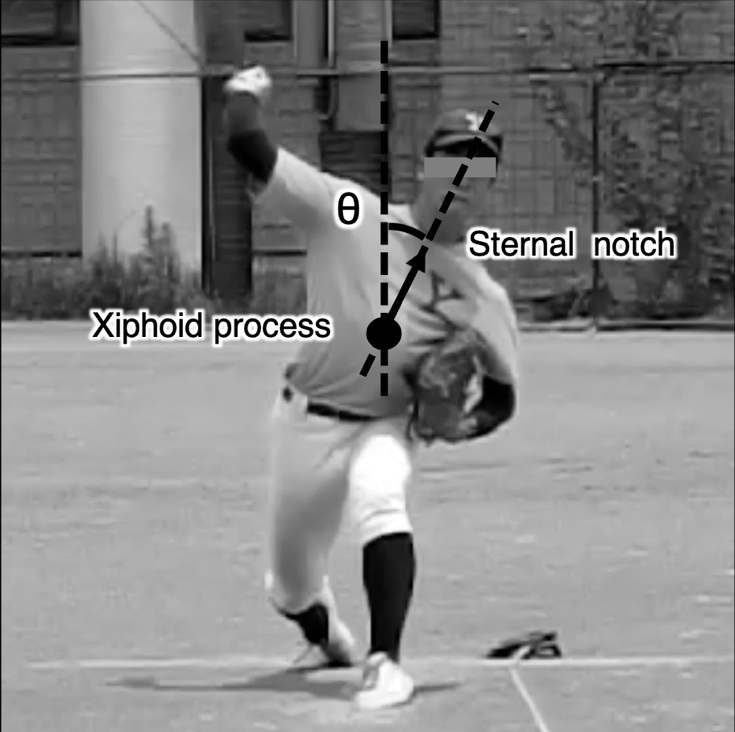
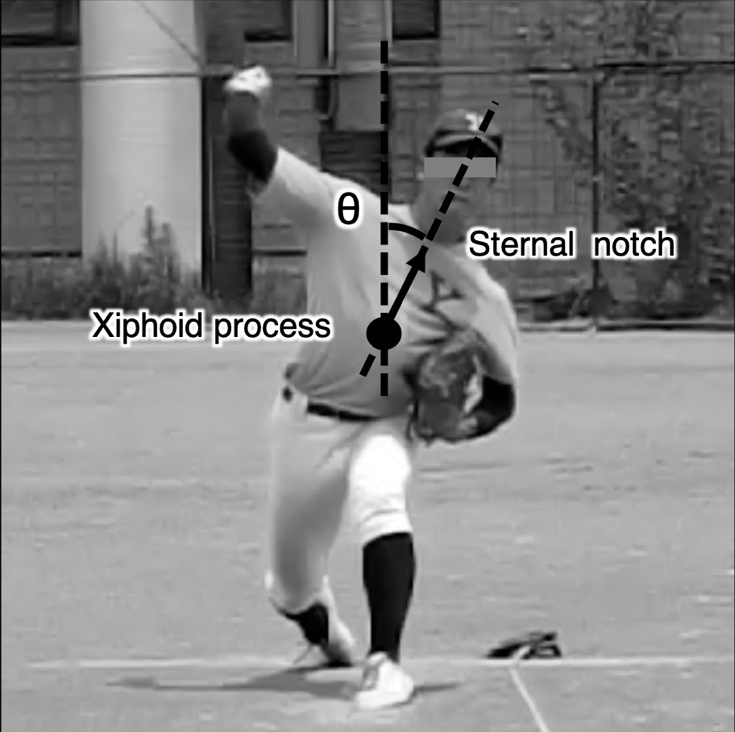
The three fastest strike pitches from each participant were selected for analysis, and the mean values of these three pitches were used for the statistical analysis, For each pitch, the frame corresponding to maximal shoulder external rotation was identified, and the xiphoid process and sternal notch were digitized to establish the trunk midline. The CLT angle was determined as the angle (in degrees) between a vector from the xiphoid process to the sternal notch and the vertical axis (Figure 3). This method exhibits high interrater reliability (ICC2,k = 0.90) and strong agreement with 3D-measured CLT angles (r = 0.88).7 For HtK trunk rotation assessments, the contralateral flexion angle was calculated as the angle formed by a line from L5 to C7 and the vertical axis (Figure 2). This measurement method demonstrated high interrater reliability (ICC2,k = 0.92).
Statistical Methods: Descriptive statistics (mean ± standard deviation) were calculated for all variables. Participants were divided into two groups based on previously established biomechanical classifications: a high CLT group (CLT ≥ 30°, n = 9) and a low CLT group (CLT < 30°, n = 10). Pitchers with visually excessive CLT are reported to exhibit an average tilt of 34.6°, compared to 21.9° in pitchers without excessive tilt.4 Consequently, a threshold of 30°was used to distinctly categorize pitchers with high CLT.s While CLT values below 30° have been sometimes subdivided into moderate (15°–30°) and low (<15°) categories,10 however, this cohort contained limited participants in these specific lower ranges (n = 8 and n = 2, respectively). Therefore, to ensure an optimal and statistically balanced distribution for group comparisons, these subgroups were combined into a single low CLT group (CLT <30°). The Shapiro–Wilk test was employed to assess normality. The results confirmed that all continuous variables demonstrated a normal distribution, with the exception of CLT at MER. Consequently, independent t-tests were used to compare the means of the normally distributed variables between the two independent groups, while the Mann–Whitney U test was used for the non-normally distributed CLT data. Pearson correlation coefficients (r) were used to analyze the relationships between CLT angle at MER and the following variables: hip internal rotation, trunk rotational mobility (in both the HtK position and LLP), and trunk contralateral flexion during rotation (in the HtK position). Demographic factors (age, height, weight, and years of pitching experience) were correlated with performance measures (ball velocity and elbow valgus torque). Correlation strength was classified as follows: very weak (|r| < 0.2), weak (0.2 ≤ |r| < 0.4), moderate (0.4 ≤ |r| < 0.7), strong (0.7 ≤ |r| < 0.9), and very strong (|r| ≥ 0.9).20 While the final sample size did not meet the initial requirements of the a priori power analysis, inferential statistics were utilized to explore potential differences and relationships within this cohort. To mitigate the risk of type II errors associated with the small sample size and to provide a more comprehensive interpretation of the data, effect sizes (Cohen’s d for group comparisons and Pearson’s r for correlations) have been reported alongside p-values. According to Cohen’s guidelines, effect sizes for Cohen’s d were defined as small (0.20), medium (0.50), and large (≥ 0.80), while effect sizes for Pearson’s r were defined as small (0.10), medium (0.30), and large (≥ 0.50).20 This approach allows for an assessment of the clinical magnitude of the findings independent of the sample size. All analyses were performed using JMP Pro software (version 17; SAS Institute Japan, Tokyo, Japan). A p < 0.05 was considered to indicate statistical significance.
RESULTS
Table 1 presents the results of the group comparison analyses. No statistically significant differences were noted for any of the variables based on either the t-test or the Mann–Whitney U test. Specifically, no statistically significant differences were detected between high (n = 9) and low (n = 10) CLT groups regarding trunk rotational mobility on the LLP dominant (62.8° ± 11.5° vs 64.5° ± 11.2°, p =0.745, d = 0.15) and non-dominant (58.3° ± 9.0° vs 60.0° ± 8.5°, p =0.684, d = 0.19) sides, nor in compensatory contralateral trunk flexion during rotation on the dominant (17.1° ± 7.6° vs 18.0° ± 2.5°, p =0.705, d = 0.18) and non-dominant (18.2° ± 7.6° vs 20.1° ± 6.5°, p =0.576, d = 0.26) sides (Table 1).
Table 2 presents the outcomes of the correlational analyses. The mean CLT angle at MER was 21.7° ± 20.3°. Contralateral trunk flexion during rotation showed very little to no negative relationship with CLT at MER on the dominant (r = –0.14, p = 0.566) or non-dominant side (r = –0.39, p = 0.101). Similarly, no statistically significant correlations were detected between trunk rotational mobility (in HtK or LLP), hip internal rotation, or demographic variables (age, height, weight, and pitching experience) and trunk tilt at MER (Table 2).
A statistically significant, moderately positive correlation was detected between trunk tilt at MER and ball velocity (r = 0.47, p = 0.004). Conversely, very little to no relationship was detected between CLT at MER and elbow valgus torque (r = 0.02, p = 0.935) (Table 2). A statistically significant, strongly positive correlation was observed between ball velocity and elbow valgus torque (r = 0.69, p < 0.001). Among the 19 participants with available LLP data, 2 (10.5%) participants demonstrated trunk rotational mobility values below 50°.
DISCUSSION
This study aimed to compare trunk rotational mobility and compensatory lateral flexion between pitchers with high and low CLT, and to examine the relationships between these factors, player characteristics, ball velocity, and elbow valgus torque. It has been suggested that pitchers with limited trunk rotation may compensate by increasing lateral trunk flexion, especially during the late cocking phase, when trunk rotation typically peaks.9 However, no significant associations were observed between trunk rotational mobility—in the LLP or HtK position—and CLT at MER. Statistically significant relationships were not detected within this specific cohort between excessive CLT at MER and either limited trunk rotational mobility or compensatory lateral trunk flexion.
Previous studies have demonstrated that a greater amount of contralateral flexion at MER correlates with increased ball velocity and elbow peak valgus torque.4,10 The present study demonstrated that ball velocity was moderately and significantly associated with trunk tilt (CLT: 21.7° ± 20.3°, ball velocity: 33.6 ± 1.8 [m/s], r = 0.47, p = 0.004); however, no such association was observed for elbow peak valgus torque (elbow peak valgus torque: 43.2 ± 8.3 [Nm], r = 0.02 , p = 0.935). Although trunk tilt was not associated with elbow valgus torque, ball velocity was strongly and significantly positively correlated (r = 0.69, p < 0.001), indicating that increased velocity may independently contribute to elbow stress. This finding aligns with previous literature demonstrating that throwing at higher velocities increases elbow valgus stress, which in turn necessitates a proportional increase in elbow varus torque to offset this stress.21,22 The mean CLT at MER in this study was 21.7° ± 20.3° (range: 1.4°–44.0°), consistent with reported values.4,10 Oyama et al. employed 3D motion analysis to compare tilt angles at MER between high school pitchers who were subjectively evaluated as exhibiting excessive tilt and those who did not.4 Pitchers in the excessive tilt group demonstrated significantly greater tilt (34.6° ± 11.2°) than those in the non-excessive tilt group (21.9° ± 8.0°). In a follow-up study, Oyama et al. used 2D motion analysis to evaluate CLT in youth pitchers aged 8 to 11 years.10 Pitchers were stratified into high (CLT >30°), moderate (CLT = 15°–30°), and low (CLT <15°) tilt categories, with average angles of 37.5° ± 4.8°, 23.0° ± 4.7°, and 2.3° ± 4.6°, respectively. Compared to previous data from high school pitchers using the PULSEthrow sensor (elbow valgus torque: 50.7 ± 14.6 Nm, ball velocity: 30.4 ± 3.5 m/s), the current sample exhibited higher average ball velocity (33.6 ± 1.8 m/s) and lower torque (43.2 ± 8.3 Nm).23
Previous studies have elucidated the coupling motion between axial rotation and lateral flexion of the trunk. The lateral flexion angles observed in the HtK position in this study (17.6° ± 5.4° on the dominant side; 19.2° ± 6.9° on the non-dominant side) were notably greater than those reported in previous upright spinal kinematics research. Narimani and Arjmand (2018) reported that thoracic rotation in a standing posture is coupled with ipsilateral lateral flexion (8.4° ± 6.9° during left rotation; 14.4° ± 5.7° during right rotation).24 This discrepancy may be attributed to several factors. First, differences in postural demands play a crucial role. The quadruped HtK position requires unilateral arm support against gravity, providing a pivot point that facilitates a compensatory contralateral shift or tilt of the upper trunk. Second, this study’s participants exhibited a greater total range of thoracic rotation (approximately 60°) than the 41° reported in standing study evaluating the measure in the standing position.24 It is possible that the standardized pitching warm-up performed immediately before the measurements, acutely enhanced the extensibility of the spinal joints and soft tissues, although this was not directly measured. Furthermore, it is important to note that spinal coupling patterns can vary depending on the direction of rotation. In the lumbar spine, Narimani and Arjmand reported a mixed pattern: ipsilateral flexion during left rotation (3.9° ± 9.0°) but contralateral flexion during right rotation (1.3° ± 7.0°).24 The current study included both right- and left-handed pitchers, with rotation toward the throwing side designated as dominant side rotation. Since coupling patterns differ based on the specific direction of rotation, this variability may have influenced the overall lateral flexion measured when combining the entire trunk as a single unit. Finally, baseball players may exhibit sport-specific adaptations in coupling patterns that favor increased lateral flexion during rotational movements to maximize kinetic chain efficiency.25
Maximal trunk rotation toward the throwing side occurs during the early cocking phase, immediately before stride foot contact (SFC), with an average angle of 54.9° ± 9.1° among high school pitchers.9 This movement—termed “hip-to-shoulder separation”—denotes the rotational disparity between the pelvis and the upper torso. Reduced hip-to-shoulder separation correlates with an increased risk of injuries requiring surgical intervention,26 whereas greater separation is associated with higher ball velocity.27 Therefore, it is considered important to maintain sufficient hip-to-shoulder separation for enhancing performance and preventing injury in throwing athletes. A previous study identified the minimal detectable change in trunk rotational mobility using the LLP test as 5.53° for right rotation and 5.89° for left rotation.16 Only two out of 19 pitchers (10.5%) exhibited LLP rotational mobility below 50°, indicating that most participants had sufficient trunk mobility. This may explain the absence of significant correlation between trunk mobility, lateral compensation, and CLT during the pitching motion in this sample.
This study has some limitations. First, the trunk rotation angles during the pitching motion were not directly measured. Although it was assumed that rotation assessed in the HtK position would correlate with trunk rotation during SFC, this association needs confirmation with motion capture data. Second, right- and left-handed pitchers were included, and the rotation was analyzed according to the dominant side. However, coupling patterns may differ based on the direction of rotation,24 and stratifying the sample into right- and left-handed groups could have provided additional insights. Third, pitching trials were conducted on flat ground rather than from a pitching mound. Although the regulation distance of 18.44 m was maintained, mound height can influence trunk mechanics, particularly hip-to-shoulder separation.28 Moreover, the flat-surface setting might have affected the representativeness of the pitching motion compared to in-game conditions. Fourth, trunk tilt measurements were based on gross spinal alignment (e.g., L5–C7 and sternum vectors) without distinguishing the contributions of the thoracic spine, lumbar spine, or pelvis. A segmental analysis could have yielded more comprehensive insights into the mechanics of trunk tilt. Future research could achieve this by implementing a multi-segment trunk model, utilizing additional anatomical markers on the thorax and pelvis to separate thoracic, lumbar, and pelvic kinematics during the throwing motion. Fifth, the sample size was relatively small (n = 19) and did not meet the requirement of the a priori power analysis (n = 42). Consequently, this study is critically underpowered, which significantly increases the risk of a type II error. However, despite the lack of statistical significance, certain variables exhibited noteworthy clinical trends with moderate-to-medium effect sizes, such as trunk rotation in the HtK position for the non-dominant side (d = 0.41) and ball velocity (d = 0.43). This suggests that the non-significant findings, particularly regarding these mobility and performance measures, may be attributable to insufficient statistical power to detect a true effect rather than a definitive absence of a relationship. Furthermore, the sample was confined to high school pitchers from a single team due to convenience sampling, which limits the generalizability of the findings.
CONCLUSIONS
This study compared trunk rotational mobility and compensatory lateral flexion between pitchers with high and low CLT and examined the relationships among these factors, ball velocity, and elbow valgus torque. The findings indicate that there were no significant differences between the CLT groups regarding trunk rotational mobility or compensatory lateral flexion. Furthermore, mobility and compensatory flexion demonstrated very little to no relationship with CLT at MER, suggesting that the hypothesized compensatory mechanism—where limited rotation leads to increased lateral tilt—was not supported within this specific cohort. While excessive CLT was related to increased ball velocity, a clear relationship with elbow valgus torque could not be demonstrated. Given the limited statistical power and the exploratory nature of this study, these results should be interpreted with caution and do not definitively rule out potential biological associations. Further research with larger, appropriately powered cohorts is necessary to confirm these findings and further elucidate the complex mechanisms underlying excessive CLT.
Conflicts of interest
The authors report no conflicts of interest.
ACKNOWLEDGMENTS
Appreciation is extended to Shunsuke Koh for supporting the analysis and to the baseball team members and coaches for their participation in this study.