INTRODUCTION
Muscle strain injuries are among the most frequent and impactful issues in elite sport, often resulting in prolonged time loss and performance disruption. While lower-limb strains, particularly hamstring injuries, are well-documented in sprinting1,2 and other high-speed sports,3 injuries involving the abdominal wall are comparatively rare, yet can be equally debilitating. In rotational sports such as baseball, oblique strains represent the second most common cause of time loss in Major League Baseball (MLB).4 Similar injuries are also prevalent in tennis and cricket, where trunk rotation is a dominant component of performance.5,6
In sprinting, while the biomechanics of sprint starts have been well described in relation to ground reaction forces and kinematic parameters,7–9 the specific contribution of trunk rotation and anti-rotation control remains under-investigated. Achieving a high block-exit velocity, is a key determinant of sprint performance,10 and requires coordinated contralateral trunk rotation to counter the torques generated by the lower limbs and maintain a square body position during acceleration. Despite this, there is a limited evidence addressing the functional role of trunk rotation in sprinting or the management of trunk and abdominal wall injuries in this population.
Recent developments in rehabilitation science emphasize the concept of optimal loading, which advocates for the early and progressive application of mechanical stress to promote tissue healing and functional adaptation.11 This principle, alongside evidence supporting early loading in muscle injury recovery,12,13 challenges traditional rest-based management approaches. Moreover, advances in objective performance monitoring technologies, such as isokinetic dynamometry, cable-based resistance systems, and optical timing tools, allow for real-time assessment of force and velocity, supporting individualized, data-informed rehabilitation.
Given these gaps in current understanding, individualized, data-informed rehabilitation approaches warrant exploration in elite sprint athletes. This case study presents the rehabilitation and return to competition of an elite sprinter who sustained a full-thickness tear of the external oblique, internal oblique, and transversus abdominis. The rehabilitation program emphasized early, optimal loading, objective trunk force profiling, and collaborative decision-making between the athlete, physiotherapist, and coach. The purpose of this case report is to provide a descriptive account of managing a complex trunk injury in a sprint athlete and may offer observations relevant to current assumptions regarding strength and force symmetry in RTP decision-making.
CASE DESCRIPTION
The athlete, a 22-year-old elite male sprinter (weight = 82 kg, height = 177 cm, 100 m personal best = 10.08 s), sustained a full-thickness abdominal wall tear while warming up at his national championships, a key event in his competitive season and central to his goal of qualifying for the World Championships. Written informed consent was obtained from the athlete for the use of his clinical information and performance data in this report. As this manuscript represents a retrospective clinical case report describing routine clinical practice without experimental intervention, formal institutional ethics approval was not required.
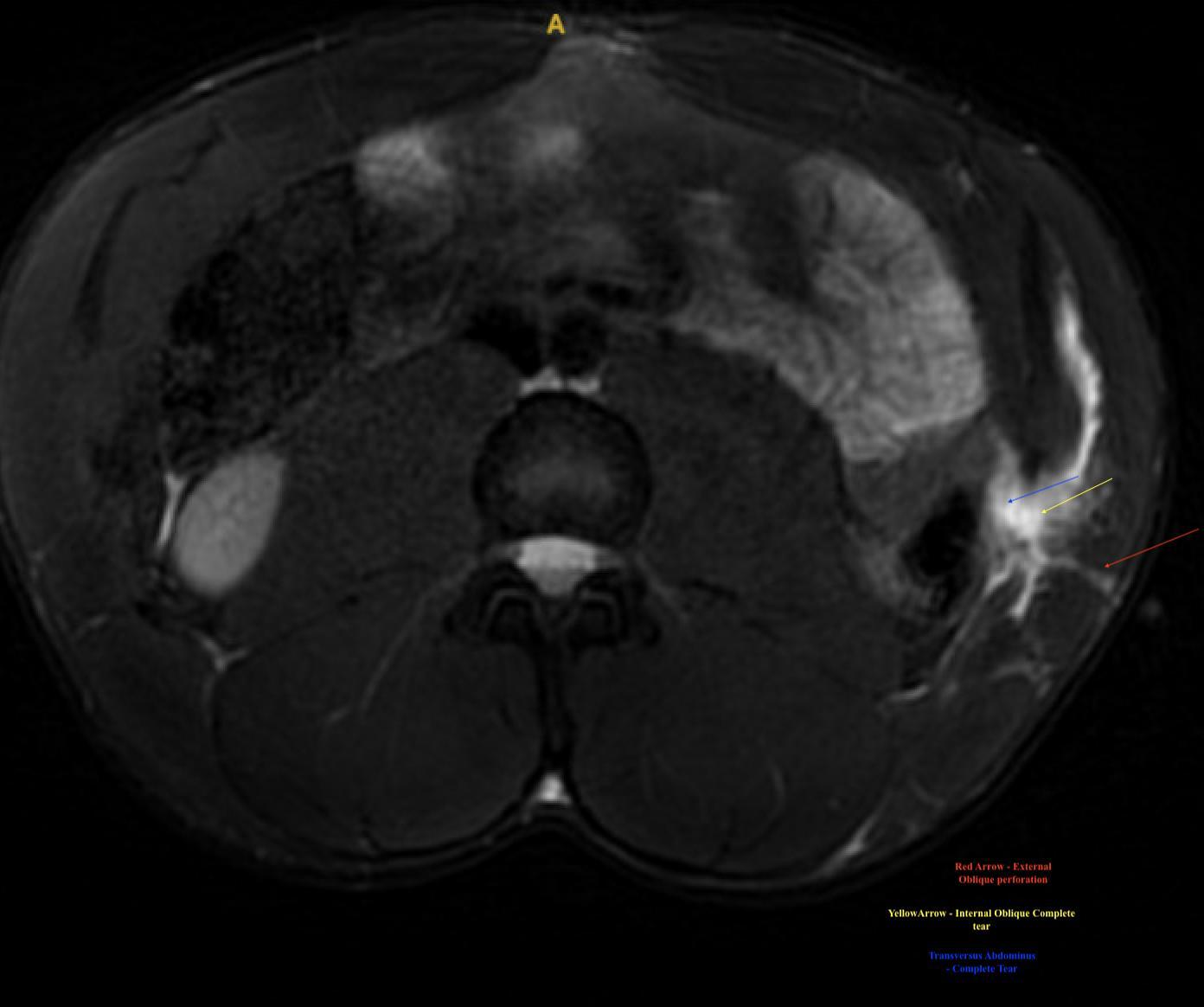
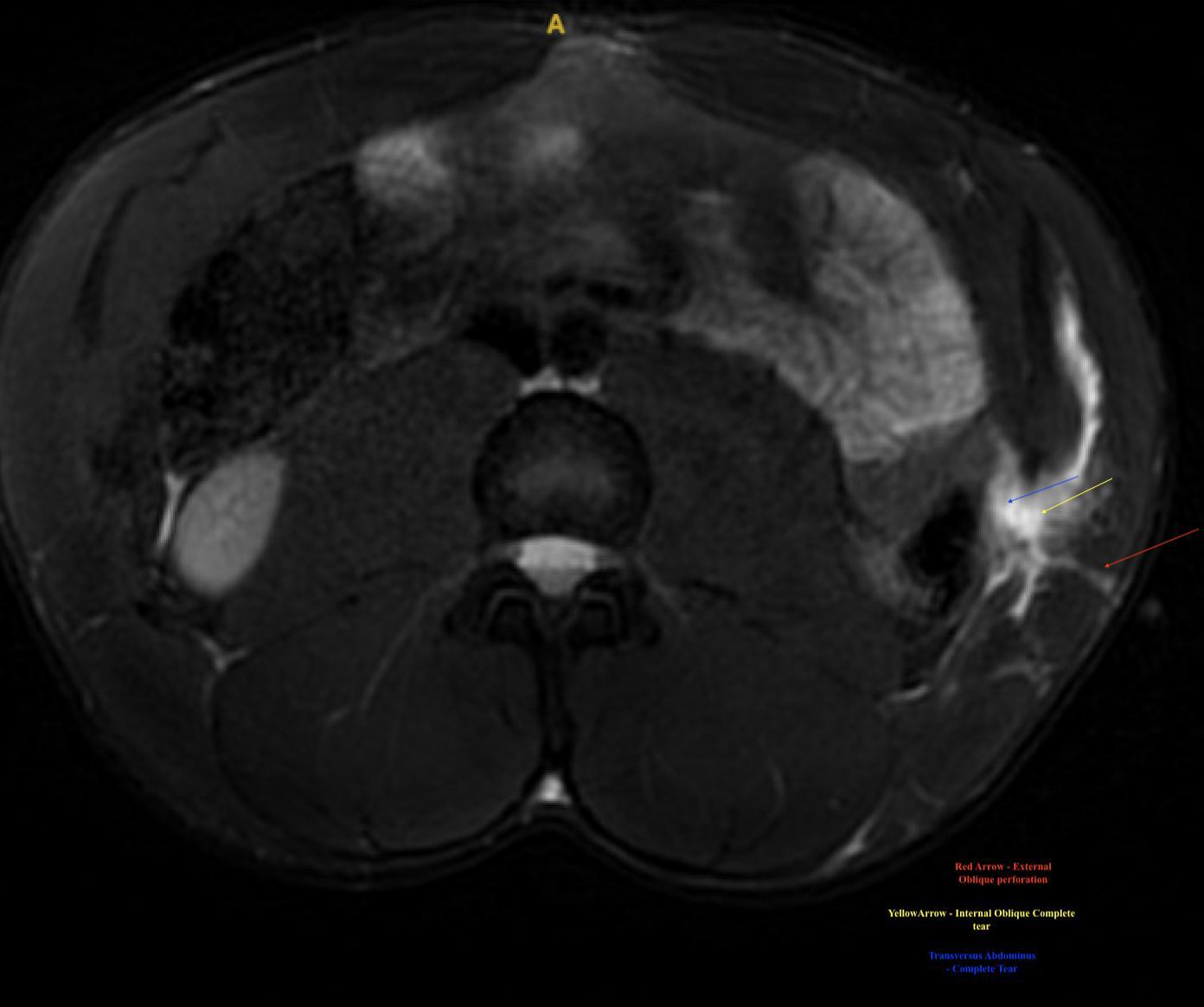
The injury occurred during the second step out of the starting blocks, when he experienced a sudden sharp pain in the left lower abdominal region. Despite the discomfort, he completed both his heat and semifinal races before electing to withdraw from the final due to escalating pain and functional limitation. At examination two days post-injury, he reported localized pain at rest that was exacerbated by trunk rotation and high-force activities. Hopping, skipping, and palpation at the abdominal insertions to the ribs reproduced his symptoms. Magnetic resonance imaging (MRI) on day three post injury confirmed a full-thickness tear of the left external oblique, internal oblique, and transversus abdominis muscles at the level of the 11th and 12th ribs. The dimensions of the tear were absent from the report (Figure 1).
A four-pronged approach to rehabilitation detailed below was implemented, progressing from isometric loading to sprint specific drills. Objective testing included force profiling using the 1080 Quantum system (1080 Motion AB, Lidingö, Sweden) and sprint testing using flying 30m sprints through Optojump (Optojump, Microgate, Bolzano, Italy). Pain levels and functional capacity guided load progression and return-to-play decisions.
The rehabilitation program was managed using the principles of early loading and incorporated both structured and individualized elements. The program had four components:
-
Optimal loading of the injured area to facilitate tissue healing/remodeling.
-
Early re-introduction to normal Strength & Conditioning (S&C) programming.
-
Profiling of the force producing capabilities of the injured muscles.
-
Graded return to sport specific activities.
The four components were addressed concurrently, with progression guided by predefined clinical and performance criteria. These included:
-
Pain maintained at <3/10 on a Numeric Rating Scale (0-10) (NRS) during and after exercise
-
No increase in symptoms the following day
-
Maintenance of movement quality as assessed visually by the physiotherapist
-
Ability to complete prescribed loading tasks without compensatory strategies
-
Progressive exposure to sprint-specific velocities without symptom exacerbation
These criteria were used in conjunction with athlete feedback and coach input to guide progression rather than fixed time-based milestones.
Pain-free isometrics were introduced at Day 2, S&C training resumed at Day 5, and high-speed running (via Optojump) and force-profiling via 1080 Quantum (1080Q) were initiated at Day 8. By Day 16, the athlete completed sprint starts symptom-free, was cleared for full training at Day 18, and returned to competition at Day 28, where a personal best of 10.08 s was recorded. A summary of the rehabilitation process is detailed in Table 1.
The daily rehabilitation program is detailed in Appendix 1. Initial isometric loading consisted of 3-4 exercises targeting anti-rotation and anti-side flexion, performed for 3-5 sets of 20-30 second holds at a perceived intensity of ~4-6/10. Load progression involved increasing hold duration, resistance, and introducing through range movements once pain free tolerance was established. Dynamic trunk exercises were introduced from Day 4, progressing from controlled tempo movements to higher velocity contractions. This was guided by the principles of early and optimal loading. Contemporary rehabilitation science emphasizes that early, controlled mechanical loading, rather than rest alone, facilitates tissue healing and functional remodeling. Glasgow et al11 describes optimal loading as the calibrated application of mechanical stress to healing tissue in a way that reflects both tissue capacity and the stage of healing. In muscle injuries specifically, early loading has been shown to support faster recovery and reduce re-injury risk, particularly in high-speed muscle groups like the hamstrings.12,13
The athlete’s normal S&C program was re-introduced under the supervision of the physiotherapist. Modifications were made to some of the exercise selection in terms of range, load, or rate of force development (RFD) based on observations and athlete feedback. These modifications included reduced range of motion where movement quality was compromised, lower external loads (~70-80% of typical training loads), and controlled exercise tempos to ensure symptoms remained <3/10 on the NRS during exercise. All modifications were removed by the 2nd week of re-introduction to S&C.
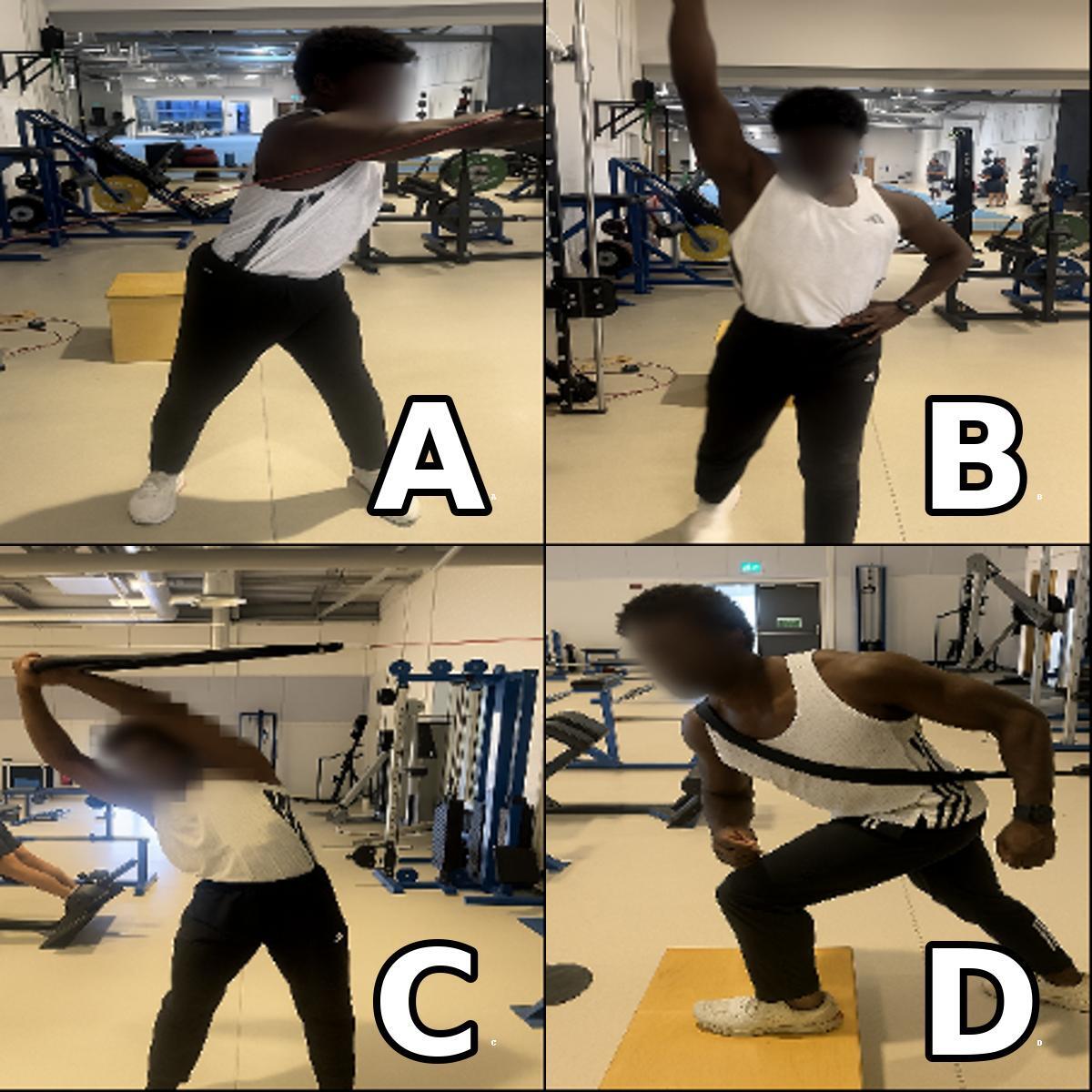
The measurement of peak force, measured in Newtons (N) using the 1080Q was carried out on Days 8, 10, and 16 prior to return to sport, and again on Days 31, 59 and 72 after return to sport. These data were used to monitor changes in trunk force-producing capacity and to inform progression of loading, particularly in determining readiness to advance from controlled trunk exercises to higher-force and sprint-specific tasks. The 1080Q is a motorized resistance device capable of applying programmable concentric and eccentric resistance while simultaneously recording force, velocity, and power at sampling frequencies at 333 Hz. Four exercises were selected for profiling as shown in Figure 2:
-
Rotational pull (RP) bilateral hands left and right adapted from the protocol described by Eriksrud et al.14: The rotational pull was performed bilaterally with the hands linked while the athlete executed controlled trunk rotation against the 1080Q’s transverse-plane resistance. This dynamic rotational action closely reflected the rapid anti-rotation demands of early sprint acceleration, making it one of the most sport-specific assessments in the protocol.
-
Vertical press (VP) left - and right-hand - adapted from the protocol described by Eriksrud et al.14: The vertical press involved performing a full-range, single-arm overhead pressing motion against constant resistance from the 1080Q while maintaining trunk alignment throughout the movement. This dynamic task challenged anti-side-flexion capacity and exposed asymmetries in trunk control under vertical loading.
-
Trunk side bend (SB) bilateral hands overhead - adapted from the protocol described by Eriksrud et al.14: The side bend exercise required the athlete to move through a controlled lateral flexion and return-to-neutral pattern while resisting the 1080Q’s lateral force. This through-range movement isolated frontal-plane trunk loading, offering insight into tolerance for forces that were less specific to sprinting demands.
-
Sling-based rotational pull (SR) (designed to replicate the mechanism of injury during the sprint start): The sling rotation exercise required full-range trunk rotation while the 1080Q applied resistance in the direction that mimicked the original injury mechanism. This drill dynamically loaded the anterior abdominal sling system and tested the athlete’s ability to transmit and control rotational force during high-speed, sprint-relevant movements.
_bilateral_hands_left_and_right_rotational_pull__b)_left-_and_right-hand_vertical_press_.jpeg)
Initial loading parameters followed Eriksrud’s pain-monitoring guidelines, maintaining a NRS ≤ 3/10 during effort. Progression to maximal force output was permitted when all exercises were consistently pain-free and symmetrical movement patterns were observed. Regression criteria included any increase in pain beyond 3/10, observable compensatory movement patters, or residual soreness lasting >24 hours. Force data from the 1080Q sessions are presented in Table 2. The athlete was advised to complete these “high force” sessions on alternate days. “Substitute” sessions were completed using a conventional cable machine when the athlete was unable to access the Sport Ireland Institute (SII) facilities.
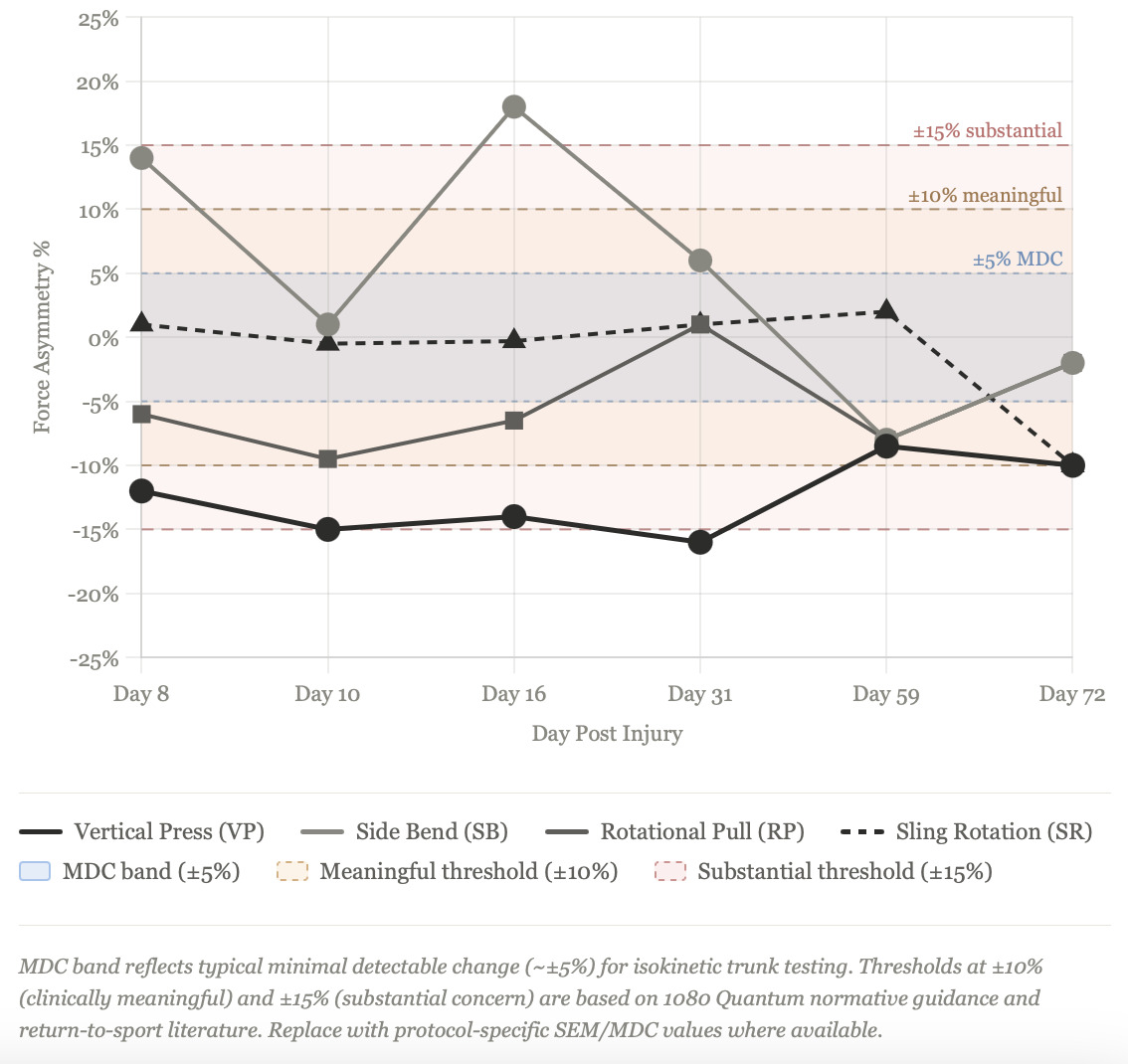
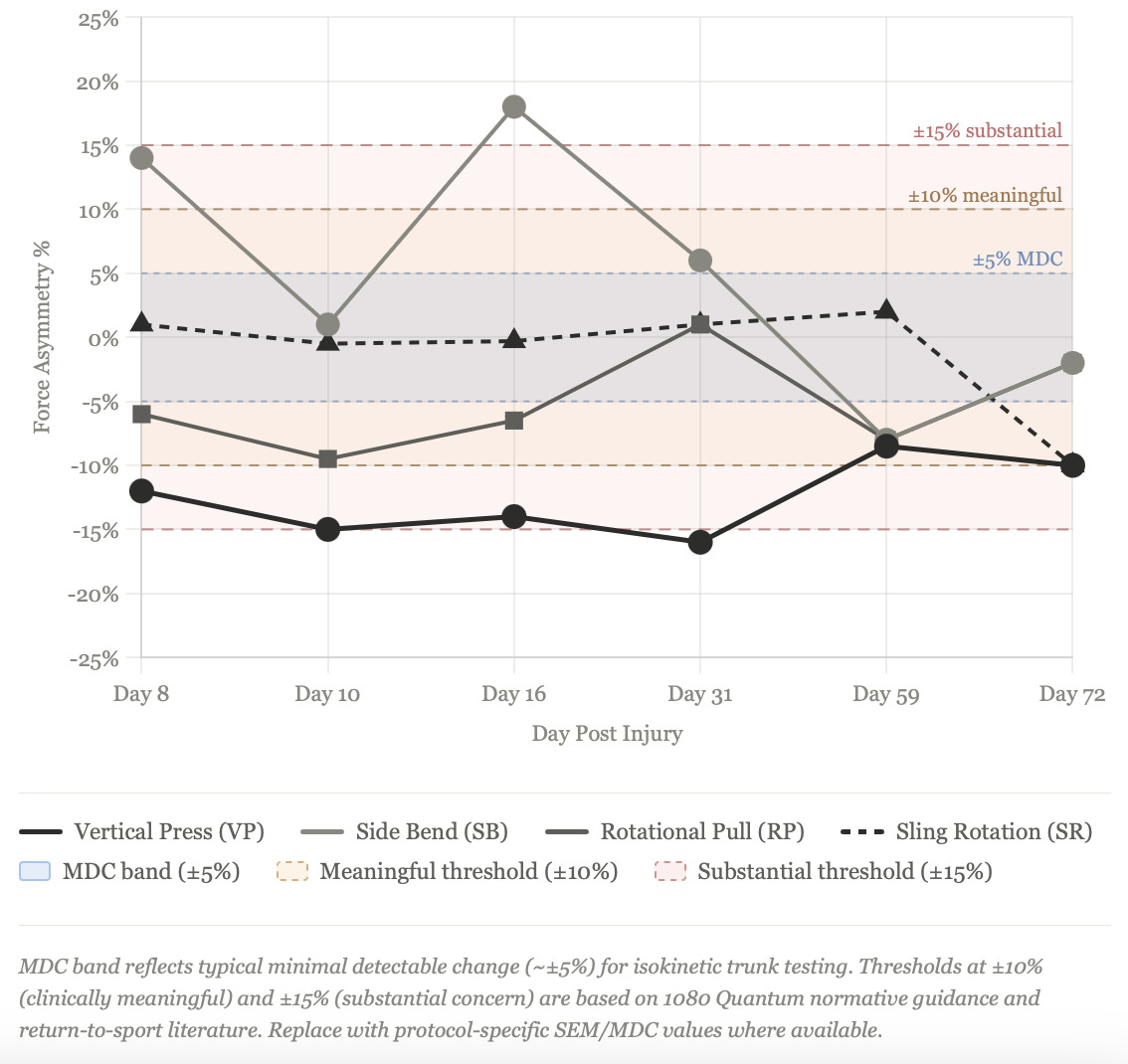
Progressive increases in both average and peak trunk forces were observed across all four 1080Q exercises between Day 8 and Day 72. In the absence of established normative thresholds for trunk asymmetry in this population, values were interpreted relative to within-athlete changes over time and the specific functional demands of each task. Asymmetry values within ±10% were considered acceptable where movement quality and symptom response were not compromised. The greatest residual asymmetries were evident in the vertical press (VP) and side bend (SB) tasks, whereas the rotational pull (RP) and sling rotation (SR) exercises, considered more specific to sprint acceleration, demonstrated near-symmetrical force outputs by Day 16 and remained within ±3% thereafter (Figure 3). These task-specific patterns were used to inform clinical interpretation, with greater weighting given to symmetry in sprint-relevant tasks when considering progression to high-speed running and return to block accelerations.
Assessment of the athlete’s sport-specific function was conducted on Days 5, 8, 11, 13, and 16 to evaluate his ability to perform progressively more demanding sprint-related tasks. These progressed from low-load technical drills to high-speed running and, finally, block accelerations. A summary of these progressions is presented below (Appendices 2 & 3 provide full details):
-
Day 5: Return to supervised S&C with minor exercise modifications. Sport-specific drills (A/B/C skips, high knees up to ~80%) were performed pain-free.
-
Day 8: High-speed running reintroduced (60–85% effort; max 9.3 m/s). This progression was permitted following successful completion of lower-load technical drills and trunk loading without symptom provocation, and in accordance with predefined pain and movement quality criteria; trunk force profiling initiated with the 1080Q; trunk exercises progressed to dynamic control.
-
Day 11: Flying 30 m sprints progressed to 95% effort (max 10.6 m/s), completed pain-free. This progression was permitted following successful tolerance of submaximal sprinting (≤85% effort) and the absence of delayed symptoms.
-
Day 13: Longer sprint repetitions introduced to increase exposure to sustained high-force efforts.
-
Day 16: Sprint starts from blocks completed symptom-free; final 1080Q session performed.
-
Day 18: Cleared for full training participation.
-
Day 28: Returned to competition, where a personal best of 10.08 s in the 100 m was recorded.
High-speed running was monitored using Optojump (Microgate, Bolzano, Italy), with velocity and step kinematics such as step length, contact times and flight times recorded. Perceived effort was tracked during the initial exposures to high-speed running and compared with historical performance data to contextualize recovery progression. Progressive increases in velocity were observed, with perceived effort closely aligned to pre-injury maximal velocity values (Table 3). Running intensity progression was based on a combination of objective and subjective criteria, including:
-
Ability to complete current intensity without pain or movement restriction
-
Consistent step kinematics relative to historical pre-injury values ie. Symmetry levels for step length, contact times and flight times <5%
-
Athlete-reported confidence in sprinting tasks
-
Progression to blocks acceleration was permitted following achievement of >90-95% of pre-injury maximal velocity without symptoms
In practice, objective data were used to inform three aspects of rehabilitation progression: (1) advancement of trunk loading intensity based on force output trends and pain response, (2) progression of running intensity based on velocity, movement quality and symptom tolerance, (3) return to acceleration from blocks decision-making based on the restoration of acceleration specific movement patterns. These data were considered within the broader clinical context and were not used as isolated decision-making thresholds.
OUTCOME
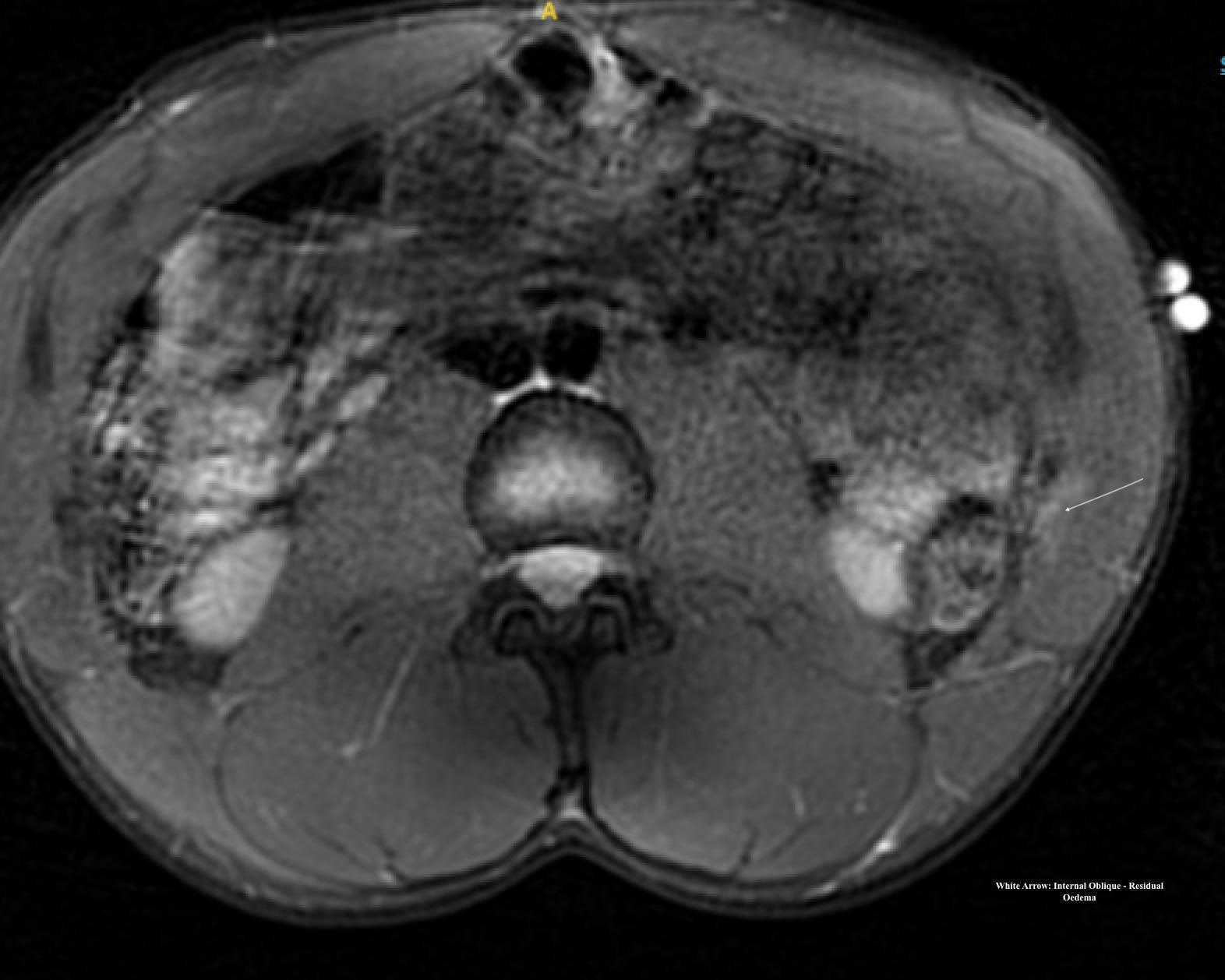
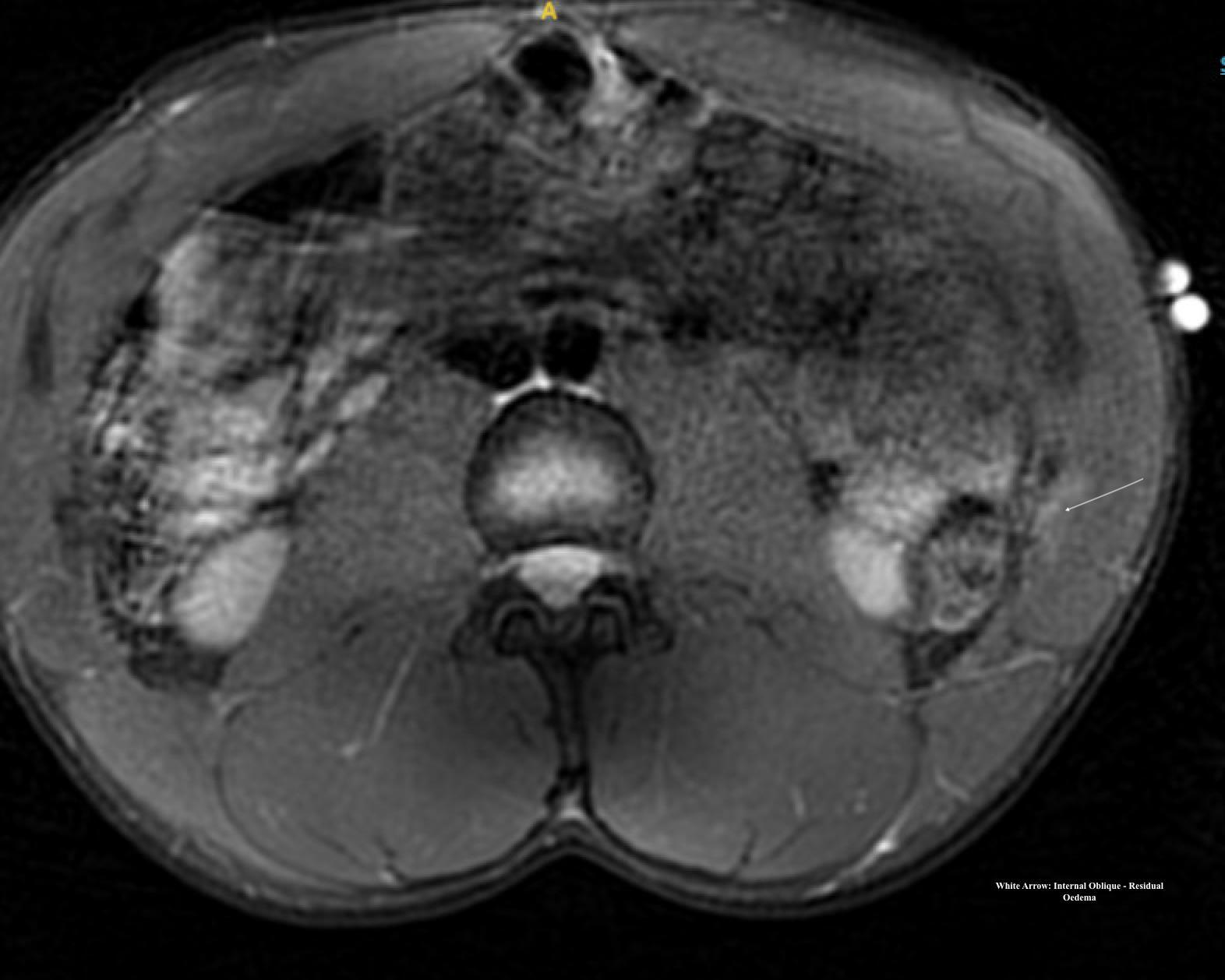
The athlete ended their season with their race on Day 28 and has since returned to training with no adverse effects after the customary “off season” break. A repeat MRI performed using the same protocol and reported on by the same radiologist at Day 74 Post Injury revealed almost full resolution of the 3 muscle tears (Figure 4).
DISCUSSION
This report describes a return to elite sprinting over a relatively short timeframe following a full thickness abdominal wall tear, through the external oblique, internal oblique, and transversus abdominis. The expected prognosis for abdominal wall injuries with MRI confirmed muscle tear is typically prolonged. In elite cricket players, Hickey et al15 found that athletes with MRI confirmed abdominal wall tears were eight times more likely to require at least six weeks before returning to play compared to those without a visible tear. Despite a similar imaging presentation, the current athlete was returned to full training and competition at three weeks post injury.
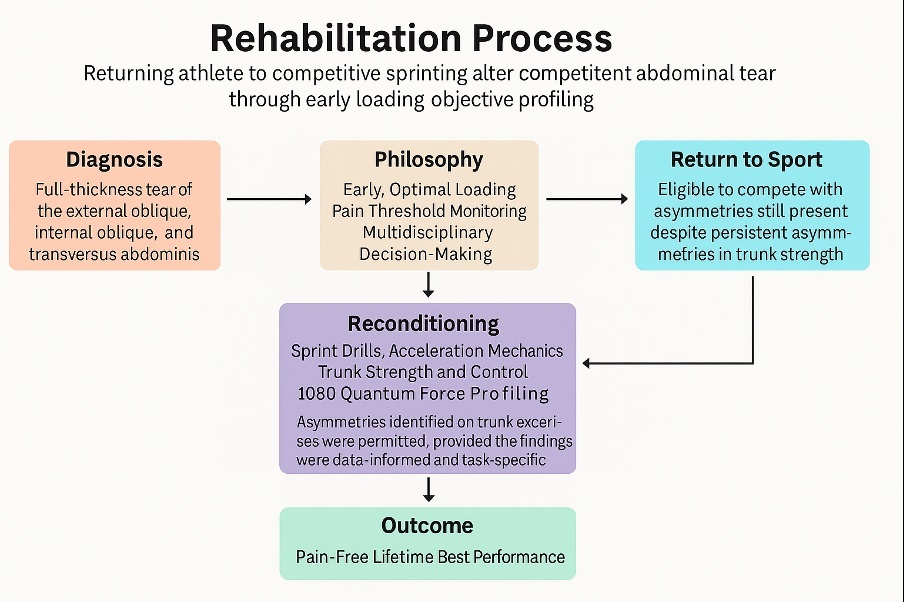
This rehabilitation process (Figure 5) reflects the clinical application of early and optimal loading principles within a high-performance setting. Informed by the framework proposed by Glasgow et al.,11 progression was guided by the athlete’s functional capacity, pain threshold, and performance metrics, rather than a fixed phase-based timeline. Emphasis was placed on controlled mechanical loading to facilitate tissue repair, neuromuscular control, and performance reintegration. The athlete-specific, data-informed approach allowed for continued progression despite persistent asymmetries and may provide an example of how task-specific rehabilitation can be implemented in an elite sport context.
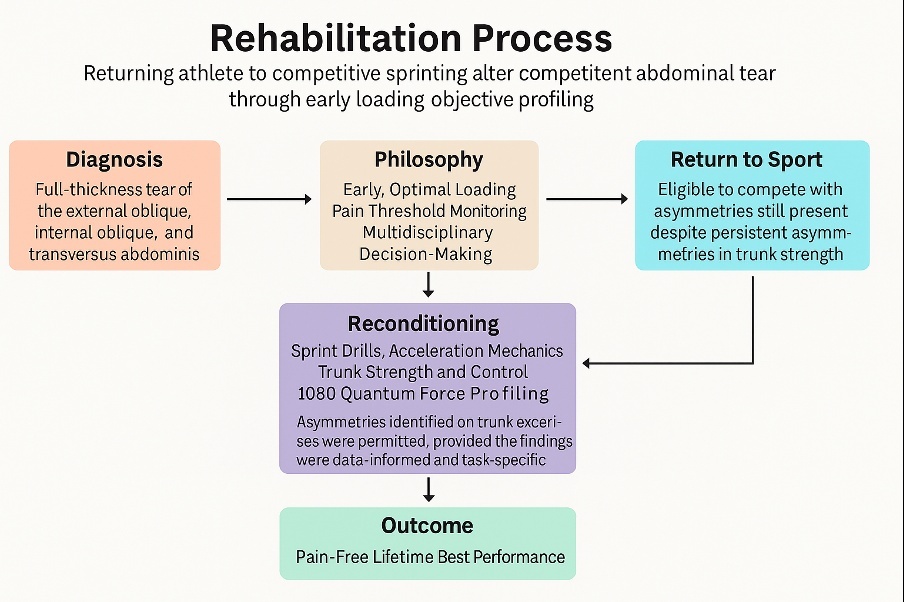
In recent years, rehabilitation in elite sport has evolved from time-based recovery models to criteria-based progressions.16 However, in this case, a data-informed rather than a data-driven approach was employed, leveraging objective profiling to guide, but not dictate, clinical decisions.17 This model reflects the increasing integration of data from technologies such as the 1080Q, while still allowing clinical reasoning and athlete feedback to remain central to decision-making. Early loading and progressive exposure to sprint-specific stress were prioritized, with progression to high-speed and near-maximal sprinting guided by predefined safety criteria including symptom response, movement quality, and objective performance thresholds. These criteria were used to support clinical decision-making, rather than arbitrary timelines in advancing sprint intensity.
Traditional RTP frameworks often emphasize restoration of bilateral strength or force symmetry as key readiness indicators. However, the interpretation of asymmetry in this case was based on task-specific relevance and within-athlete trends, rather than comparison to external normative thresholds, which are not well established for trunk-specific force profiling in elite sprint athletes. Growing evidence suggests that perfect symmetry may not always be achieved prior to RTP, although its role in determining readiness remains unclear.13,17 In this case, the athlete demonstrated measurable asymmetry in two out of four trunk force outputs at the time of return but recorded a pain-free personal best performance (10.08 s) within four weeks of injury.
This outcome may support consideration of a more nuanced interpretation of performance readiness. Maestroni et al.17 caution that rigid adherence to symmetry or isolated strength criteria may not translate into meaningful reductions in injury risk or improvements in performance, emphasizing instead the importance of functional capacity and context-specific readiness. Consequently, this case may prompt reconsideration of aspects of conventional criteria-based RTP models and highlights the value of integrated, athlete-centered decision-making. While the presence of asymmetry challenged conventional return-to-play criteria, further examination of the 1080Q data highlighted that the type and location of these asymmetries were equally important. Understanding which tasks showed residual deficits provided valuable insight into their sport-specific relevance and true functional impact.
The selection of four 1080Q exercises was intended to capture the multidimensional force-producing capabilities of the trunk while emphasizing relevance to sprint-specific function. Sprint acceleration requires high levels of anti-rotational control and contralateral trunk stiffness to counteract the torques generated by the lower limbs during the early steps out of the blocks.7,8 Accordingly, the RP and SR exercises most closely replicated the functional loading patterns of sprinting, particularly the rapid rotational control required during block exit.
Pre-return-to-sport 1080Q testing revealed residual deficits in the VP and SB exercises, tasks that primarily emphasize general vertical and lateral trunk stability and are less specific to the high demands of sprint acceleration. These general movements are more representative of trunk function in rotational or overhead sports (e.g. tennis or cricket) and less critical to the primary force vector requirements of sprinting. In contrast the RP and SR exercises, which directly reflect the sprint-acceleration-specific mechanism of injury and require high levels of anti-rotational control, demonstrated near baseline, symmetrical force output.8 This distinct pattern may suggest that complete resolution of generalized trunk capacity was not required for successful RTP in this case as the primary sport-specific kinetic demands may have been successfully recovered.17
A further distinguishing observation in the present case study was that the VP deficit was noted on the ipsilateral side, directly contrasting with the contralateral weakness reported by Eriksrud et al.14 in an elite tennis player. This discrepancy may reflect individual differences in trunk loading and motor control strategies rather than fundamental differences in sports mechanics alone. Athletes commonly adopt unique neuromuscular coordination patterns to achieve stability and force transfer, especially in the presence of or following injury.18 In this context, the athlete likely developed a subconscious protective strategy, resulting in redistributed loading away from the previously injured region and an altered muscle recruitment pattern during the single arm vertical press.18 Such patterns underscore that asymmetry profiles may reflect adaptive movement strategies rather than residual impairment, reinforcing the critical need to interpret profiling data within the context of each athlete’s unique mechanics and rehabilitation history.17
Taken together, these observations highlight the potential importance of interpreting strength data within the context of the sport and individual-specific movement strategies, while acknowledging that the relationship between asymmetry and functional performance remains unclear. Functional recovery should be defined by readiness to perform the key movement patterns of the sport, not by absolute restoration across all test positions. This perspective aligns with contemporary rehabilitation frameworks advocating individualized, task-specific assessment to bridge the gap between clinical metrics and performance readiness.1,17 Throughout rehabilitation, decisions regarding load progression and return to competition were made collaboratively between the athlete, physiotherapist, and coach. This Shared Decision-Making (SDM) model balanced the athlete’s performance objectives with appropriate risk management, consistent with recommendations for high performance settings.3 Given the athlete’s competition timeline and the rarity of this injury in sprinting, an accelerated, but evidence-informed RTP approach was adopted.1 While the timeline could be viewed as aggressive, each progression was rigidly grounded in performance-based functional criteria, sustained absence of pain, and the athlete’s psychological readiness and confidence.16 The successful outcome illustrates that when contextual risk is understood and collaboratively managed, early reintegration into high-speed training can be achieved safely. In high stake environments, accelerated timelines may reflect calculated risk tolerance shared across the multi-disciplinary team. This case provides an example of how interdisciplinary communication, athlete empowerment and functional criteria may contribute to effective rehabilitation and successful return to performance.
To complement the clinical and performance data, the following summarizes the athlete’s reflections on his rehabilitation experience (the athlete’s original reflections can be found in Appendix 4). From the athlete’s perspective, the injury experience was initially marked by disbelief and denial. Despite recognizing the severity of the pain during the second step out of the starting blocks, he continued to compete through his heat and semifinal before accepting that withdrawal from the national championship’s final was necessary. The immediate emotional impact was profound, as the event had been pivotal in his attempt to qualify for the World Championships. Following medical assessment and MRI confirmation of a full-thickness tear involving three abdominal wall muscles, he described the diagnosis as “the worst-case scenario come true.” Early support from his family, coach, and performance staff at the Sport Ireland Institute was instrumental in reorienting his focus toward recovery.
The athlete reflected that a key feature of his rehabilitation was shifting away from a diagnosis-based or time-driven plan toward one guided by pain, function, and performance. He appreciated that rehabilitation was structured around what he could do rather than what was prohibited, noting that “each session showed me I could do more than I thought.” This approach provided him with daily structure and a renewed sense of control at a time when he feared losing an entire competitive season.
As the program progressed, the athlete’s confidence grew in parallel with objective improvements in testing. He particularly valued the regular 1080 Quantum sessions, describing them as a tangible way to “see progress in real time.” He noted that although small strength differences persisted, he felt physically and psychologically prepared to compete, emphasizing that “the feedback gave me confidence I was ready.” This sentiment reinforces the data-informed, not data-driven philosophy underpinning the case, where objective measures supported but did not dictate readiness decisions.
The decision to return to competition was made collaboratively among the athlete, his coach, and the rehabilitation team. He acknowledged the process as “aggressive but justified,” recognizing the careful balance between risk and performance opportunity. His first race back, in which he recorded a lifetime best performance - was described as “a storybook ending,” transforming the injury from a setback into a source of personal and professional growth. His reflections underscore the value of shared decision-making, individualized progression, and psychological readiness as integral components of successful return to performance.
This case report provides preliminary observations relevant to early trunk loading in speed athletes, specifically noting:
-
Early, optimal loading may be safely applied to complex trunk injuries when guided by pain and movement quality.
-
Sport-specific rehabilitation may benefit from reflecting the mechanical demands of the discipline - in sprinting and specifically blocks acceleration, emphasizing anti-rotation and stiffness control.
-
Objective monitoring tools may help inform, but not replace, clinical reasoning and collaborative decision-making.
-
Functional performance, not absolute symmetry, may be a more relevant RTP criterion in elite populations.
Future work should explore longitudinal tracking of trunk loading asymmetries, their relationship to sprint mechanics, and whether such findings persist or normalize with ongoing training.
This report represents a single case in a highly controlled performance environment, limiting generalizability to broader populations. Quantitative data such as muscle architecture or EMG activation were not collected, and 1080 Quantum data were limited to selected exercises. While efforts have been made to outline key components of the rehabilitation process, some aspects of exercise prescription and progression were individualized and may not be fully reproducible, which is an inherent limitation of applied case report methodology. The athlete’s motivation and elite conditioning may have accelerated recovery relative to typical cases. Nonetheless, the insights derived from this case provide valuable guidance for practitioners managing high-grade trunk injuries in speed-based sports.
Conclusions
This case report describes the application of an early, optimally loaded, and data-informed rehabilitation model in the management of a high-grade abdominal wall injury in an elite sprinter. The integration of objective profiling and graded exposure to sprint-specific loading was associated with a safe, and functionally relevant return to performance over a relatively short timeframe. A personal best was recorded at first competition post injury. Persistent asymmetries in less sport-specific trunk tasks were observed alongside successful return to performance, highlighting the potential importance of interpreting objective data within the context of sport- and individual-specific function rather than rigid symmetry criteria. This case supports the value of shared decision-making, continuous monitoring, and individualized progression in bridging the gap between tissue healing, training readiness, and elite performance outcomes.
Corresponding Author:
Paul Carragher
Sport Ireland Institute, Sport Ireland Campus, Snugborough Road, Blanchardstown, Dublin 15, D15 PNON.
Phone: +35318608800
Email: paulcarragher@instituteofsport.ie
Conflicts of Interest
The authors report no conflicts of interest.