Introduction
Kinesiology tape is a common therapeutic intervention which is typically used to treat various MSK conditions. Typically, kinesiology tape is used to treat pain and improve daily function. However, the clinical effectiveness of kinesiology tape is unclear secondary to ambiguous results and unclear mechanisms of action across the literature.1–8 Proposed mechanisms for how kinesiology tape influences pain perception include central inhibition of nociceptive signaling in low-threshold afferent fibers,9 continuous sensory feedback that enhances proprioception in injuries involving instability, such as in the ankle,10,11 and improvements in cutaneous circulation and lymphatic flow resulting from the lifting of the skin, which may also reduce localized mechanical pressure.12 Because multiple factors may contribute, the precise mechanisms underlying the effectiveness of kinesiology tape remain unclear.
One specific area of interest as it relates to the mechanisms of influence of kinesiology tape is the effect on cutaneous blood flow. Several studies have examined the effect of kinesiology tape on cutaneous blood flow by measuring red cell flux over the taped area. Red cell flux, which is used to estimate cutaneous blood flow, has been selected as a desired effect of kinesiology tape secondary to the healing properties associated with increased blood flow to a localized area of tissue damage.13 Blood flow serves a vital role in the delivery of cytokines and nutrients to the site of repair,14 while also functioning to flush harmful substances or dead cellular structures away from the site. Cutaneous blood flow also serves as a form of thermoregulation, which can potentially induce therapeutic effects if the temperature and rate of flow are increased enough.
While several studies have demonstrated no significant improvement in blood flow using kinesiology tape over placebo,9,15,16 other studies have demonstrated that blood flow increases in the taped areas.17 One potential reason for the discrepancies in the findings could be the type of kinesiology tape that was being used. Thrive “Far Infrared” (TruePower, Natick, MA) kinesiology tape is a thin, elastic tape with an acrylic adhesive that is suggested for use in supporting muscles and joints by providing targeted pain relief. The purported mechanism through which the "Far Infrared’’ fibers work is that of reflecting the body’s infrared radiation back toward the skin surface over which it is applied. This hypothesized increase in local skin temperature is suggested to increase vascular flow.18
Therefore, the purpose of this study was to examine the changes in skin temperature and cutaneous blood flow of the erector spinae with the application of Thrive “Far Infrared” kinesiology tape. The hypothesis was that the application of kinesiology tape would increase skin temperature as well as blood flow.
Materials and Methods
Participants
Participants were recruited from the Doctor of Physical Therapy program as well as undergraduates at The University of Tennessee at Chattanooga by posted flyers and verbal advertisements. Inclusion criteria included: (i) BMI range of 18.5-30; (ii) 18 years of age or older. Exclusion criteria included: (i) known skin sensitivity (e.g. allergy to adhesive tapes); (ii) scars in the areas to be measured; (iii) inability to maintain prone positioning for a 40-minute time frame. Participants gave verbal and written consent to participate in this study and the recruitment period lasted from February 1, 2025 to May 9, 2025. This study was approved by the Institutional Review Board at The University of Tennessee at Chattanooga (IRB # 25-013).
Materials
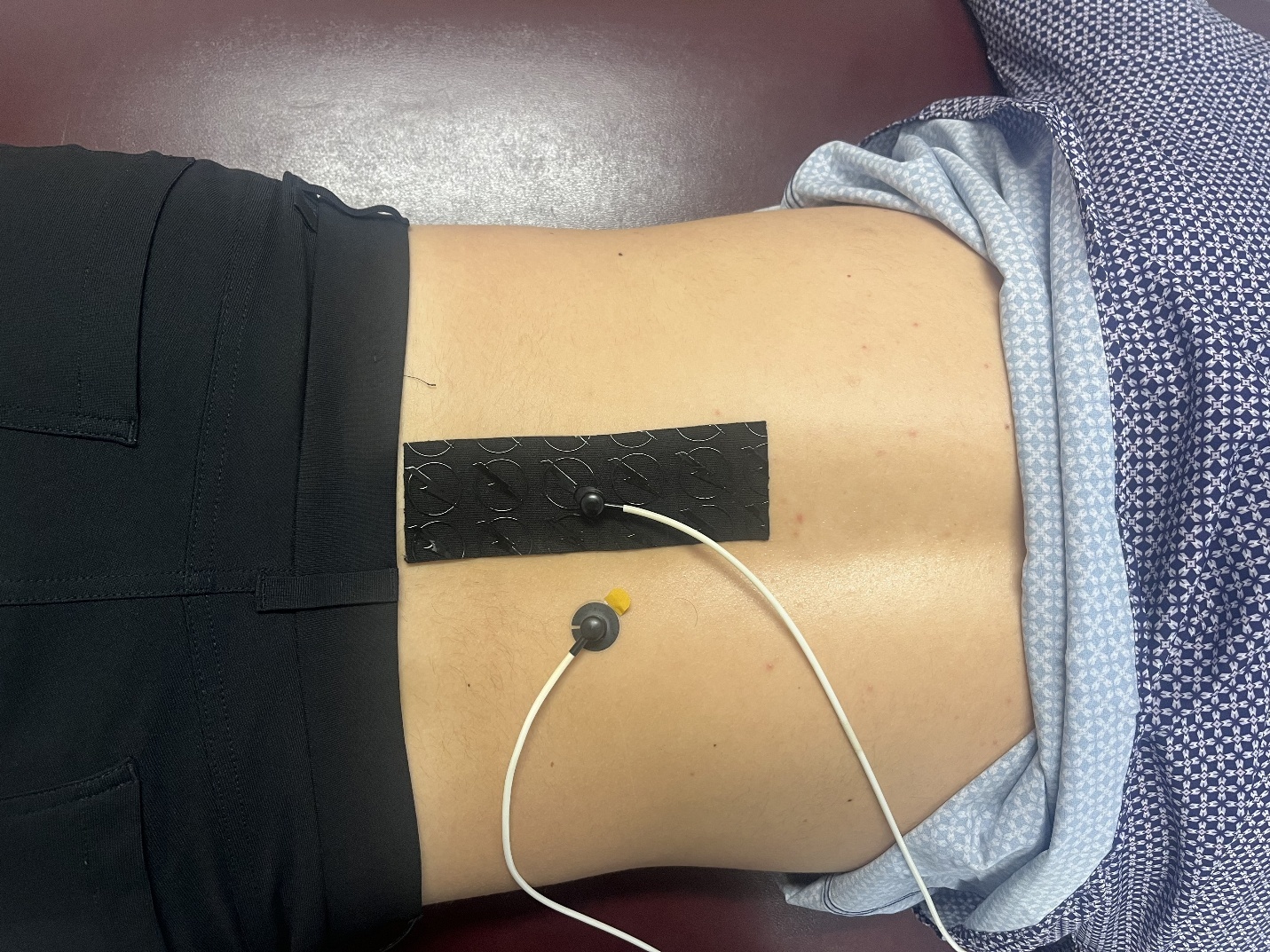
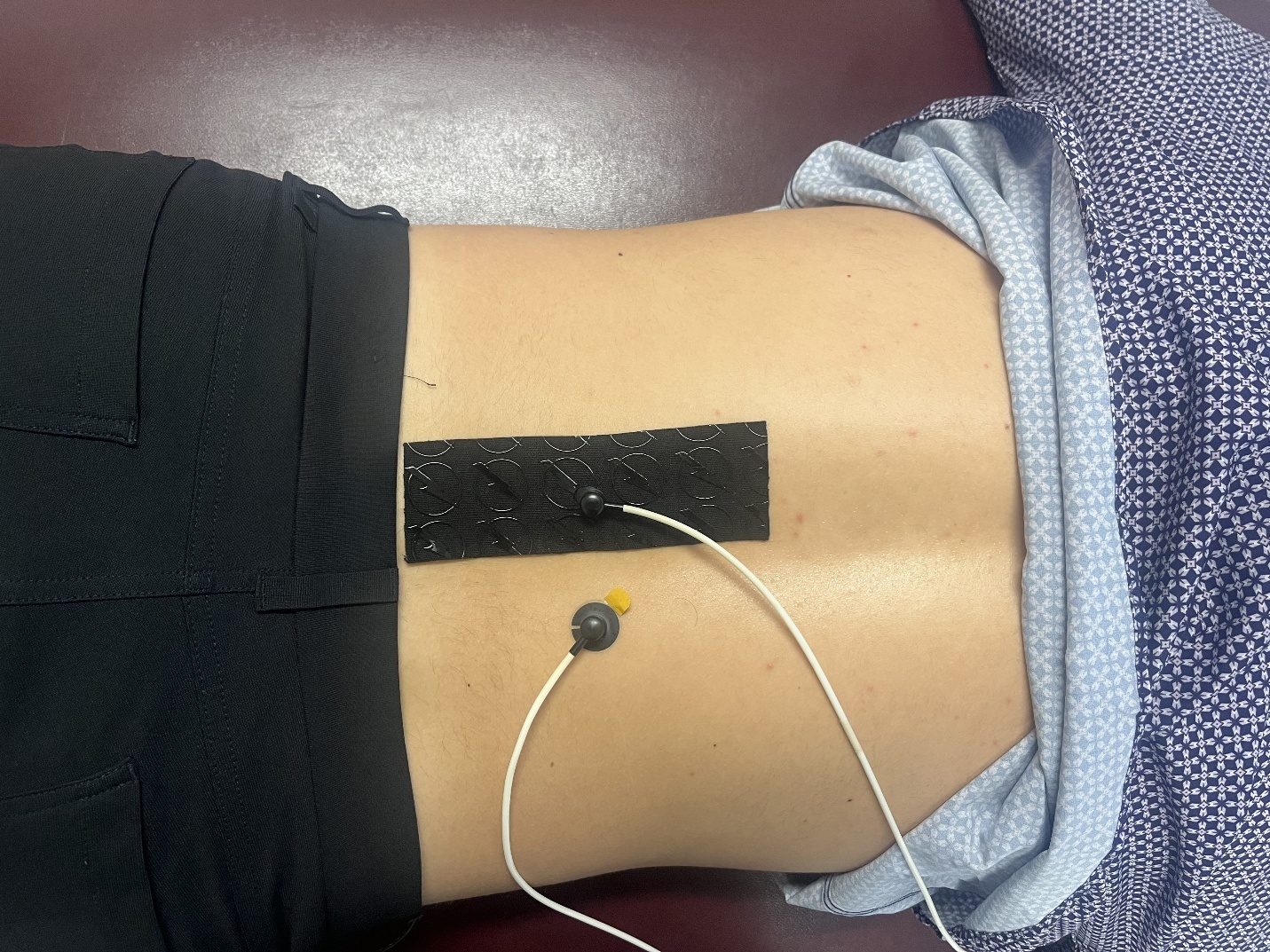
Prior to data collection, one strip of 5 11/16-inch kinesiology tape (Thrive tape, TruePower, Natick, MA) was prepared for each subject using the line markings on the back of the tape. A 10 mm diameter hole was cut in the approximated middle of the tape using an Owden® hole punch to allow for the infrared sensor of the Laser Doppler flowmeter probes (moorVMS-LDF, Moor Instruments, Wilmington Delaware) to be in contact with the skin to avoid signal contamination from the adhesive fibers. Laterality for the kinesiology tape placement was randomly assigned based on a computerized random number generator. Investigators were not blinded due to the visibility of tape application during data collection, which may have introduced measurement bias.
Procedures
Data collection was completed individually with each participant. Upon arriving for data collection, participants demographic information was recorded as participants acclimated to room temperature for 5 minutes. Participants were provided with an intake form and informed consent document, ensuring their voluntary participation in the study. Prior to enrollment in the study, participants were instructed to abstain from caffeine and strenuous physical activity for six hours. The room where data collection was performed was held between 68°F and 72°F.
After completion of the intake form and informed consent, participants were then positioned prone on a treatment table with their arms resting comfortably at their sides, and the back was exposed from LI to the iliac crest. Laser Doppler flowmeter probes (moorVMS-LDF, Moor Instruments, Wilmington, DE) were placed bilaterally on the participants’ multifidus muscles at the spinal level of L4 in the bulk of the multifidus belly equidistant on the left and right sides. The L4-L5 segment was identified by palpating the superior border of bilateral iliac crests.(19) This method has demonstrated moderate to good reliability (κ = 0.81; 95% confidence interval, 0.79-0.83) in identifying the L4 spinous process.19 Participants were asked to be still for the remainder of data collection while red cell flux (RCF) and skin temperature measurements were obtained for 5 minutes to establish baseline blood flow. Combining this time with 10 minutes of rest during the informed consent and participation explanation was utilized to stabilize blood perfusion and reach a steady resting state.9 After baseline values were obtained, kinesiology tape that was prepared prior to participant arrival with the hole punch was applied superior to inferior on one side with no tension, based on the established laterality and the infrared sensor was placed in the cut-out of the kinesiology tape (Figure 1). The contralateral side with no tape served as the comparator. The contralateral design was selected to reduce between-subject variability in skin temperature and cutaneous perfusion, allowing each participant to serve as their own comparator and improving sensitivity to localized side-to-side differences.
The kinesiology tape strip was kept in place for 30 minutes of continuous measurement. Upon tape removal, an additional 5 minutes of continuous measurements were obtained to assess changes in red cell flux following removal. Red cell flux and tissue temperature were recorded every second throughout the study and exported to Microsoft Excel (Microsoft Corporation. Microsoft Excel, Version 16.0; 2021) and subsequently to SPSS (IBM Corp. IBM SPSS Statistics for Windows, Version 29.0. Armonk, NY; 2023) for analysis.
Statistical analysis
After the first five participants, an interim sample size re-estimation was performed to refine the estimated sample size needed for this study.20 The calculation for the sample size was based on a power level of 0.95, a p-value of p = 0.05, and an effect size derived from the change in flux of d=0.864. The power analysis resulted in an n of 24 subjects. Because estimates derived from a small early subsample may be unstable, an additional sensitivity analysis was conducted in G*Power for a repeated-measures ANOVA (within factors) using the completed study design (α = .05, power = .95, total n = 25, 8 measurements, correlation among repeated measures = .50). The minimum detectable effect corresponded to approximately partial η2 = .05. Temperature and flux data were collected at a frequency of 1 Hz, yielding 300 data points for each five-minute period and a total of 2,400 data points across the 40-minute session. The initial five-minute interval served as a no-tape baseline, followed by 30 minutes with tape applied. Data collection concluded with a final five-minute no-tape period.
Data analysis
Prior to analysis, isolated null values were replaced with the mean of the preceding and subsequent data points. This step was performed only for sporadic missing samples. Of the 2,400 data points per subject, an average of fifteen values were replaced (0.625% of all data points). To establish a stable baseline, the first four minutes of the five-minute baseline period were excluded, and the final minute was averaged to define the baseline reference value. This approach was chosen to allow participants to come to a stable baseline for a consistent comparison of both sides. Due to the position dependent variability of the flux, the values obtained were normalized to baseline to account for position dependent variability in the measure. During the taping phase, the 30 minutes were divided into six consecutive five-minute blocks, with the readings within each block averaged. After tape removal, the final five-minute period was averaged to evaluate immediate post-removal effects.
Normal distribution for the temperature and flux data was assessed with a Shapiro-Wilk test. For those data which were normally distributed, a two-way mixed repeated-measures analysis of variance was performed with a between-subject variable of tape (“tape” vs “no tape”) and a within-subject variable of time (“baseline”, “interval 1”, “interval 2”, “interval 3”, “interval 4”, “interval 5”, and “post-removal”). Where there were significant main effects or interactions a post-hoc analysis was performed using Least Squared Difference to account for multiple comparisons. Sphericity was assessed using Mauchly’s test, and Greenhouse-Geisser corrections were applied to the degrees of freedom where violations occurred. Effect sizes were determined with partial η2 with 0.01, 0.06, and 0.14 being considered small, medium, and large effect sizes respectively.
Results
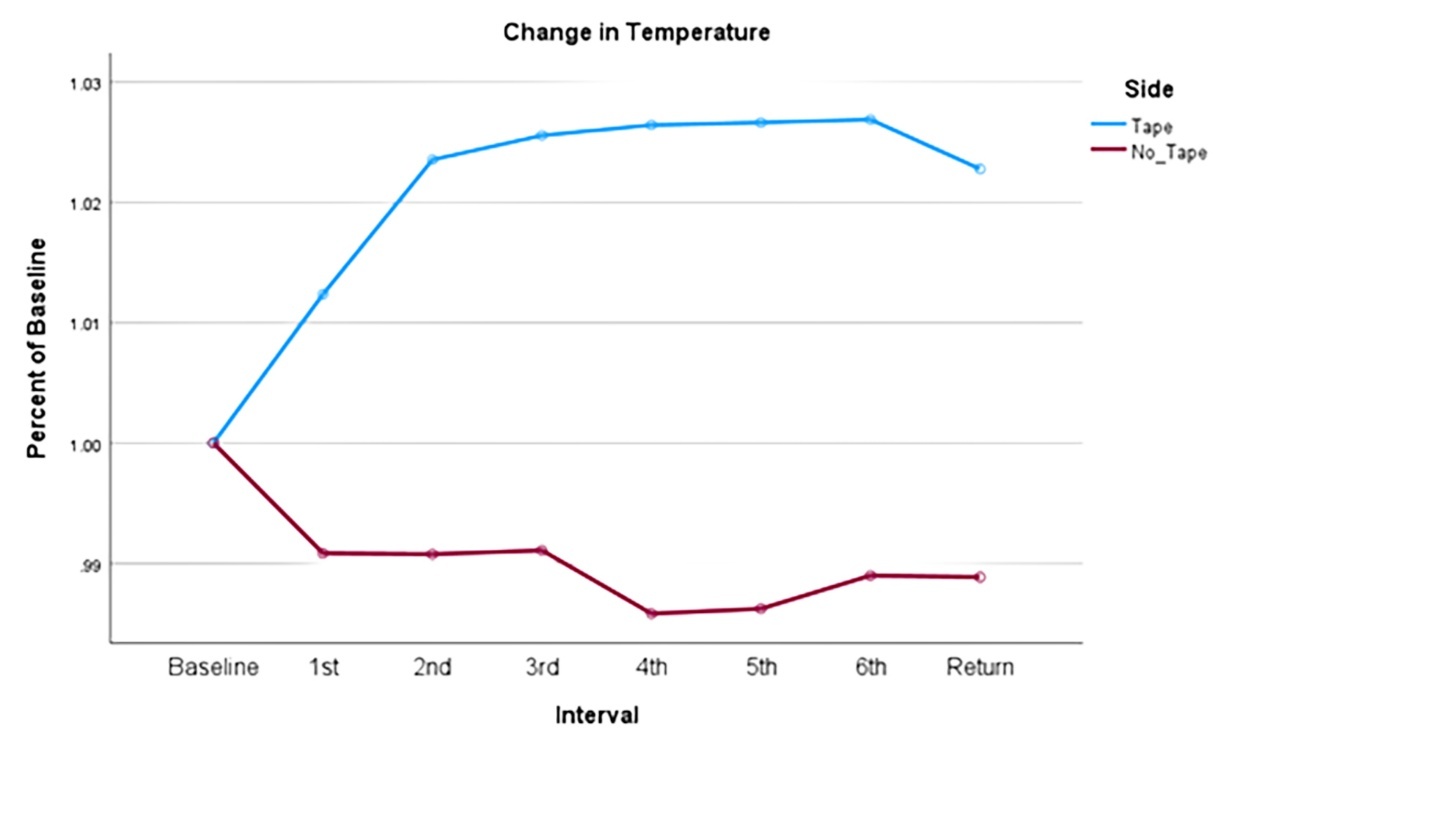
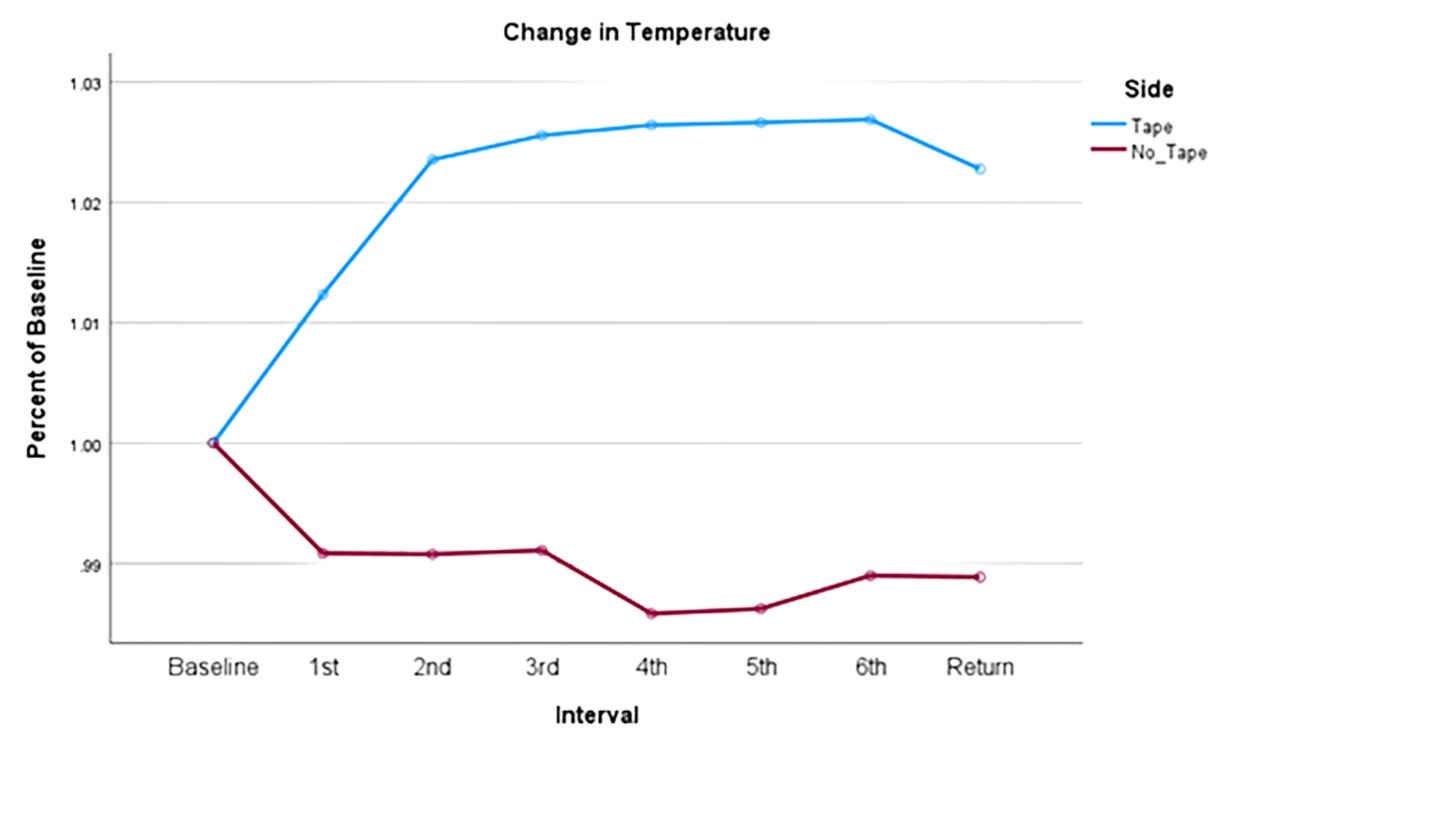
A total of 25 individuals (15 Female) were recruited to participate in this study with all participants completing the study. The mean age was 23.84 years (±4.43) with a mean BMI of 24.30 (±4.70). There were no reports of any adverse events. For the dependent variable temperature, the assumption of sphericity was violated for the two-way interaction, χ2(27) = 435.5, p = <0.001; therefore, Greenhouse-Geisser corrections were used to interpret the p-values. There was a statistically significant interaction between time and side on temperature, F~(1.92, 92.24)~ = 14.463, P<0.001, partial η2 = .232. Pairwise comparison using Bonferroni correction for multiple comparisons revealed that the tape side demonstrated statistically significant (p<0.001) greater temperatures as a percentage of baseline than the control side for each of the follow-up time periods and extended into the post-removal period as seen in Table 1 and Fig 2.
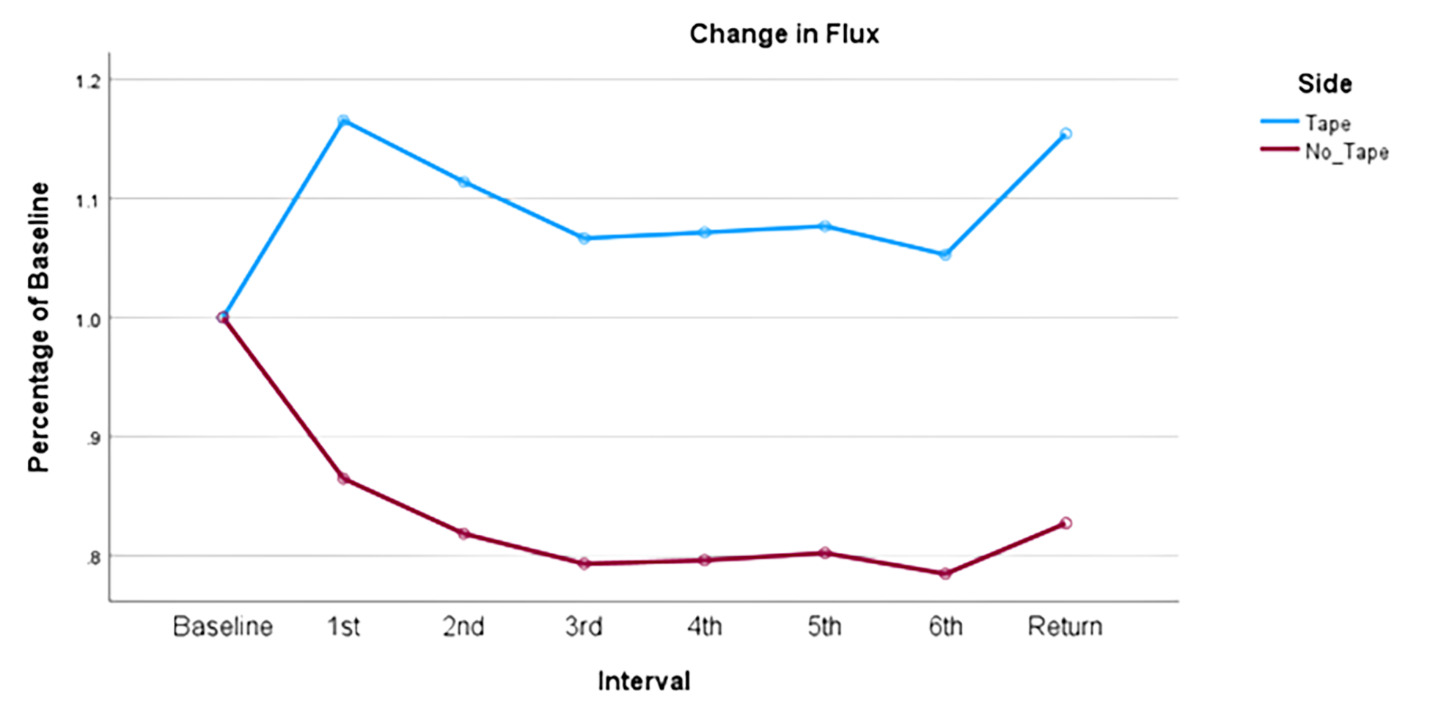
For the dependent variable flux, the assumption of sphericity was violated for the two-way interaction, χ2(27) = 362.13, p = <0.001; therefore, Greenhouse-Geisser corrected degrees of freedom are reported. There was a statistically significant interaction between time and side on flux, F~(2.47, 118.62)~ = 9.62, P <0.001, partial η2 = .167. Pairwise comparison using Bonferroni correction for multiple comparisons revealed that the tape side demonstrated statistically significant (p<0.001) greater flux values as a percentage of baseline than the control side for each of the follow-up time periods. This extended into the post-removal period as well as seen in Table 2 and Figure 3.
Discussion
The results of the current research suggest that the application of infrared kinesiology tape is effective for increasing skin temperature and cutaneous blood flow in the lumbar paraspinals at rest, producing modest but statistically significant effects. Because the mechanism of action was not studied, it is plausible that the presence of material over the skin compared to the control side is what is responsible for the increase in skin temperature and cutaneous blood flow, and not the mechanistic effect associated with the mineral infused far-infrared tape.
Previous studies have used laser doppler to measure red blood cell flux as a surrogate for cutaneous blood flow.9,12,15–17 These studies are mixed as to whether red blood cell flux or skin temperature changes following the application of kinesiology tape. For example, several studies found no significant differences in cutaneous blood flow or skin temperature following kinesiology tape application when compared with their respective control and placebo groups.9,12,15,16 One potential reason for these null findings could be that the various kinesiology tapes used in these studies did not promote infrared heating of the skin as is purported to occur with the Thrive tape used in this study. However, while this study demonstrated modest but significant increases in temperature and red blood cell flux, the lack of a non-infrared tape control precludes a definitive conclusion that these changes were specifically induced by far-infrared technology. However, Craighead et al. found that kinesiology tape did increase cutaneous red blood cell flux, cutaneous vascular conductance, and skin temperature regardless of the tension and convolutions present on application to a statistically significant degree.17 One reason for the discrepancy in the findings could be that Craighead et al. had a 72-hour application time, which was longer than the other studies.17
The proposed mechanisms through which kinesiology tape increases cutaneous red cell flux and temperature may differ from one brand of tape to the next. For Thrive “Far Infrared” kinesiology tape, the tape which was utilized in this study, there is a purported infrared mechanism which is designed to be the driving factor behind red cell flux and cutaneous temperature increases. The mechanism is characterized by a phenomenon where the tape’s infused minerals take far infrared rays from the skin and redirect them back towards the skin, creating an increase in skin temperature, and thus cutaneous red blood cell flux.(18) Another, more common, proposed mechanisms of increased red cell flux to the superficial tissues involve tape creating a lifting action on the skin during application, which creates a pressure gradient between the superficial tissues and the dermis, thereby increasing circulation. While never demonstrated empirically, this concept may serve as the practical application for introducing convolutions into the taping pattern or utilizing multiple layers with different application strategies. Another possibility is that those who utilize kinesiology tape may experience benefits in pain and function due to placebo. Simply having an adhesive material applied to a potentially problematic area of the body with the expectation of benefit may induce positive patient outcomes. This may be one of the reasons for introducing convolutions or multiple layers with different application strategies.17 However, since the study design did not include a non-infrared tape comparator, the findings of increased temperature and red blood-cell flux due to the far-infrared technology of this tape is speculative.
No adverse events were observed during this study. Therefore, practical application of kinesiology tape likely will not cause any undesired effects. Patients may experience benefits via the placebo method as well.
The increase in skin blood flow on the taped side and no-tape control after the removal of the tape may be attributed to a sympathetic response triggered by the noxious stimulation associated with tape removal. There is some evidence that painful stimuli cause the release of substance P and calcitonin gene-related peptide (CGRP), which result in localized vasodilation.21 Additionally, the interaction between sympathetic vasoconstriction and antidromic vasodilation plays a critical role in modulating skin blood flow, particularly in response to cutaneous injury or irritation.22 While the vasodilatory response is typically localized, the bilateral nature of our findings could be explained by the proximity of the tested areas, potentially allowing for overlapping neural and vascular responses.
The primary limitation of this study is lack of placebo control. While participants served as their own no-treatment controls to minimize physiological variability, this design cannot distinguish the specific effects of far-infrared technology from nonspecific effects associated with skin occlusion or other types of kinesiology tape. Nor can it account for any systemic or regional neural or vascular changes that might result from the application of the “Far Infrared” tape. Future studies should include a sham condition using a non-infrared tape to account for this variable. Future directions for this research should include populations that have pain. This would allow for the concurrent measurement of RBC flux and potential pain reduction, allowing for inferences to be made on the effect increased flux and temperature might have on pain. Because the tape used in this study was provided by the manufacturer, independent replication by investigators without industry sponsorship is needed to confirm these findings.
Hydration status and time of day were not independently controlled across participants. However, because each participant served as their own comparator and bilateral measurements were obtained simultaneously, systemic physiological factors such as hydration and circadian phase would have affected both sides equally and are unlikely to have biased the within-subject side-to-side comparison. Future studies may consider standardizing these variables. Further limitations of this study include measuring blood flow through a small hole cut in a single brand of kinesiology tape to allow for the laser doppler probe. However, kinesiology tape was applied directly around the probe and effects on blood flow and temperature should be evident. Further limitations include the subjects being young healthy individuals, and extrapolating the data to other populations such as those with impaired blood flow cannot be made. Future research should include assessing any change in flux within a population that is experiencing pain or participating in exercise.
CONCLUSIONS
The results of this study indicate that the application of Thrive “Far Infrared” kinesiology tape produces statistically significant increases in cutaneous red blood cell flux and skin temperature in the lumbar paraspinal region compared to an untaped control side, with effects persisting into the post-removal period. These findings suggest that far-infrared kinesiology tape may influence local cutaneous physiology; however, because a non-infrared tape comparator was not included, it remains unclear whether the observed changes are attributable to the far-infrared properties of the tape or to the nonspecific effects of skin occlusion common to kinesiology tape in general. The clinical relevance of the modest magnitude of these changes has yet to be established, and generalizability is limited to young, healthy individuals at rest. Future research should incorporate a sham tape condition, include individuals experiencing pain, and be conducted by investigators without industry sponsorship to further evaluate the therapeutic potential of far-infrared kinesiology tape.
Conflict of interest statement
TruePower, the manufacturer of ThriveTape, provided the tape used in this study and sponsored this project. They provided the tape to be used in the study; however, they had no role in study design, data collection, analysis, interpretation of results, or authorization to decline publication of the data.
Data Availability Statement
Data will be available upon request.