INTRODUCTION
Anterior cruciate ligament (ACL) injuries represent one of the most severe and potentially career-threatening injuries in pivoting sports such as football, handball, basketball, and field hockey.1,2 In elite athletes, ACL rupture is frequently associated with prolonged absence from competition, substantial physical and psychological burden, and potential long-term consequences including recurrent instability and early onset of osteoarthritis.3,4 Consequently, surgical ACL reconstruction (ACLR) has become the predominant treatment strategy in professional sport and is often regarded as the default option to facilitate return to high-level competition.2,5 More recently, renewed interest in primary ACL repair has expanded the surgical treatment spectrum, particularly for proximal femoral-sided tears with favorable tissue quality, in which preservation of the native ligament may represent an alternative to reconstruction.6–8
Despite its widespread acceptance, the scientific evidence supporting the superiority of ACLR over structured non-operative management remains inconclusive. Several studies conducted in the general population have demonstrated comparable long-term functional outcomes between operative treatment and well-structured conservative rehabilitation, particularly in carefully selected individuals.9–11 However, the transferability of these findings to elite athletes remains uncertain. High-performance sport is characterized by substantially greater biomechanical demands, condensed competition schedules, and pronounced psychological and contextual stressors, all of which may influence treatment outcomes. As a result, high-quality clinical data addressing non-operative treatment strategies specifically in elite pivoting-sport athletes remain scarce.2,3
Clinical decision-making following ACL injury in elite sport is further complicated by contextual factors such as competition calendars, career stage, contractual obligations, and the proximity of major sporting events. Athletes may therefore face a dilemma between a standard surgical pathway with a prolonged rehabilitation period and a non-operative approach that may allow an earlier return to competition but is perceived to carry an increased risk of instability or secondary injury. Within this context, the classification of patients as so-called “copers” or “non-copers” has gained increasing attention. However, reliable predictors for successful non-operative outcomes remain limited, particularly at the elite level and in athletes exposed to high pivoting demands.12–14 Emerging evidence suggests that ACL rupture morphology is heterogeneous, and may influence intrinsic healing potential. Proximal femoral-sided tears with preserved fiber continuity have been proposed as potentially favourable injury phenotype for biological healing compared with midsubstance ruptures.15
Given the limited evidence regarding morphology-informed treatment decisions in elite sport, the purpose of this case report is to describe the non-operative management of a femoral-sided ACL injury (Sherman type II) in an international elite field hockey player who returned to international competition 140 days after injury and subsequently achieved elite performance at the Olympic Games, winning a silver medal 200 days post-injury. By providing a detailed account of injury characteristics, decision-making processes, criteria-based rehabilitation, and functional outcomes this case report aims to contribute to the ongoing discussion regarding individualized treatment pathways for ACL injuries in high-performance sport. The purpose of this case report is to describe the morphology-informed nonoperative management, criterion-based rehabilitation, and return to Olympic-level competition of an elite field hockey player following a fermoral-sided Sherman type II ACL injury.
CASE PRESENTATION
Injury and Imaging
The athlete was a 30-year-old male international elite field hockey player competing at the highest national and international level. At the time of injury, he had been active in the first national league for more than 13 years and had accumulated over 190 international caps. He reported no prior history of knee injuries, pain, instability, or functional limitations in either knee and was fully fit at the start of the tournament.
The injury occurred on 20 January 2024 during the semi-final of an Olympic qualification tournament, representing the fourth match within a seven-day competitive period. The mechanism was non-contact and occurred during maximal sprinting when the athlete attempted a rapid corrective movement toward the ball following an imprecise pass. At the time of injury, the left knee was positioned at approximately 30° of flexion and was exposed to a valgus load combined with slight external tibial rotation. The athlete immediately discontinued play and received on-field acute care including cryotherapy and anti-inflammatory measures.
Subjectively, the athlete reported no immediate sensation of locking or giving way. Marked joint effusion, significant pain, or restriction of range of motion were initially absent, and full weight-bearing without assistive devices was possible within hours following the injury. Approximately 12 hours after the incident, magnetic resonance imaging (MRI) of the left knee was performed. Following imaging, the knee was temporarily immobilized and the athlete returned to his home country to further assessment and management.
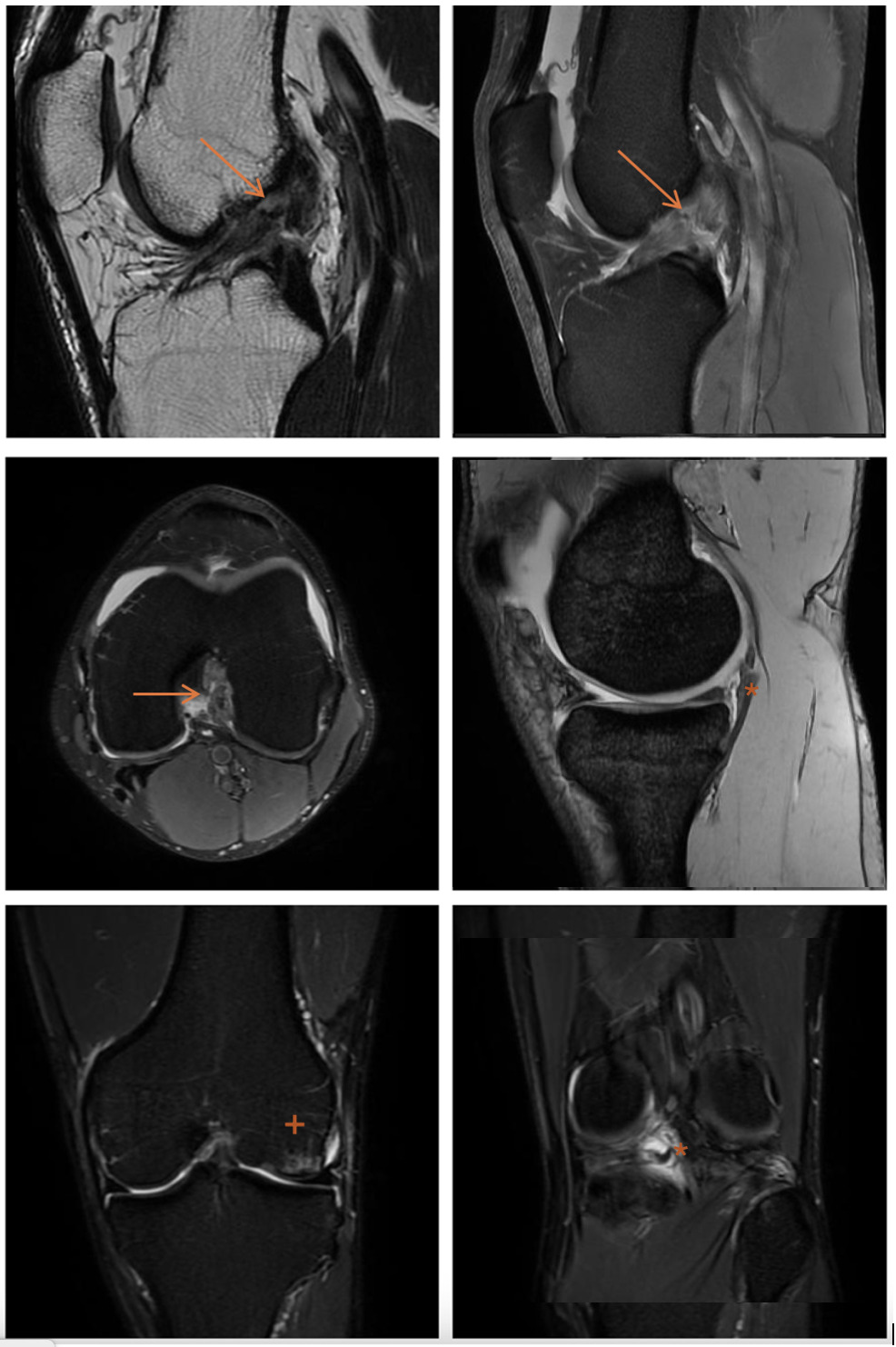
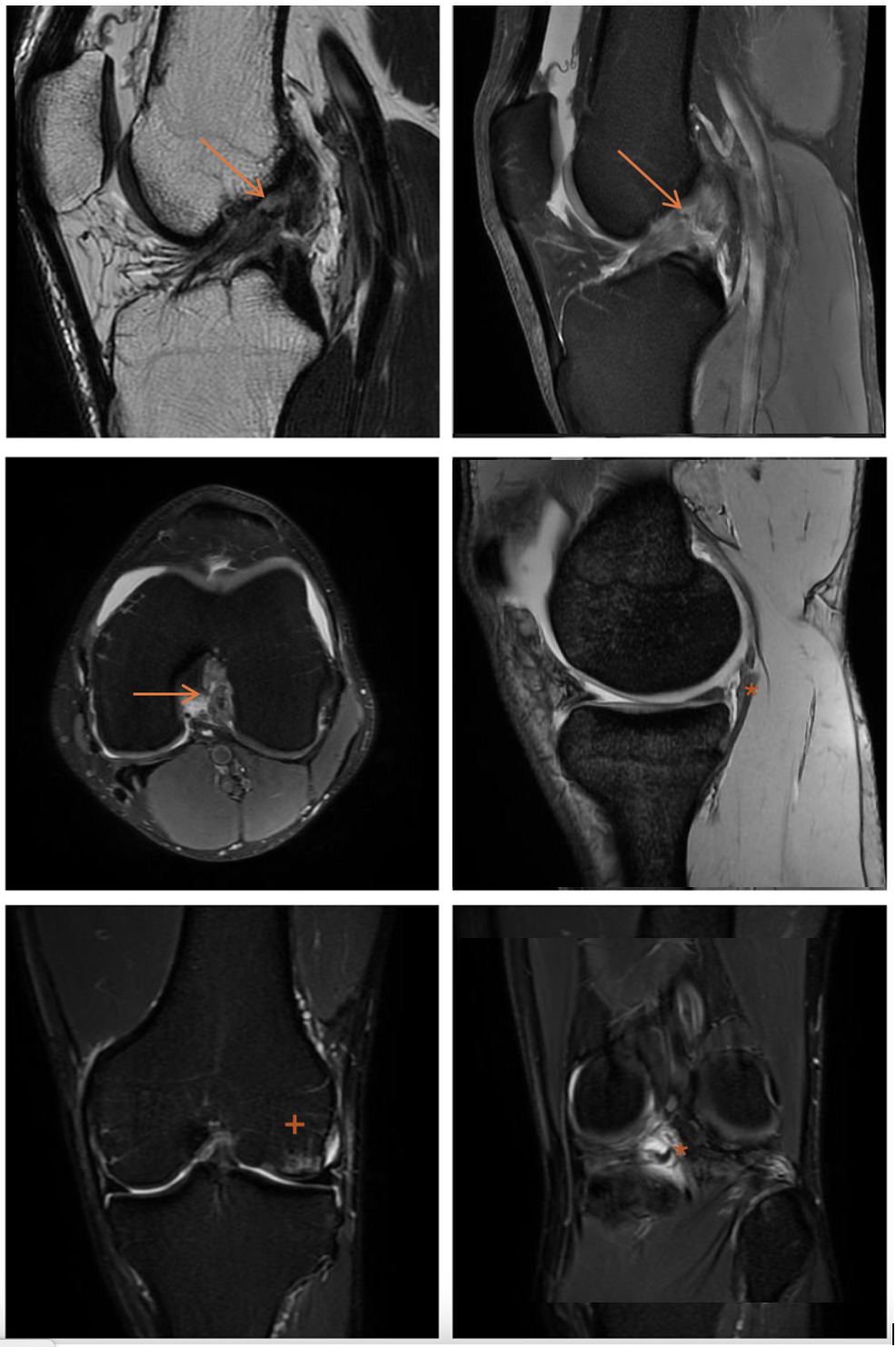
Initial MRI demonstrated a femoral-sided anterior cruciate ligament injury classified as a Sherman type 2 lesion, characterized by a high-grade femoral insertional tear with preserved fiber continuity. In addition, a ramp lesion of the posterior horn of the medial meniscus and a lateral bone marrow contusion (“kissing bone bruise”) were identified. No chondral defects were present, and the posterior cruciate ligament and collateral ligaments appeared intact. (Figure 1)
Following imaging, a comprehensive clinical and functional assessment was undertaken to evaluate knee stability, symptom burden, and the athlete’s capacity to tolerate high-demand loading. Despite the morphological findings on MRI, the athlete reported no subjective instability, was able to fully weight-bear without assistive devices and demonstrated no early episodes of giving way during daily activities. These findings prompted further evaluation within a structured shared decision-making framework regarding operative versus non-operative management.
Decision-Making and Treatment Strategy
Treatment decision-making was guided by a structured, multi-factorial assessment integrating injury morphology, early clinical presentation, functional capacity, and contextual performance demands.
Based on these findings, the athlete was provisionally classified within a functional “coper” framework. This classification was supported by high baseline functional capacity and early patient-reported outcome measures, including a Knee Outcome Survey–Activities of Daily Living Scale (KOS-ADLS) score exceeding 80%. It was explicitly acknowledged, however, that the predictive validity of coper classifications in elite pivoting-sport athletes is limited, and that this classification was considered dynamic rather than definitive, necessitating continuous reassessment throughout rehabilitation.
Given the high-performance context and the potential implications of treatment choice, the athlete sought independent opinions from four experienced orthopaedic knee surgeons specializing in sports medicine. All consultations addressed the potential benefits and risks of both surgical reconstruction and non-operative management, including anticipated timelines for return to sport, risk of secondary instability or injury, and long-term joint health considerations. While surgical ACL reconstruction was recognised as the standard treatment approach in elite pivoting sports, consensus was reached that a non-operative pathway could be considered given the favorable injury morphology, early functional stability, and the athlete’s informed preference. Primary ACL repair represents an additional surgical option in selected proximal Sherman type I and II injuries with favorable tissue quality. The relevance of repair in these specific injury patterns further illustrates that ACL injuries should not be regarded as a homogeneous entity and that tear morphology may inform treatment selection across both operative and non-operative pathways.6–8
The athlete expressed a clear and informed desire to pursue a non-operative treatment strategy, prioritizing the opportunity to return to international competition within the Olympic year despite the acknowledged uncertainties and potential long-term risks. This decision followed extensive discussion regarding the possibility of delayed surgical intervention, secondary instability, and the absence of robust evidence supporting early return to elite sport following conservative management.
Ultimately, a shared decision was made to initiate a closely monitored, interdisciplinary non-operative rehabilitation programme. Predefined clinical and functional criteria were established to guide progression, alongside explicit stop-criteria that would prompt reconsideration of surgical intervention in the event of subjective instability, recurrent effusion, or functional deterioration. This adaptive strategy aimed to balance the athlete’s performance objectives with patient safety and long-term knee health.
At the initial physiotherapeutic assessment six weeks after injury, the athlete presented with a knee extension deficit of 10°, knee flexion of 150°, mild medial knee pain following load, and a small intra-articular effusion with a moderate suprapatellar effusion. Additional findings included reduced muscular capacity, altered pelvic alignment, and increased thoracic kyphosis. At follow-up assessment approximately nine weeks after injury, full knee extension and flexion (0–0–160°) had been restored. Joint effusion was minimal and transient following high-load sessions and resolved within 24 hours. Muscular hypertrophy was symmetrical on side-to-side comparison, gait pattern had normalized, and pelvic alignment and core stability had improved.
Rehabilitation Strategy
The non-operative rehabilitation programm was delivered by an interdisciplinary team comprising sports physicians, physiotherapists, strength and conditioning specialists, and performance coaches experienced in elite sport. The overarching rehabilitation philosophy was to individualize the program to the athlete rather than adapting the athlete to a predetermined protocol. Clinical findings, functional performance, and subjective symptom reporting were continuously integrated to inform progression and load management.
Rehabilitation was structured into four overlapping phases defined by functional and performance-based criteria rather than rigid time-based milestones. Progression between phases required the absence of subjective instability, controlled joint effusion, restoration of range of motion, and the athlete’s ability to tolerate progressively increasing mechanical and neuromuscular demands without adverse response.
At 86 days post injury, a comprehensive objective return-to-competition (RTC) assessment was performed to guide progression toward team-based training and subsequent reintegration into competitive match play. The timing of this assessment was determined by the interdisciplinary team’s clinical judgment, based on the athlete’s observed rehabilitation progress and tolerance of increasing functional demands, rather than predefined testing criteria. A detailed description of the criteria-based rehabilitation programm and the RTC assessment is provided in Supplementary Material 1.
Phase 1: Early Protection and Neuromuscular Activation (week 1 – week 6)
The initial rehabilitation phase was designed to protect the injured structures while allowing early neuromuscular activation and maintenance of general physical conditioning. The knee was protected using an adjustable rigid brace worn continuously for six weeks, allowing free knee motion within a restricted range from 0° extension to 90° flexion to reduce mechanical loading on the ACL. Weight bearing was permitted and progressed according to pain tolerance. Forearm crutches were used initially, with progressive discontinuation according to pain tolerance and gait quality.
Physiotherapy was performed daily and focused on joint effusion management, lymphatic drainage, restoration of full knee extension to 0° while deliberately avoiding hyperextension, and early neuromuscular activation. Hyperextension was restricted during the early healing phase to avoid excessive end-range loading of the injured native ACL and increased anterior tibial translation, thereby limiting mechanical stress on the proximal healing ligament. Quadriceps activation was initiated predominantly through isometric exercises and closed chain strengthening with low external loads (≤20 kg), performed with the brace in situ and, where available, supported by electromyographic feedback. Isometric strengthening and stabilization exercises for the hamstring muscles were incorporated (e.g. bridging exercises), alongside progressive trunk and hip strengthening with an emphasis on hip abductor control.
Controlled active-assisted knee mobilisation was performed using isokinetic devices within the predefined range of motion. Aquatic therapy was introduced to facilitate low-impact knee mobilization and conditioning while respecting the imposed movement restrictions. Cryotherapy, including daily exposure to whole-body cold therapy, was used for pain and swelling control.
As an adjunctive intervention, autologous conditioned plasma (ACP/PRP) therapy was administered on five occasions during the initial rehabilitation phase. Two injections were performed intra-articularly, and three injections were directed to the ACL stump under imaging guidance. Progression to Phase 2 was guided by the improvements in pain, joint effusion, range of motion, and tolerance of increasing functional loads. These clinical parameters were considered alongside the athlete’s subjective confidence and the interdisciplinary team’s clinical judgement, ith progression permitted only in the absence of concerning symptoms or signs of instability.
Phase 2: Progressive Load Tolerance and Movement Control (week 7 – week 14)
During the second rehabilitation phase, the focus shifted toward progressive load tolerance, neuromuscular control, and preparation of the knee for higher functional demands under increasing mechanical stress. With pain and joint effusion largely resolved and full knee range of motion restored, rehabilitation advanced from protected activation toward controlled dynamic loading in weight-bearing conditions.
A central aim of this phase was the re-establishment of coordinated neuromuscular control across the ascending and descending kinetic chains. Proprioceptive training was systematically progressed, beginning with distal control strategies targeting the foot and ankle complex and advancing proximally to the knee and hip. Balance and stabilisation exercises were performed in progressively more challenging conditions, including single-leg stance tasks, perturbation-based drills, and multiplanar control exercises, with specific emphasis on frontal-plane knee stability and dynamic varus–valgus control.
Strength training was advanced to include concentric and combined concentric–eccentric loading using predominantly semi-open kinetic chain exercises, defined here as guided or machine-based movements in which the distal limb segment is constrained by an apparatus while controlled joint motion remains possible. Isokinetic training was incorporated to allow controlled progression of knee extensor and flexor strength across defined velocity ranges, following a structured strength pyramid approach. Where available, electromyographic feedback was used to optimize muscle activation patterns and address residual asymmetries. Attention was paid to hamstring–quadriceps co-contraction strategies to support dynamic knee stability and control anterior tibial translation during functional tasks.
In parallel, targeted neuromuscular re-education of the knee joint was performed under dynamic loading conditions, including controlled frontal-plane challenges and rotational demands. Core stability and trunk control were further intensified, with a focus on hip abductor strength and lumbopelvic control to minimise compensatory strategies and ensure appropriate lower-limb alignment during single-leg activities.
Cardiorespiratory conditioning formed an integral component of this phase. Aerobic endurance was progressively developed using lower-limb cycle ergometry as the primary modality, supplemented by interval-based conditioning where tolerated. Training intensity and volume were gradually increased, including sessions performed under simulated altitude conditions to enhance aerobic capacity while maintaining low joint impact.
During the later part of this phase, selected higher-demand elements were introduced in a graded manner, including eccentric strength training, rapid force development, and early components of speed and explosiveness, where clinically appropriate. Partial body-weight-supported running using an anti-gravity treadmill was added selectively to facilitate controlled reintroduction of cyclic loading patterns while limiting peak joint forces. Advancement to Phase 3 was contingent upon fulfilment of predefined functional and performance-based criteria rather than time-based milestones.
Objective Return-to-Competition Assessment at 86 Days Post-Injury
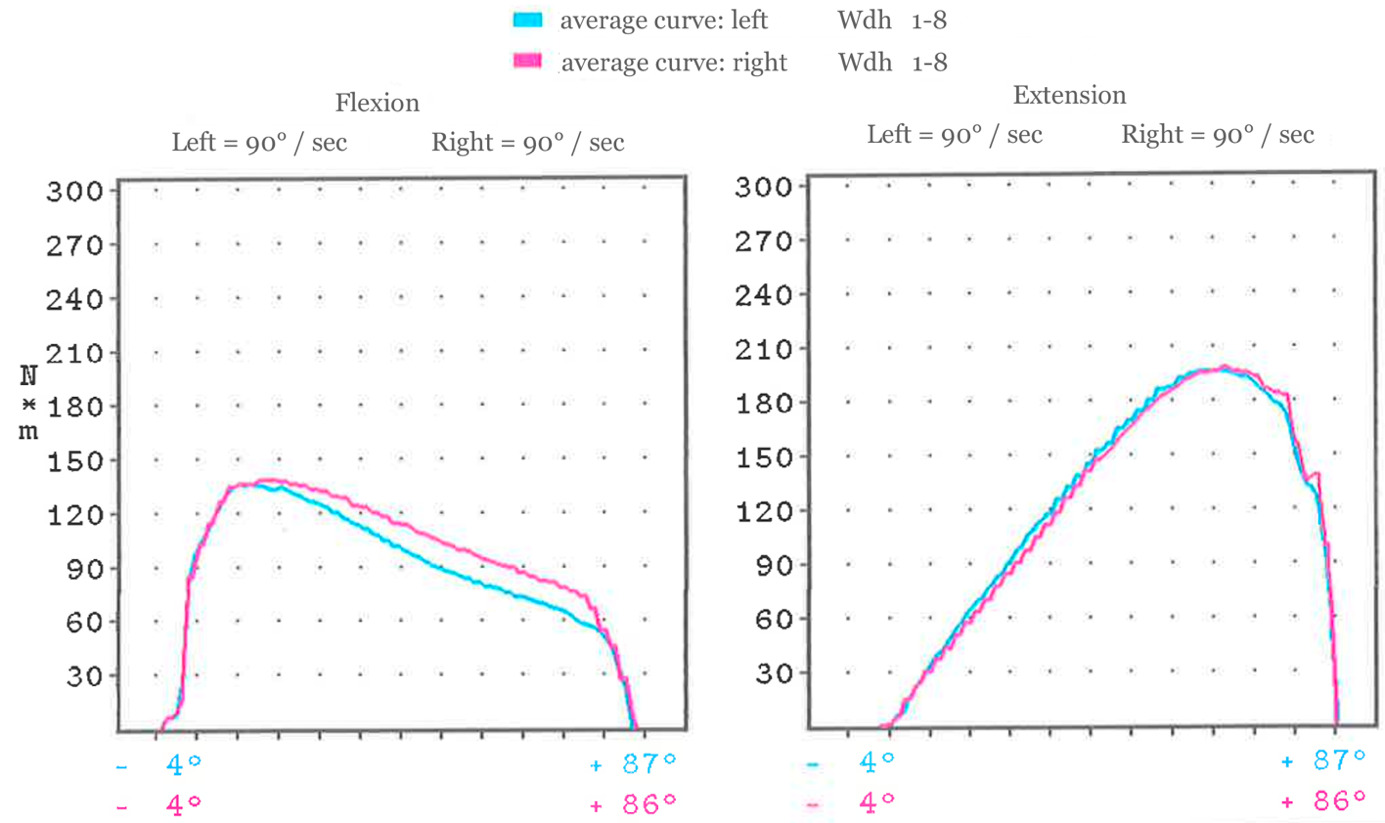
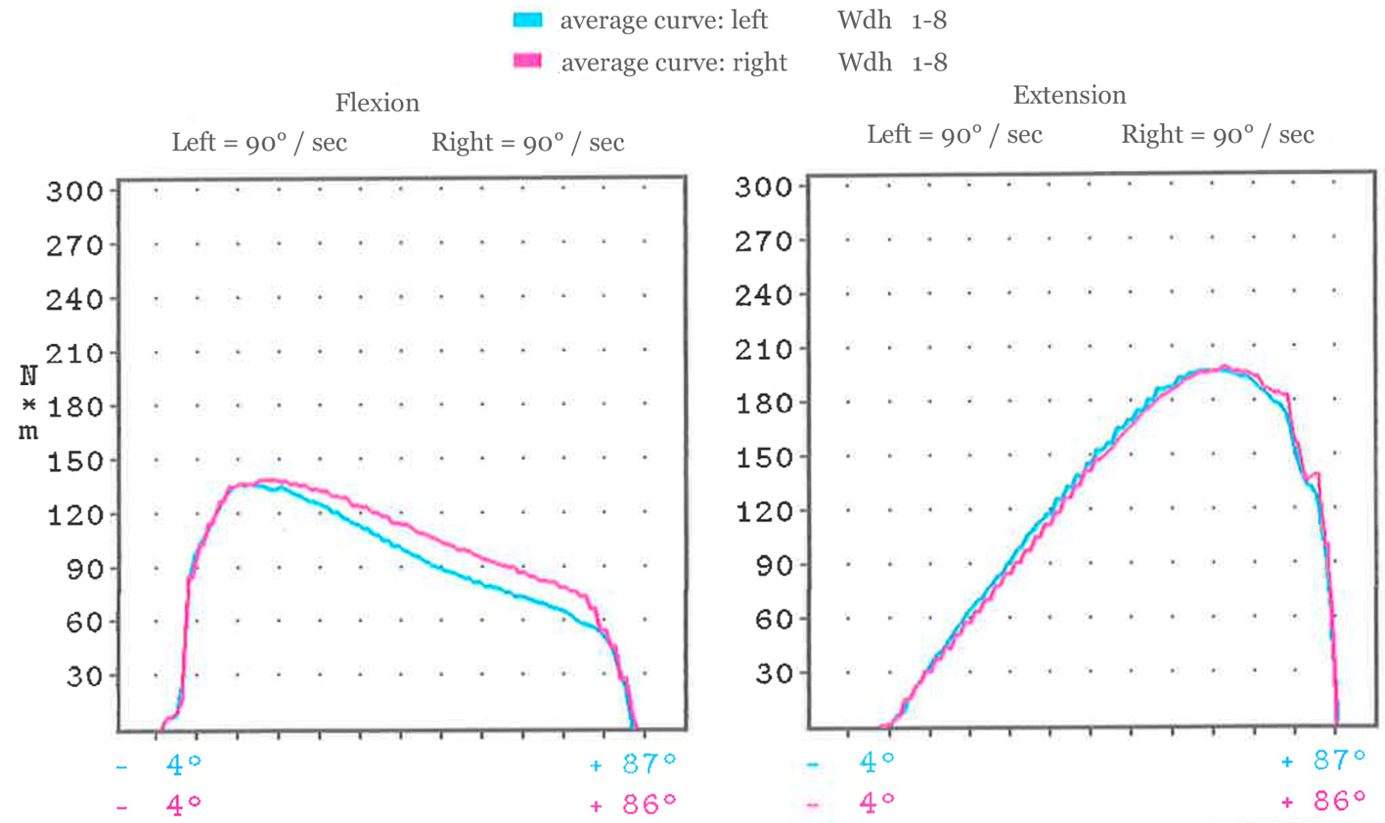
Isokinetic strength testing at 90°/s demonstrated symmetrical quadriceps and hamstring performance profiles (Table 1, Figure 2). Maximum knee extension torque was 196 Nm on the injured side and 198 Nm contralaterally, corresponding to body-mass-normalised values of 2.45 and 2.48 Nm/kg, respectively (limb symmetry index [LSI] 99%). Maximum flexion torque was 136 Nm and 138 Nm, corresponding to 1.70 and 1.73 Nm/kg, respectively (LSI 98%). Total work during extension was identical bilaterally (1563 J), and flexion work differed by less than 10%. The hamstring-to-quadriceps ratio ranged between 67% and 69%, exceedingly commonly cited ≥60% thresholds considered acceptable for return-to-sport decision-making in pivoting athletes.
Functional performance testing revealed a single-leg hop for distance LSI of 99.5% and a side-hop LSI of 92.4%. Countermovement jump performance was symmetrical in bilateral and unilateral conditions. Y-Balance testing demonstrated a composite score exceeding 115%, with side-to-side differences below 1%. Running gait analysis at 9 km/h demonstrated symmetrical stance and swing phase distribution, with side-to-side differences below 2%. Three-plane electromyographic analysis showed synchronous muscle activation timing without delayed quadriceps onset, quadriceps-dominant protective patterns, or maladaptive compensatory strategies. Hamstring and gluteal activation patterns were preserved bilaterally.
A formal mechanical laxity assessment using instrumented anterior translation testing or repeated provocative ligament testing (e.g., Lachman or pivot shift) was intentionally not performed at this stage. In the absence of subjective instability, recurrent effusion, or functional giving-way episodes, the clinical strategy prioritized dynamic functional evaluation over isolated passive ligament testing to avoid unnecessary mechanical stress on the healing ligament and to minimize potential psychological destabilization.
Across strength, balance, hop performance, and neuromuscular domains, limb symmetry indices exceeded commonly accepted ≥90% return-to-sport thresholds. No reactive joint effusion, subjective instability, or adverse clinical response was observed during progressive loading. Based on these findings, progression to unrestricted running and subsequent sport-specific integration was approved. A structured overview of the objective return-to-competition parameters is presented in Table 1. Detailed test data are provided in the file entitled Supplementary material 2.
Phase 3: Sport-Specific Strength, Speed, and Plyometric Preparation (week 15 – week 18)
Phase 3 introduced higher mechanical loads and sport-specific movement patterns. Strength training targeted maximal and explosive force production, while plyometric drills and progressively challenging running and change-of-direction tasks were incorporated, initially in linear patterns and subsequently with increasing intensity and explosiveness. Emphasis was placed on maintaining frontal-plane knee stability and a running strategy aimed at minimising valgus thrust under dynamic conditions. Load progression was carefully individualised based on clinical response, performance metrics, and subjective confidence. Any increase in joint effusion, pain, or perceived instability prompted immediate modification of training parameters.
Progression to Phase 4 was based on satisfactory tolerance of sport-specific loading, including running, plyometric exercises, and change-of-direction tasks, without recurrent effusion, pain, or subjective instability. The decision incorporated the athlete’s confidence and the interdisciplinary team’s clinical judgement.
Phase 4: Return to Training and Competition Integration (week 19 – week 22)
The final rehabilitation phase focused on the structured reintegration into sport-specific training and competitive environments. Following successful completion of individual on-field drills, running progressions, and sport-specific technical tasks, the athlete was gradually reintroduced to team-based training under controlled and progressively less restricted conditions. Training exposure was initially limited in volume and intensity, with particular attention to high-demand actions such as acceleration-deceleration, cutting, pivoting, and contact-related scenarios.
Return-to-competition decisions were made through a shared interdisciplinary process and were based on a combination of clinical examination, functional performance testing, and patient-reported outcome measures. In addition to objective findings, the absence of adverse joint responses to training loads and the athlete’s subjective confidence during unrestricted sport-specific tasks were considered essential prerequisites for competitive clearance. Throughout this phase, continuous communication between medical staff, rehabilitation specialists, coaching personnel, and the athlete was maintained to guide load management, minimise reinjury risk, and support a safe transition to full competition.
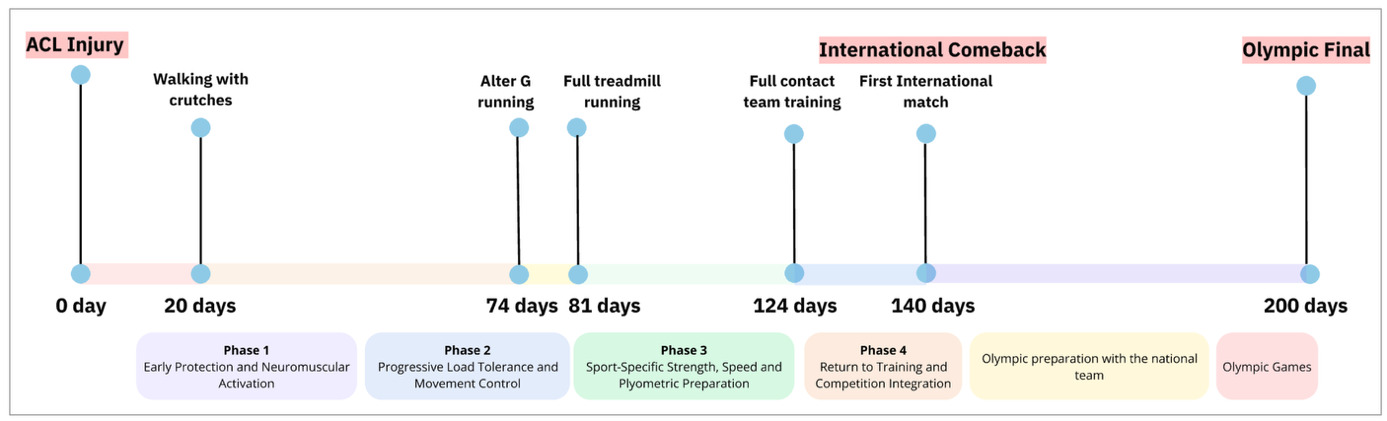
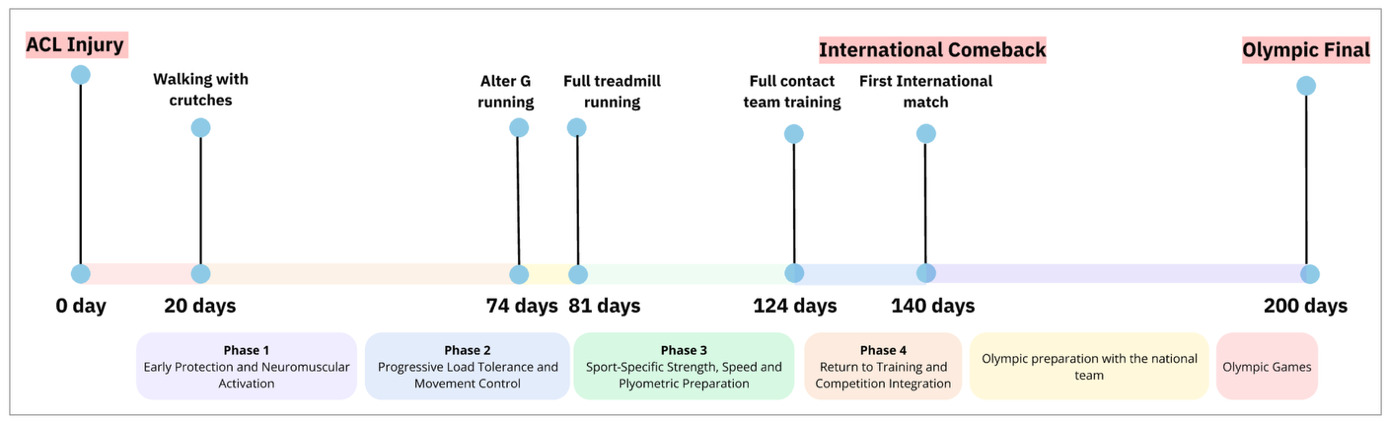
A detailed chronological overview of rehabilitation milestones and competition exposure is provided in Table 2 and Figure 3.
Outcomes and Follow-Up
Functional milestones were achieved without setbacks or episodes of subjective instability throughout rehabilitation and return to competition. Independent ambulation without crutches was achieved 20 days after injury, followed by anti-gravity treadmill running at 73 days, full body-weight treadmill running at 81 days, and full-contact team training at 123 days. The athlete returned to international competition on 8 June 2024, corresponding to 140 days after injury, during an official international match against India, in which he scored a goal. He tolerated full pivoting, acceleration–deceleration and contact demands without subjective instability or functional limitation. The athlete subsequently participated in national league competition and international tournaments, was nominated for the Olympic team, and competed at the Olympic Games, where he achieved elite performance and won an Olympic silver medal 200 days post-injury.
Objective instrumented or manual laxity testing, including Lachman, pivot-shift, or anterior drawer testing, was not systematically performed during rehabilitation and follow-up. This decision was made to avoid unnecessary mechanical stress and joint manipulation in the absence of subjective instability or functional giving-way episodes under progressively increasing sport-specific load. Clinical assessment therefore focused on symptom reporting, functional performance, joint effusion response, and tolerance of high-demand pivoting activities.
Patient-reported outcome measures were obtained at 3, 6, and 12 months after injury, with pre-injury status assessed retrospectively after the injury. Outcomes included the Lysholm Knee Scoring Scale, Tegner Activity Level Scale, International Knee Documentation Committee (IKDC) subjective knee form, and the Anterior Cruciate Ligament-Return to Sport after Injury (ACL-RSI) scale (Table 3). The Lysholm score decreased from 100 pre-injury to 85 at 3 months, followed by improvement to 95 at 6 months and 100 at 12 months. The Tegner Activity Level Score decreased at 3 months and returned to the pre-injury level by 6 months, which was maintained at 12 months. IKDC scores similarly improved from 86.2 at 3 months to 95.4 at 6 months and 96.6 at 12 months. Psychological readiness, assessed using the ACL-RSI, increased from 49 at 3 months to 100 at 6 months and remained high at 95 at 12 months.
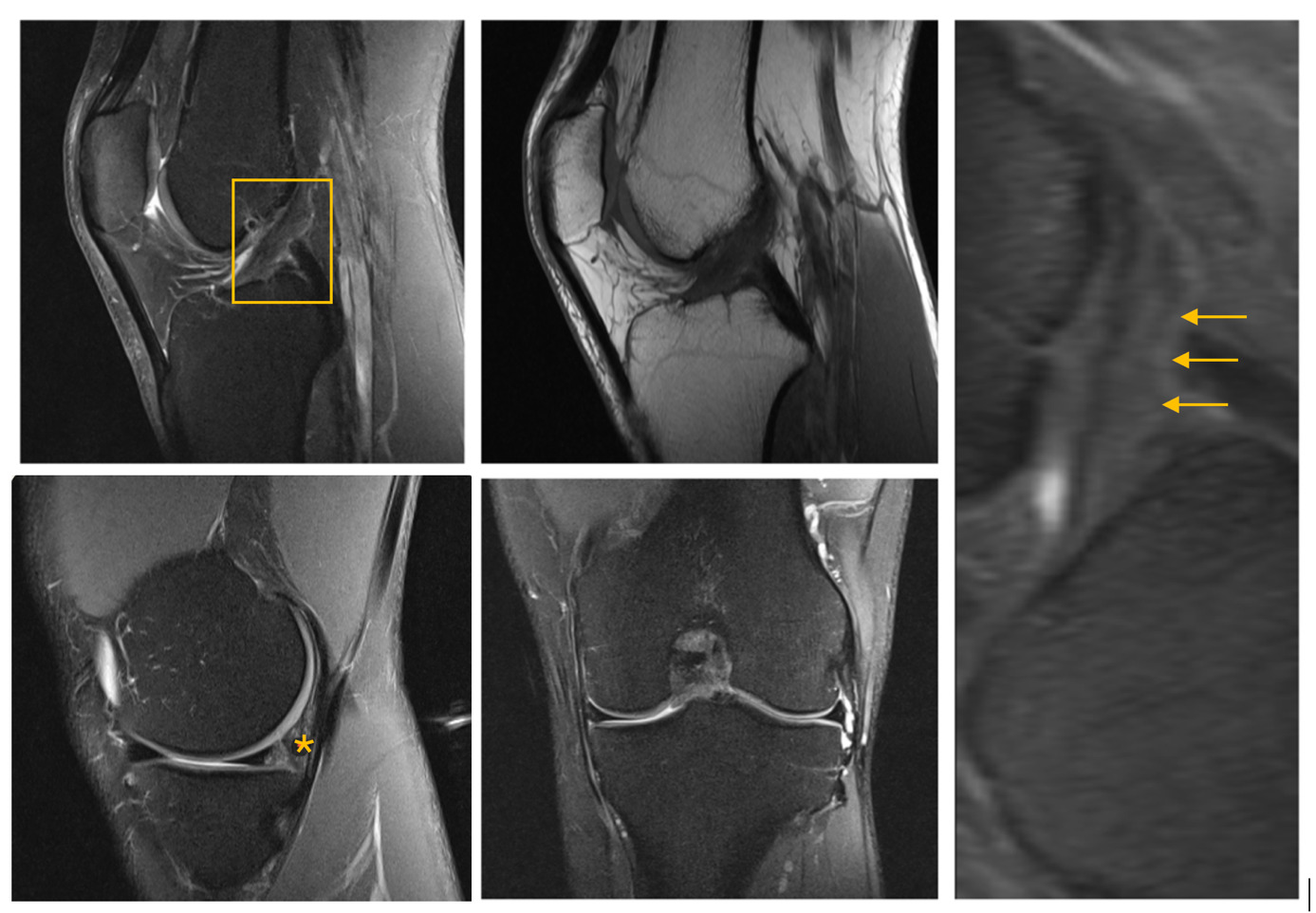
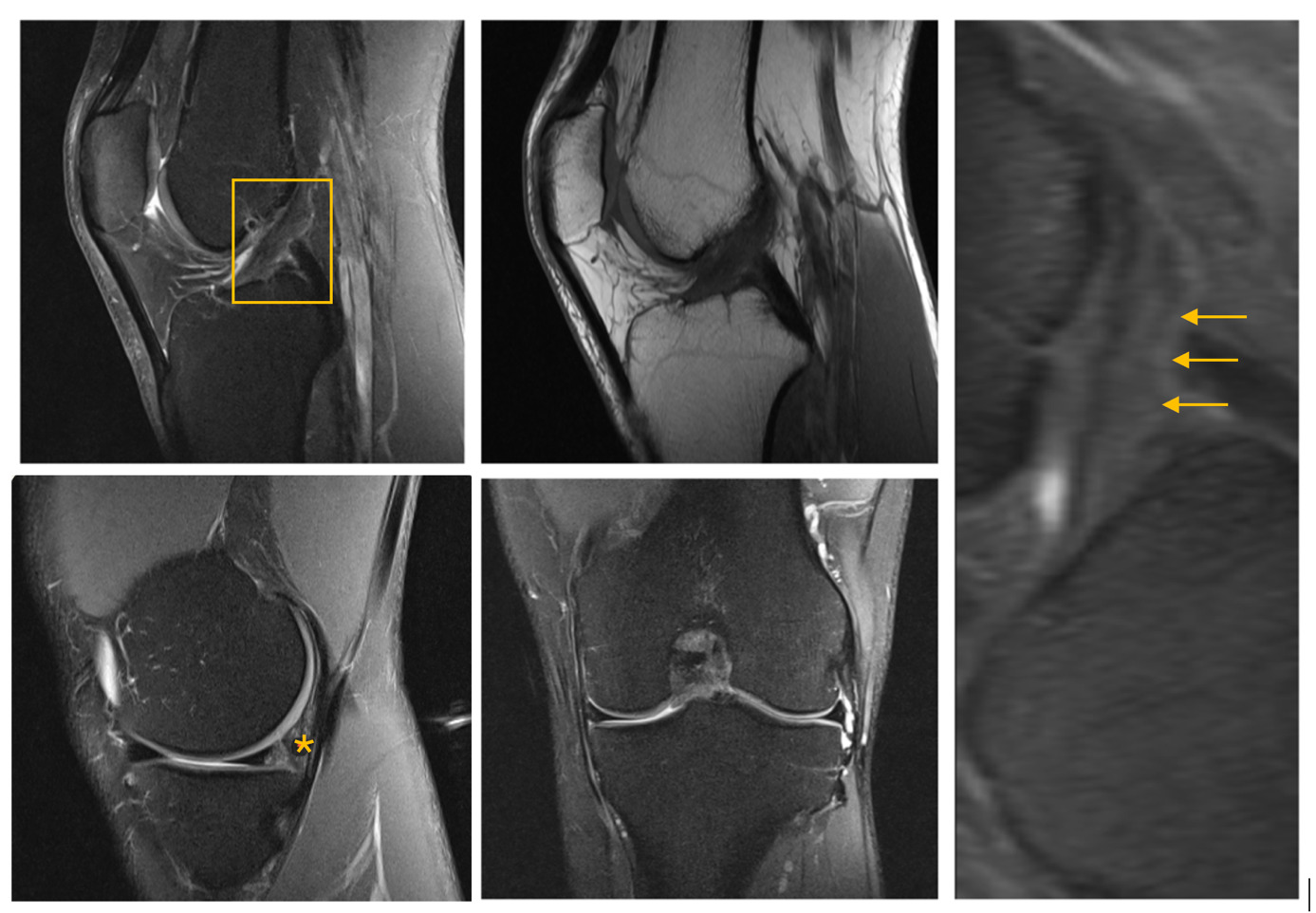
Magnetic resonance imaging performed 12 months after injury demonstrated an anterior cruciate ligament with preserved fibre continuity and no evidence of complete rupture (Figure 4). The posterior cruciate ligament and collateral ligaments remained intact. Residual signal alterations were observed at the posterior horn of the medial meniscus. No progressive chondral damage was detected.
DISCUSSION
The present case describes the non-operative management of a femoral-sided anterior cruciate ligament (ACL) injury (Sherman type II) in a 30-year-old elite international field hockey player six months before the Olympic Games. Initial MRI demonstrated a high-grade proximal tear with preserved fiber continuity and synovial sheeth, accompanied by a ramp lesion of the posterior horn of the medial meniscus and a lateral bone marrow contusion, without associated chondral or collateral ligament injury. Despite these structural findings, the athlete reported no subjective instability, tolerated full weight-bearing and exhibited no early episodes of giving way. These clinical characteristics, together with the athlete’s explicit wish to compete at the Olympic Games without a prolonged period of absence, were central to the shared decision-making process favouring a non-operative approach. After a highly individualised and closely supervised rehabilitation programme, the athlete returned to full international competition 140 days after injury, followed by continued participation at the Olympic Games with the achievement of an Olympic silver medal. Magnetic resonance imaging performed 12 months after injury demonstrated preserved fibre continuity of the ACL and no new associated injuries.
Anterior cruciate ligament reconstruction is widely regarded as the standard of care in elite athletes participating in pivoting sports. Epidemiological data indicate that more than two million ACL injuries occur annually worldwide, and surveys suggest that the vast majority of orthopaedic surgeons recommend reconstruction to facilitate return to pivoting sports.5,16 In elite football cohorts, more than 95% of ACL-injured players undergo reconstruction, with most returning to full training and competition within the first postoperative year.2 This practice reflects both the perceived need for mechanical stability and the cultural expectations surrounding injury management in professional sport. However, the widespread adoption of ACL reconstruction in elite athletes has occurred despite the absence of unequivocal evidence demonstrating superior long-term functional outcomes compared with structured non-operative management.11,16
Randomised controlled trials and systematic reviews in the general population suggest that long-term functional outcomes following non-operative management may be comparable to those achieved after surgical reconstruction, particularly in carefully selected individuals.9,10,17 While surgically treated patients often demonstrate greater objective knee stability, differences in patient-reported function, activity levels, and quality of life are frequently small or absent.11,16 Some studies further report a longer time to return to sport following surgical intervention.11 Nevertheless, the applicability of these findings to elite athletes remains uncertain, as most comparative studies include heterogeneous populations with lower activity demands and limited representation of professional athletes. Consequently, evidence supporting non-operative management in elite pivoting-sport athletes remains sparse.
Decision-making following ACL injury in elite sport remains complex and multifactorial. Although the classification of patients as “copers” or “non-copers” has been proposed as a framework to guide treatment decisions, the predictive validity of this approach remains limited, particularly in elite athletes.12–14 In this case, favorable early functional presentation and the absence of subjective instability or swelling and a good self-reported global knee function supported a provisional coper classification; however, continuous reassessment throughout rehabilitation was essential. Psychological readiness represents one component of return-to-sport decision-making and was considered as part of a broader functional assessment rather than as a primary determinant of progression.18–20
Another prevailing assumption in contemporary sports medicine influencing the treatment algorithms in elite pivoting sports is that a ruptured ACL possesses limited intrinsic healing capacity.21,22 However, anatomical investigations have demonstrated a rich vascular supply of the ACL and histological studies describe that ruptured ACL tissue undergoes typical phases of healing.23 These biological observations, together with emerging MRI-based evidence of ACL continuity following structured non-operative treatment, challenge the categorical view that rupture necessarily precludes meaningful biological recovery.15,24 Data from structured non-operative protocols provide additional context. In cohorts managed with early flexion immobilisation, a high proportion of patients demonstrated MRI evidence of ACL continuity at short-term follow-up, with greater healing associated with superior patient-reported outcomes.15 Nonetheless, MRI continuity does not necessarily reflect full biomechanical restoration, as re-ruptures have been reported in high-demand situations. Similarly, secondary analysis of the KANON trial identified MRI evidence of ACL healing in a subset of patients managed initially with rehabilitation, particularly among those treated exclusively non-operatively.15 While these findings do not establish equivalence with reconstruction, they indicate that structural continuity of the native ACL may occur under specific biological and mechanical conditions.
In the present case, early management included six weeks of immobilization in 0-0-90° of flexion to reduce mechanical loading on the ligament. Biomechanical investigations have demonstrated that the distance between ACL origin and insertion is shortest between 90° and 135° of knee flexion, theoretically reducing gap formation between ruptured fibre ends.25 Although this approach does not replicate formal cross-bracing protocols, temporary positioning in flexion may have contributed to favourable tissue approximation during the acute healing phase.
However, recent prospective evidence highlights that immobilisation-based strategies alone may be insufficient in high-demand pivoting populations. In a two-year controlled cohort study comparing the Cross Bracing Protocol (CBP) with surgical stabilization in skeletally mature pivoting-sport athletes, Porter and Shadbolt reported a markedly higher rate of recurrent instability in the CBP group (70% vs 2.5%), along with increased medial meniscal injury and inferior patient-reported outcomes.15,26 However, these findings must be interpret in light of important methodological limitations, including the absence of lesion-specific stratification, non-standardized rehabilitation protocols and the lack of objective return-to-sport criteria, which preclude causal inference regarding the efficacy of bracing itself. Importantly, the present case does not represent a replication of the CBP. Immobilization was temporary and followed by a closely supervised, criterion-based rehabilitation programme incorporation progressive loading, functional testing and objective performance monitoring prior to RTS. This structured approach, combined with favourable injury characteristics (Sherman Type 2) and elite-level conditioning, may have contributed to the successful return to high-level competition.
An adjunctive biological component of the treatment strategy in this case was the administration of autologous conditioned plasma (ACP/PRP), delivered in five applications during the early phase after injury, including two intra-articular injections and three targeted applications to the ACL stump under imaging guidance. The biological rationale for platelet-based therapy includes delivery of growth factors such as PDGF, TGF-β and VEGF, which may modulate inflammation and stimulate fibroblast proliferation and extracellular matrix synthesis.27,28 Experimental studies suggest that platelet concentrates can influence ACL cell proliferation and early tissue remodelling; however, clinical evidence remains heterogeneous. In a midterm evaluation of intraligamentary ACP application combined with a healing response technique for partial ACL ruptures, Koch et al. reported good functional outcomes with a 9.5% failure rate and return to sport in approximately 71% of patients at a mean of 5.8.28 More recently, ultrasound-guided PRP injection for partial ACL tears was associated with superior short-term pain reduction and functional improvement compared with conservative treatment alone.29 Nevertheless, restoration of MRI-based ligament continuity does not necessarily equate to complete biomechanical normalisation, and causality between PRP application and clinical outcome cannot be inferred.27,28 In the present case, ACP was used as an adjunct within a structured rehabilitation framework rather than as a standalone intervention.
A further central component of the favorable outcome was the structured, performance-oriented rehabilitation strategy. Non-operative management in this case did not represent passive protection but rather a progressively loaded, criterion-based programme emphasizing neuromuscular control, kinetic-chain integration, and objective monitoring of symmetry under increasing mechanical demand.30 Progression through phases was contingent upon absence of reactive effusion, restoration of range of motion and tolerance of multiplanar loading. Emphasis was placed on coordinated hamstring–quadriceps co-activation, frontal-plane control, and trunk–hip stabilisation to support dynamic knee stability during sport-specific tasks. The integration of isokinetic strength progression, perturbation-based training, controlled reintroduction of running, and comprehensive functional testing allowed incremental exposure to high-demand activities while continuously monitoring for adverse response. This structured progression likely contributed substantially to the absence of early recurrent instability despite accelerated return to competition.
A distinguishing aspect of this case is that progression toward the return to competition was guided by objective performance criteria rather than time-based milestones. In line with current expert consensus, return-to-sport decision-making in the present case prioritised time since ACL injury, clinical examination and functional RTS assessment, while subjective measures and additional instrumental diagnostics were considered of secondary importance.31 Regarding to ACL reconstruction, Webster and Hewett reported that passing RTS criteria may reduce the risk of ACL graft failure by approximately 60%, although this estimate is based on heterogeneous RTS definitions across studies.32 At 86 days post injury, comprehensive return-to-sport testing demonstrated isokinetic strength symmetry exceeding 98% for both extension and flexion, hop performance limb symmetry indices above 90%, preserved hamstring-to-quadriceps ratios within commonly accepted thresholds for pivoting athletes, and symmetrical neuromuscular activation patterns without compensatory strategies.33,34 In the absence of reactive joint effusion or subjective instability, these findings provided objective justification for advancement to unrestricted running and subsequent team-based training. Formal instrumented laxity testing was intentionally not repeated in the absence of clinical instability, and dynamic functional performance under load was prioritised over isolated passive ligament testing.
The athlete achieved full-contact team training at 124 days and returned to international competition at 140 days post injury, subsequently competing in the Olympic final at 200 days. This timeline is notable when contextualised within contemporary reconstruction literature in elite footballers, where return to match play typically occurs between 6 and 11 months.35 Meta-analytic data report graft failure rates ranging from 3% to 24.8% and contralateral ACL injury rates up to 16.7%.17 Furthermore, athletes returning before seven months following reconstruction demonstrate higher reinjury rates compared with later return.36 In this context, the present non-operative pathway achieved elite competitive return within a timeframe comparable to the earliest reported post-reconstruction returns, without early recurrent instability
A critical distinction in high-performance sport is between return to sport and return to competition. While many athletes resume training after ACL reconstruction, substantially fewer regain their pre-injury competitive level.3 Systematic reviews indicate that approximately half of athletes return to competitive sport at their previous level following ACL injury and commonly experience impairments in both quality of life and physical performance, which may have implications for their long-term athletic career.3,37,38 In contrast, the present athlete not only returned to international competition but achieved sustained elite performance under Olympic-level demands. This highlights that non-operative management may be considered in selected cases where injury pattern, functional presentation and contextual factors align.9–11
Several contextual and injury-specific factors likely contributed to the outcome observed. These include the femoral-sided intraligamentary injury pattern with preserved fiber continuity and preserved synovial sheath of the ACL representing a distinct morphological subtype that may be more amenable to non-operative management.39 Additionally, the absence of early subjective instability, high baseline athletic capacity and access to extensive medical and performance resources were central to the treatment strategy. The continued use of a custom-made, 3D-printed functional knee brace during high-risk sporting activities, including training and competition, through the latest follow-up in August 2026 – although not indicated for objective mechanical instability – may have contributed to perceived protection and confidence during high-demand activities. These conditions are not universally present and substantially limit the generalisability of the findings.16,40
Finally, anterior cruciate ligament injury is associated with an increased risk of post-traumatic osteoarthritis, irrespective of treatment strategy.4,41,42 Continued longitudinal follow-up will therefore be essential to evaluate durability of function and joint health in this athlete.16,43
LIMITATIONS
This report describes a single elite athlete and is therefore inherently limited by the methodological constraints of case-based evidence. Causal inferences regarding the relative contribution of injury morphology, biological augmentation, bracing, or the structured rehabilitation program cannot be established. Objective instrumented laxity testing was intentionally not repeated in the absence of clinical instability, which limits direct comparison with reconstruction cohorts reporting arthrometric side-to-side differences. In addition, pre-injury patient-reported outcome scores were assessed retrospectively and may therefore be subject to recall bias.
Furthermore, the rehabilitation process was highly individualized, interdisciplinary, and resource-intensive, including advanced biomechanical and neuromuscular diagnostics. Such conditions are not universally available and substantially restrict external validity. The favorable femoral-sided morphology with preserved fiber continuity may also represent a biologically distinct injury subtype not generalizable to midsubstance ruptures.
Long-term durability of ligament integrity and the potential development of post-traumatic osteoarthritis remain unknown. Finally, publication bias must be acknowledged, as successful non-operative outcomes in elite athletes are more likely to be reported than unsuccessful attempts.
CONCLUSION
This results of this case report demonstrate that, in a carefully selected elite athlete with a proximal-sided intraligamentary ACL tear and preserved fiber continuity, structured non-operative management integrating temporary mechanical protection, biological augmentation, progressive performance-oriented rehabilitation, and objective return-to-sport assessment facilitated a return to international competition within a condensed timeframe and a subsequent Olympic silver-medal performance. Importantly, this case highlights the role of individualized clinical decision-making, incorporating injury morphology, objective functional findings, interdisciplinary expertise, and contextual factors such as the proximity of major competitions and the athlete’s career stage. For this athlete, non-operative management represented an individually justified treatment decision within a closely monitored rehabilitation framework.
Although findings from a single case cannot redefine treatment standards or establish the generalizability of this approach, the combination of symmetrical strength restoration, normalized neuromuscular activation, absence of clinical instability, preserved MRI fiber continuity, and sustained Olympic-level performance illustrates a remarkable individual outcome folloing non-operative ACL management. This observation warrants further investigations into the potential role of morphology-informed treatment section and criterion-based rehabilitation in elite sport. Prospective comparative studies are required to clarify selection criteria, long-term structural integrity, and performance durability in this population.
Conflicts of Interest
The authors report no conflicts of interest.