INTRODUCTION
Anterior cruciate ligament (ACL) injury and subsequent rehabilitation have been extensively investigated due to their high epidemiological prevalence in sports and their clinical complexity. ACL rupture is considered a season-ending injury because of the protracted rehabilitation period, which averages 227 days in elite cohorts such as the German Bundesliga.1 Furthermore, recovery does not lead to optimal return to sport outcomes and studies have shown that elite athletes exhibit low rates of return to pre-injury performance levels.1
For professional soccer players, ACL rupture represents a devastating injury both in terms of career longevity and the substantial number of matches missed during recovery. This vulnerability is amplified by the functional demands of soccer as an open-skill sport, which inherently requires frequent pivoting, rapid deceleration, and changes of direction.2 Epidemiologically, female athletes sustain ACL ruptures at significantly higher rates than their male counterparts due to hormonal, anatomical, muscular strength, and neuromuscular differences. Furthermore, sex-specific variations in neurocognitive processing may render females more susceptible to alterations in neuromuscular knee control during movements requiring rapid anticipatory responses.3 In women’s soccer, the incidence of ACL rupture is 2–3 times higher than in men, with nearly 90% of injuries occurring through non-contact or indirect-contact mechanisms.4
Recent video analysis data5–10 indicate that neurocognitive errors contribute to a substantial proportion of non-contact ACL injuries. These errors affect sensory integration and complex motor planning, leading to a temporary loss of situational awareness or delayed reaction time. When these executive functions of the central nervous system (CNS) are unable to successfully manage rapid environmental changes, action planning systems become overloaded or delayed. This results in variations regarding task management, subsequent loss of neuromuscular control, reduced dynamic knee stability and consequent trunk instability, ultimately culminating in mechanical failure of the ACL.5,6 Video analysis studies have confirmed that defensive actions, such as pressing or tackling, represent the most common situational patterns for ACL injuries in professional soccer, whereas offensive actions, such as kicking, account for only a minority of cases.9,10 Recently, considerable debate has emerged regarding the missing component in ACL rehabilitation and prevention frameworks that could reduce injury incidence and improve athletes’ return to performance rates. To identify this “missing piece of the puzzle”, ACL injury should not be viewed solely as a musculoskeletal pathology, but rather as an injury affecting a true sensorimotor organ.7
Following ACL rupture, the body’s normal sensory input and motor planning are disrupted, resulting in neuroplastic changes affecting the brain, both afferent and efferent pathways. At the afferent level, these changes include loss of somatosensory signals originating from the ruptured ligament, increased nociceptive activity secondary to pain, and increases in swelling, and inflammation. At the efferent level, alterations occur in spinal excitability and gamma-motor neuron feedback systems.7
Neuroplasticity, defined as the ability of the CNS to adapt in response to extrinsic (environmental) and intrinsic (anatomical) stimuli, is indirectly assessed through some neurocognitive tasks, including visual attention and processing speed, dual-tasking, and reaction time, all of which are considered indicators of cerebral performance. Neuroimaging studies have demonstrated that athletes with a history of ACL rupture exhibit deficits in brain activity within the posteroinferior temporal region (visual attention domain), the pre-supplementary motor area (motor planning), and the secondary somatosensory cortex (pain and sensory processing).7
The primary cognitive mechanism of non-contact injury is inhibitory control, defined as the ability to regulate attention, behavior, thoughts, and emotions to suppress internal predispositions or external distractions, thereby facilitating appropriate responses to environmental demands. This mechanism depends on two cognitive processes. The first is “motor-response inhibition,” which is the ability to suppress inappropriate or undesired automatic motor behaviors and replace them with context-specific actions. The second process is “attentional inhibition,” namely the ability to filter distracting external stimuli to focus on task-relevant information. Any delay or deficit in these processes may lead to a neurocognitive error.2
Elite athletes must be capable of rapidly shifting attention and adapting coordination to unpredictable match circumstances. Most ACL injuries occur while the player’s attention is strictly directed toward an external object (such as the ball), which induces a shift of attentional resources away from the visuospatial awareness of their own lower limb trajectories.2 In non-contact ACL injuries, the typical scenario is during pressing, where the defender sustains ACL rupture due to poor motor-response inhibition as the attacking player performs a sudden change of direction or dribbling maneuver.2
These executive functions represent the core of neurocognitive performance. Organizing movement while processing copious amounts of information surrounded by highly dynamic environments is a foundational ability in open-skill sports where game scenarios shift constantly and unpredictably. Consequently, an athlete possessing inferior cognitive adaptability to rapidly changing environments will exhibit a diminished neuromuscular capacity for motor control, thereby increasing the risk of adopting injurious biomechanical patterns associated with ACL rupture.7
Although several reviews have discussed neuroplasticity or isolated neurocognitive interventions after ACL injury, no review has comprehensively mapped the role of neurocognitive domains across injury mechanisms, rehabilitation and prevention. Therefore, the purpose of this scoping review was to investigate the role of neurocognitive tasks in ACL injury.
METHODS
Literature search strategy
This scoping review was conducted in accordance with the PRISMA extension for Scoping Reviews (PRISMA-ScR) Checklist .11 A comprehensive literature search was performed using PubMed, Scopus, and PEDro. The full search strategies used for each database, including the Scopus and PubMed search strings, are reported in Appendix A.
Study selection criteria
Following the removal of duplicates, a single reviewer screened the records by title and abstract. Studies were considered eligible if they were available as open-access articles, full-text articles of any level of evidence, or accessible through institutional accounts, and published in either English or Italian between 2006 and 2026.
During title and abstract screening, studies were preliminarily evaluated according to topic relevance, population characteristics, presence of neurocognitive domains, and contextual alignment. Records were excluded if they involved exclusively pediatric athletes, non-athletic populations, upper-limb injuries, surgical management without neurocognitive relevance, or ACL-related topics with the absence of neurocognitive aspects. Studies focusing exclusively on rehabilitation protocols without neurocognitive integration were also excluded.
Following title and abstract screening, the remaining full-text articles were assessed for eligibility. Full-text articles were excluded when the neurocognitive component was not actually evaluated despite indications in the abstract, when the methodological scope was inconsistent with the objectives of the review, when populations were confirmed to be non-athletic, or when studies were based exclusively on surgical procedures without rehabilitation or neurocognitive implications. A conceptual mismatch was identified in several reviewed studies. When authors defined mental fatigue solely as the athlete’s subjective perception of exhaustion related to match duration, rather than an objective decline in cognitive capacity affecting inhibitory control mechanisms, studies were excluded from the review.
Data synthesis
Thereafter, included studies were categorized according to the predominant neurocognitive domain investigated, including visual attention, dual-task interference, reaction time, and cognitive fatigue, as well as coexistence across studies. They were also labelled based on the clinical implication of the study, first author, publication year and study design.
This topic is highly heterogeneous and extremely recent, with more than 40% of the available literature published within the last 24 months. Consistent with PRISMA-ScR, methodological quality assessment was not performed because the aim was to map available evidence rather than evaluate intervention effectiveness.
RESULTS
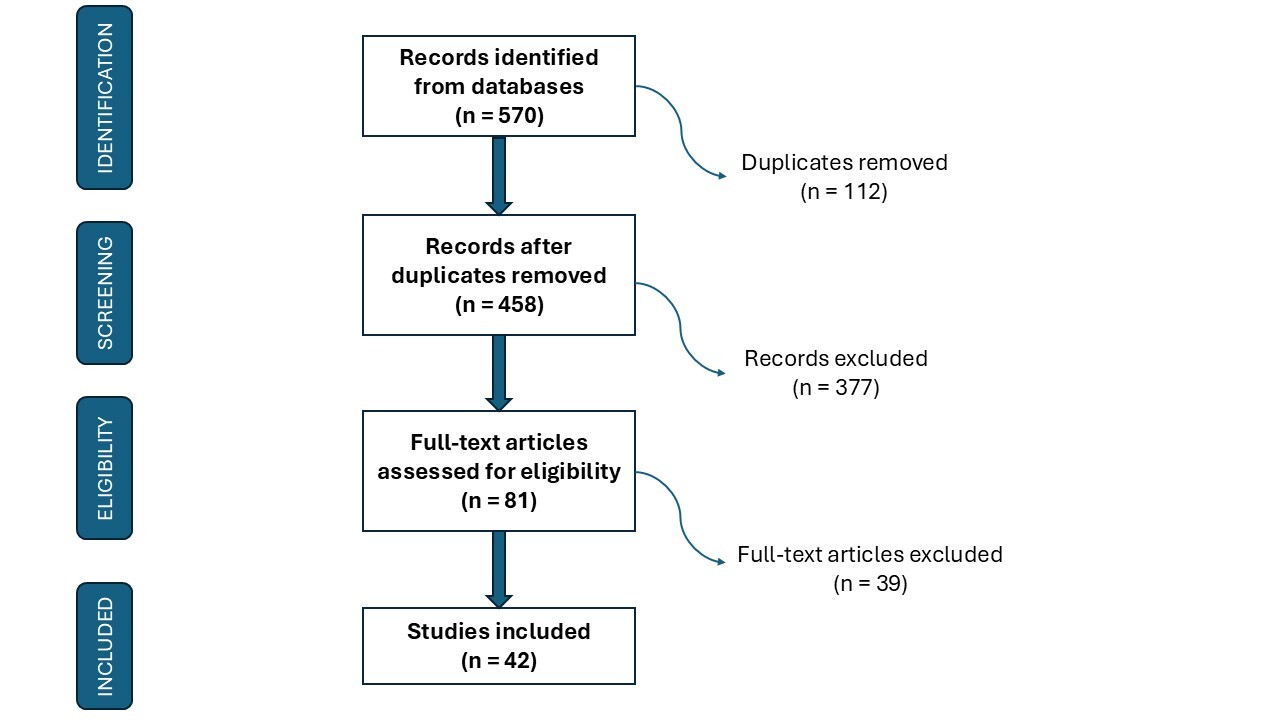
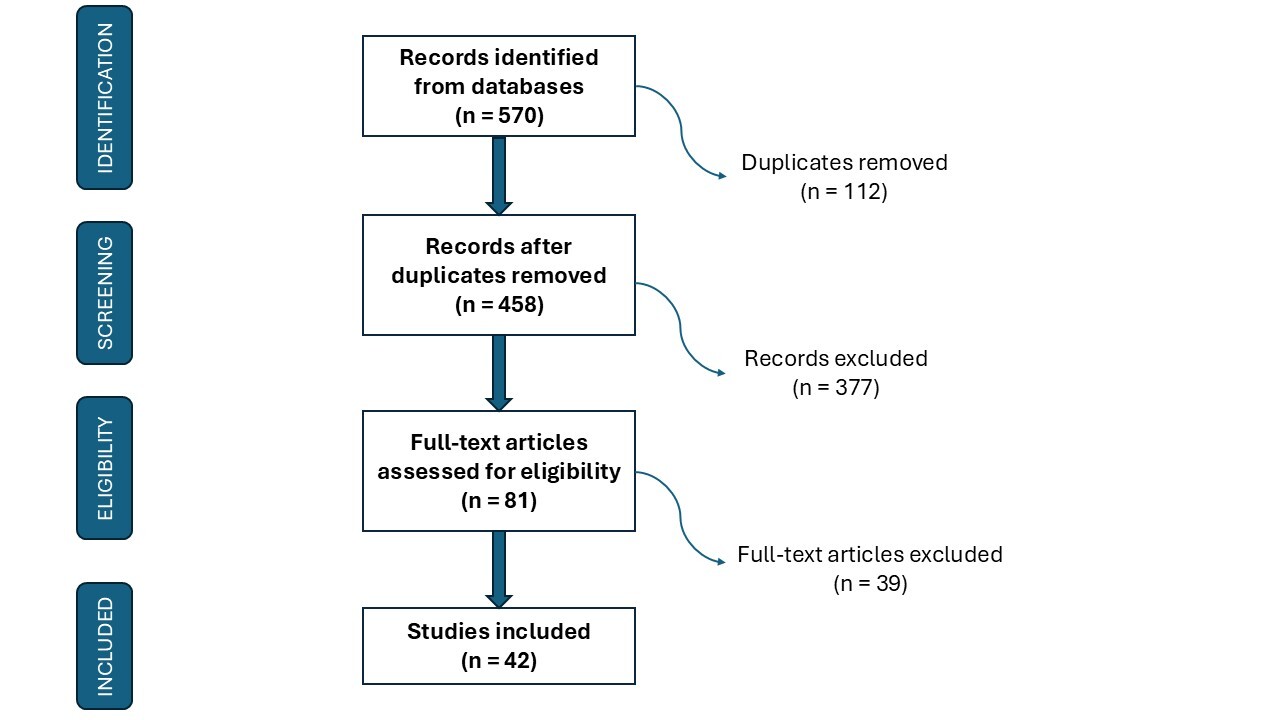
The search identified 570 records (PubMed: n = 206; Scopus: n = 350; PEDro: n = 14), with the most recent search conducted in April 2026. After removal of 112 duplicates, 458 records were screened by title and abstract, and 377 were excluded. The full texts of 81 articles were then assessed for eligibility, and 39 were excluded because the neurocognitive component was not actually evaluated despite indications in the abstract, the methodological scope was inconsistent with the objectives of the review, the populations were confirmed to be non-athletic, the studies were based exclusively on surgical procedures without rehabilitation or neurocognitive implications, or mental fatigue was defined solely as the athlete’s subjective perception of exhaustion rather than an objective decline in cognitive capacity. A total of 42 studies were included in the scoping review (Figure 1).
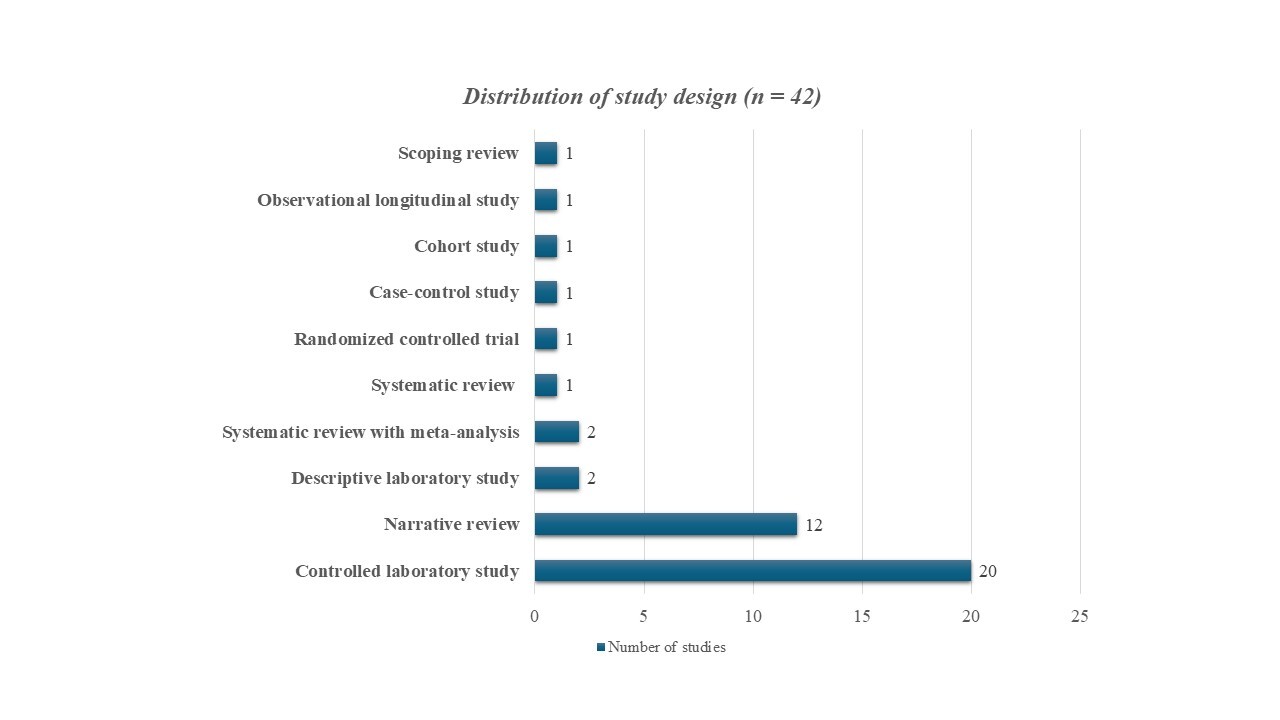
Approximately 76% of the scientific publications addressing this subject have been published since 2021.5,12–42 Furthermore, the 2024–2025 publication period alone accounts for 50% of the reviewed literature.5,12,14,16,18,22,23,25–29,31,33–37,39–41 Laboratory studies represented more than half of the articles analyzed.15,16,18,20–22,25,26,28,29,31,35–39,41–46 Second to laboratory studies were 12 narrative reviews.5,17,19,23,24,27,30,33,47–50 The remaining included articles consisted of heterogeneous study designs, including observational longitudinal studies,34 cohort studies,51 and randomized controlled trials.12 A limited number of systematic reviews were identified,13,14,40 of which two included a meta-analysis. The distribution of types of included articles is presented in Figure 2.
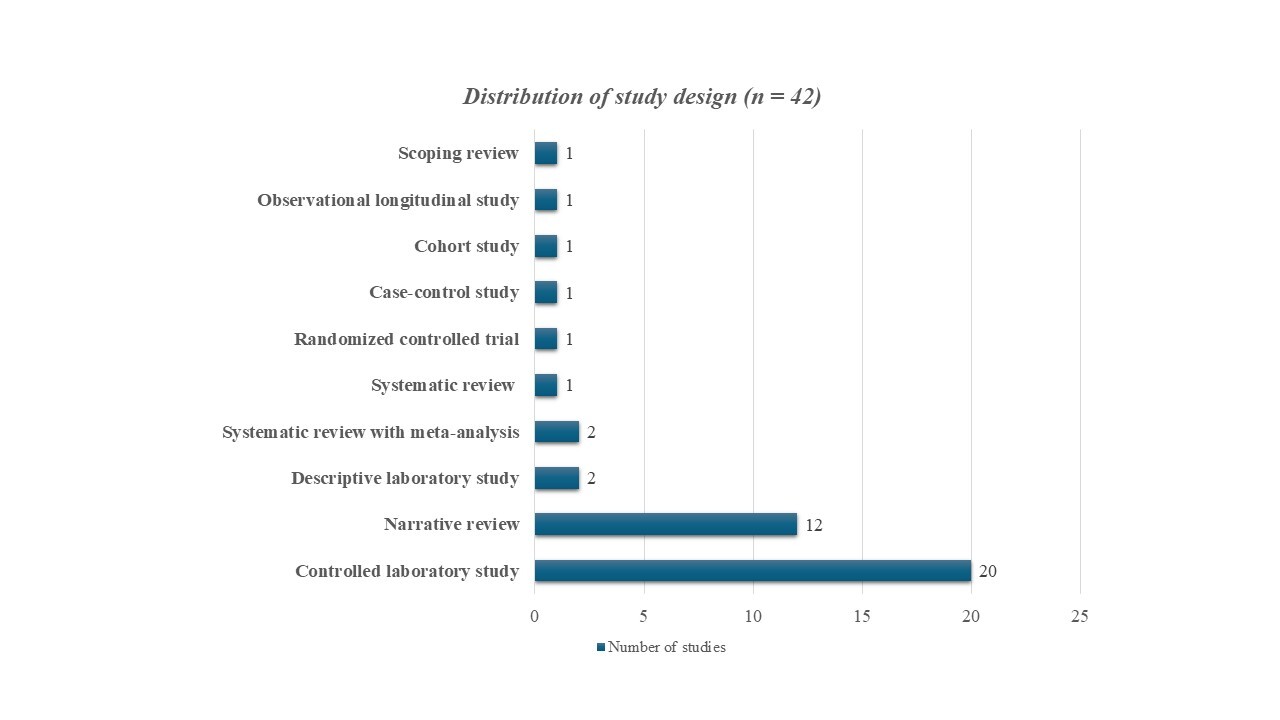
Overall, the current literature appears largely focused on experimental and exploratory neurocognitive assessments rather than prospective clinical investigations. Studies addressed both injury rehabilitation and prevention strategies.
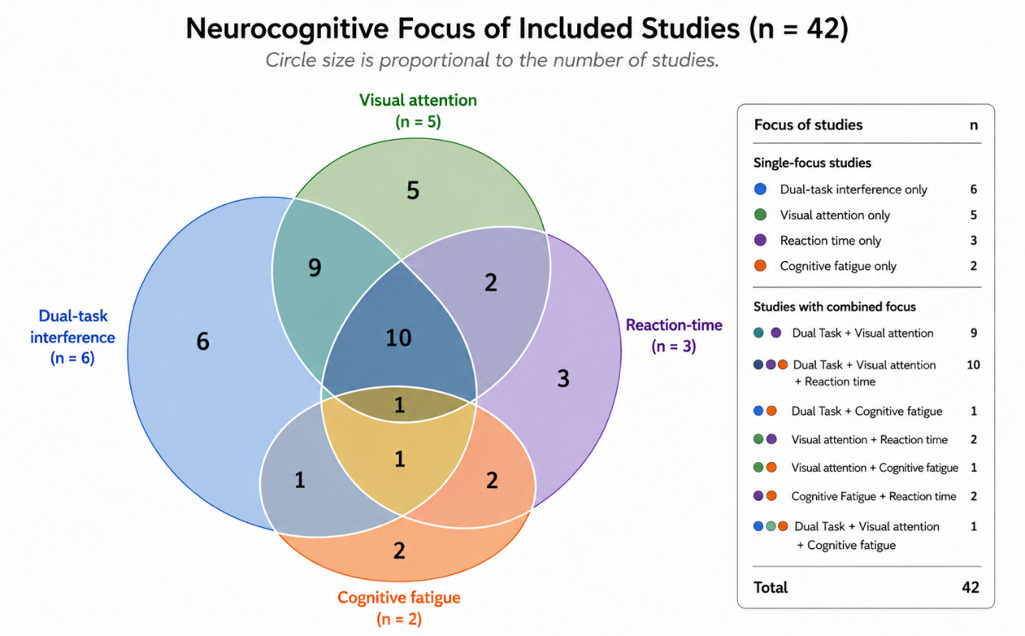
Figure 3 illustrates that dual-task interference and visual attention emerged as the most frequently investigated neurocognitive domains within the included literature. The most common combination of neurocognitive tasks was represented by studies simultaneously assessing dual-task interference, visual attention, and reaction time (n = 10),30–34,44–46,49,52 followed by studies combining dual-task interference and visual attention alone (n = 9).5,22–27,48,51 In contrast, isolated investigation of cognitive fatigue and reaction time was limited.
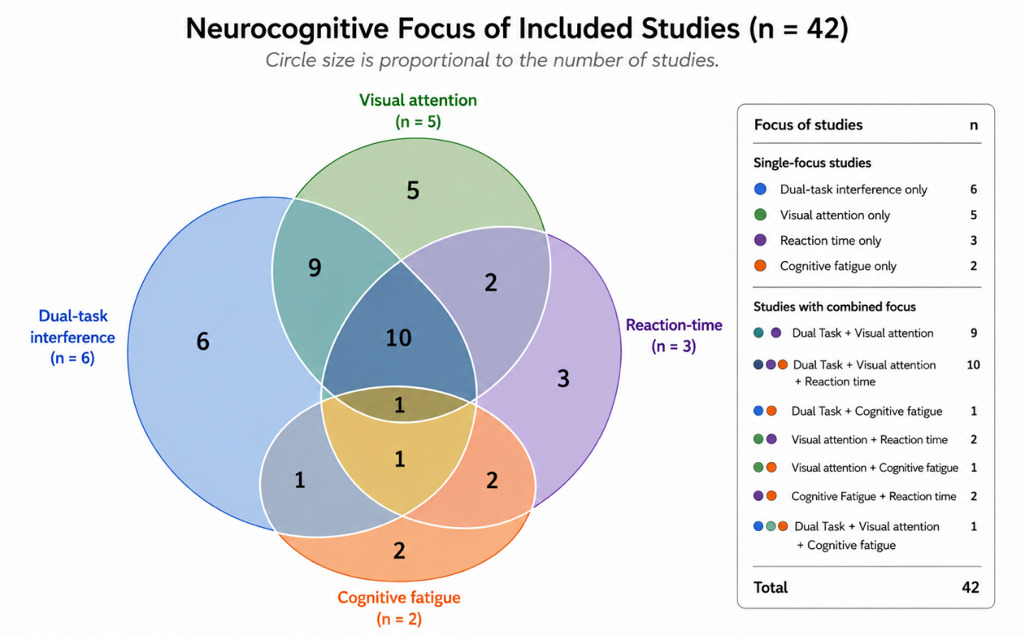
The neurocognitive domain and study design characteristics of the 42 included studies are summarized in Table 1.
Additional details regarding the included studies are included in Appendix B.
Dual-task interference
Six studies investigated dual-task interference in isolation, predominantly controlled laboratory designs (n=4) alongside two systematic reviews with meta-analysis. Assessment typically involved superimposing a cognitive or motor secondary task: balance, landing or COD tasks. Findings were mixed, dual-task conditions altered neuromuscular responses and static balance outcomes, yet meta-analytic evidence indicated that the resulting biomechanical changes did not meaningfully affect knee abduction or internal rotation loading during landing. Collectively, these studies suggest that dual-task interference influences motor planning and the clinical utility of return to sport testing but is unlikely to represent an isolated mechanical driver of ACL loading. (Appendix B, Table 1)
Visual attention
Five studies addressed visual attention, comprising three controlled laboratory studies and two narrative reviews. Assessment methods included experimental manipulation of visual-attentional load during cutting tasks and evaluation of cognitive-training or visual-perturbation interventions during rehabilitation. Increased visual-attentional demand was consistently associated with less favorable landing kinematics, characterized by reduced hip and knee flexion during the absorption phase, while cognitive-training interventions were associated with improved joint stiffness regulation and knee function after ACL reconstruction. These findings support incorporating visual-attentional challenges, such as stroboscopic or visual-perturbation training, into both prevention and return to sport testing protocols. (Appendix B, Table 2)
Dual-task interference and Visual attention
Nine studies examined the combined influence of dual-task interference and visual attention, including four controlled laboratory studies, four narrative reviews, and one cross-sectional observational study. This combination was primarily explored in the context of post-reconstruction neuromuscular control and rehabilitation frameworks. Athletes after ACL reconstruction tended to adopt compensatory neural strategies under combined visual and cognitive load, exhibited riskier biomechanics during jump landing tasks, and showed elevated injury-risk mechanics when an unanticipated cognitive challenge was superimposed on jump landings. Several narrative reviews proposed integrating visual-motor training across all phases of rehabilitation to help bridge the gap between return to sport and return to performance. (Appendix B, Table 3)
Reaction time
Three controlled laboratory studies investigated reaction time in isolation, using simple or choice reaction time paradigms during change-of-direction and landing tasks. Faster pre-motor times were associated with more favorable knee-loading patterns during dynamic single leg landings, while athletes after ACL reconstruction demonstrated impaired proactive inhibitory control compared with healthy controls. These findings support reaction time as an early, though isolated, marker of neurocognitive-motor readiness rather than a standalone screening tool. (Appendix B, Table 4)
Visual attention and Reaction time
Two controlled laboratory studies combined visual attention and reaction time assessment during neurocognitively challenged drop-landing and hop landing tasks. Both studies reported that athletes after ACL reconstruction exhibited kinematic knee impairments specifically when landings were performed under unplanned, visually and temporally demanding conditions, whereas planned conditions did not elicit the same deficits. This reinforces the clinical value of unanticipated, reactive testing paradigms over closed, predictable return to sport assessments. (Appendix B, Table 5)
Dual-task interference, Visual attention and Reaction time
This was the most frequently investigated combination, comprising ten studies across varied designs, including controlled laboratory studies, narrative reviews, a scoping review, a case-control study, and an observational longitudinal study. Collectively, these studies indicate that individuals with poorer baseline neurocognitive scores exhibit worse jump-landing performance, that neurocognitive deficits differentiate ACL-injured from uninjured individuals across multiple subtests, and that cognitive deficits can persist for years after injury despite completed rehabilitation. Sex-specific differences in neurocognition were also proposed as a contributor to the disproportionately higher female ACL injury risk. Overall, this body of evidence most strongly supports viewing neurocognitive function as a multidimensional construct relevant across injury screening, rehabilitation and prevention. (Appendix B, Table 6)
Cognitive fatigue
Two studies, one narrative review and one controlled laboratory study, examined cognitive fatigue in isolation. Experimentally induced mental fatigue significantly altered lower-limb biomechanics during sharp stop-jump maneuvers, while late-stage return to sport training and testing protocols were criticized for inadequately accounting for fatigue-related decrements in neuromuscular performance. (Appendix B, Table 7)
Cognitive fatigue and Reaction time
Two laboratory studies examined the combined effect of cognitive fatigue and reaction time. Fatigue protocols were consistently associated with altered knee movement patterns, and athletes after ACL reconstruction demonstrated greater cognitive-motor interference than uninjured controls, suggesting that fatigue may compound pre-existing reaction time deficits in this population. (Appendix B, Table 8)
Cognitive fatigue and Dual-task interference
One systematic review addressed the combined effect of cognitive fatigue and dual-task interference, reporting that increasing cognitive demand during motor tasks was associated with significant changes in biomechanical variables linked to ACL injury risk, supporting a dose-dependent relationship between task complexity and injury-relevant biomechanics. (Appendix B, Table 9)
Cognitive fatigue and Visual attention
One controlled laboratory study examined cognitive fatigue combined with visual attention, reporting that adding a secondary cognitive task to a drop vertical jump increased the sensitivity of the assessment to detect atypical landing mechanics in athletes after ACL reconstruction, supporting the clinical utility of combined cognitive-visual loading during return to sport testing. (Appendix B, Table 10)
Cognitive fatigue, Visual attention and Dual-task interference
One controlled laboratory study assessed all three domains concurrently, finding that postural control remained altered at least one year after ACL reconstruction when sensory, motor and cognitive challenges were combined, underscoring the long-term persistence of neurocognitive-motor deficits well beyond typical return to sport timelines. (Appendix B, Table 11)
DISCUSSION
This scoping review mapped the current evidence regarding neurocognitive factors across ACL injury mechanisms, rehabilitation, and prevention. Overall, the type of available evidence varies widely and spanning narrative reviews and a scoping review, observational studies, systematic reviews, to a single randomized controlled trial. This variability in evidence limits the conclusions that are able to be drawn. Four principal trends emerged. First, neurocognitive domains appear to influence movement quality and motor planning during sport-specific tasks. Second, neurocognitive alterations frequently persist following ACL reconstruction despite satisfactory rehabilitation. Third, contemporary rehabilitation and RTS frameworks only partially address cognitive demands of open-skill sports. Finally, although interest in this field has rapidly increased, the available evidence remains mainly based on laboratory and exploratory investigations.
Dual-task interference
Dual-task interference emerged as one of the most consistently investigated neurocognitive domains across the included studies.5,12–17,22–27,30–34,42,44–46,48,49,51,52 Collectively, the available evidence suggests that performing a secondary cognitive task during sport-specific movements alters motor planning and lower limb biomechanics. The studies included in this review demonstrate that the operated limb, due to ACL rupture, tends to exhibit different neuromuscular responses to environmental challenges compared with non-injured athletes. Cognitive demands during dual-task actions, such as change of direction movements, could influence lower limb biomechanics, particularly the athlete’s ability to land correctly without increasing ACL loading and consequently exposing the knee to injurious movement patterns.
However, a recent meta-analysis13 has demonstrated that small biomechanical alterations during landing do not significantly affect knee abduction loading or internal rotation moments. These findings suggest that landing while concurrently performing another cognitive or motor task cannot be considered the singular mechanism responsible for ACL rupture. This apparent discrepancy between altered neuromuscular strategies and preserved joint-loading magnitudes is likely explained, at least in part, by the marked heterogeneity of the dual-task paradigms used across studies, which range from simple auditory or verbal secondary tasks to complex, sport-specific decision-making challenges; such methodological variability makes it difficult to isolate a consistent dose-response relationship between the cognitive load imposed and the resulting biomechanical output. Where a relationship between task complexity and biomechanical change has been reported, it appears more strongly related to unanticipated and higher-order cognitive demands (such as reactive change of direction decisions) than to simple concurrent cognitive loading, suggesting that the nature and complexity of the secondary task, rather than its mere presence, may be the more clinically relevant variable.
Visual attention
Visual attention emerged as one of the central neurocognitive domains influencing motor planning during sport-specific actions. During non-contact ACL injury, a cognitive mechanism known as “inattentional blindness” may occur, representing a phenomenon where unexpected events induce a brief and involuntary cognitive deficit leading to alterations in neuromuscular activity. In other words, the athlete fails to recognize important visual cues from the external environment simply because they are unexpected. Although the eyes are attentive to surrounding external stimuli, the brain fails to consciously process what is being seen.6
The included studies5,18–27,30–36,41,42,44–49,51,52 demonstrate that an increase in visual-attentional demands in athletes is likely associated with greater ACL loading, mainly due to reduced hip and knee flexion during the absorption phase. Furthermore, the implementation of visual-perturbation training such as stroboscopic training during motor-control exercises may improve visuomotor efficiency throughout rehabilitation. From a prevention perspective, cognitive training may also have the potential to enhance the processing mechanisms involved in interpreting external environmental stimuli. Within rehabilitation settings, the visual-cognitive control to chaos continuum represents an advanced framework designed to replicate the dynamic and continuously changing nature of sport-specific environments. This approach can be considered a true form of neuroplastic therapy, in which multiple strategies are used to shift the athlete’s attentional focus from internal to external cues. The most implemented tools include stroboscopic glasses, smartboards and virtual reality systems. Evidence suggests that athletes following ACL reconstruction may exhibit a higher likelihood of developing injurious movement patterns when unanticipated cognitive challenges are introduced during jump tasks.22
Reaction time
The viscoelastic properties of muscles are constantly regulated according to functional demands. A shorter reaction time during neurocognitive tasks may provide an advantage in preparing the body more effectively for postural and stability perturbations. However, this single factor alone cannot represent the key mechanism for reducing ACL rupture rates. An ACL rupture occurs within approximately 70 milliseconds, whereas the fastest reflexive response for dynamic stabilization requires at least 35 milliseconds purely to initiate muscular tension development. The cognitive evaluation of potential coordination errors may require up to 500 milliseconds. Therefore, generating an appropriate motor response may require between 450 and 1200 milliseconds. For these reasons, it is essential that athletes possess advanced feed-forward motor control and cognitive planning abilities during match play.6
Cognitive fatigue
Collectively across the studies,37–42,50 cognitive fatigue could be defined as a reduction in cognitive capacity that affects the neurocognitive mechanisms underlying non-contact ACL injury. Studies included37,50 have demonstrated that simulating a state of acute fatigue could alter movement patterns, particularly through reduced knee flexion, and negatively affects neuromuscular performance.
At the same time, however, across several sports, the majority of ACL ruptures occur during the immediate stages of competition when the influence of cognitive fatigue has likely not yet become significant. In men’s soccer, ACL ruptures occur almost exclusively during the first half of play.9 In men’s rugby, 40% of ACL ruptures occur within the first 15 minutes of the match.53 Similarly, in women’s basketball, approximately 90% of ACL injuries occur within the first 20 minutes of play, with half occurring during the first 10 minutes.54 Therefore, cognitive fatigue during competition cannot be considered an isolated risk factor for ACL injury. Rather, this temporal pattern may reflect the interaction of multiple factors, including neurocognitive readiness, attentional demands, neuromuscular preparedness, and sport-specific contextual factors. However, the available evidence does not allow any of these factors to be identified as a specific explanation for the increased risk observed during the opening stages of competition. Prospective studies examining neurocognitive, neuromuscular, and contextual variables across different phases of competition are therefore needed to clarify this relationship.
CLINICAL IMPLICATIONS
Traditional rehabilitation approaches focusing exclusively on muscular strengthening tend to overlook the critical role of the central nervous system and the “brain–body connection” in ACL injuries.22 The findings of this scoping review support the progressive incorporation of neurocognitive challenges throughout rehabilitation rather than limiting them to the ultimate stages of return to sport. Secondary cognitive tasks, visual perturbation, externally focused motor-learning strategies and sport-specific decision-making tasks may improve the ecological validity of rehabilitation and better replicate competitive demands. Furthermore, RTS assessment environments should be realistic and context-specific, whereas current protocols are primarily performed in predictable and closed environments.19 Nevertheless, neurocognitive training should not be considered a replacement for established rehabilitation programs. Instead, it should complement evidence-based strength, neuromuscular and sport-specific conditioning programs within a comprehensive biopsychosocial rehabilitation framework.
LIMITATIONS
The analyzed literature appears to remain at an early stage of development, as evidenced by the predominance of laboratory studies and narrative reviews, alongside the limited number of randomized controlled trials, cohort studies and longitudinal investigations. Consequently, there is currently a lack of prospective evidence that is clinically translational regarding the integration of neurocognitive components within ACL rehabilitation and prevention strategies. An important limitation relates to the review methodology itself. Title and abstract screening, as well as full-text eligibility assessment, were performed by a single reviewer, which increases the risk of selection bias in the studies included. Finally, the search was limited to three databases (PubMed, Scopus and PEDro); while these sources provide broad coverage of the sports medicine and rehabilitation literature, the addition of additional databases in future updates of this review could further strengthen the comprehensiveness of the evidence base.
FUTURE DIRECTIONS
Future research should prioritize high-quality prospective cohort studies and randomized controlled trials to determine whether integrating neurocognitive interventions into rehabilitation leads to clinically meaningful improvements in return to sport rates and secondary ACL injury risk. Future studies should prioritize the development and validation of standardized neurocognitive assessment batteries capable of supporting rehabilitation progression and return to sport decision-making. Another important research priority should be the creation of ecologically valid testing environments that reproduce the perceptual, cognitive and motor demands experienced during sport competition.
CONCLUSIONS
In the limited available literature, this scoping review found that neurocognitive domains: dual-task interference, visual attention, reaction time and cognitive fatigue; were associated with changes in lower limb biomechanics and neuromuscular control during sport-specific tasks, and that neurocognitive alterations appear to persist after ACL reconstruction. However, the heterogeneity of study designs, populations, neurocognitive constructs and assessment methods, together with the limited number of high-level studies, prevents definitive conclusions regarding their individual contribution to ACL injury and reinjury or their direct impact on return to performance outcomes.
The neurocognitive component has been described as one of the “missing fragments” required for comprehensive ACL rehabilitation and injury prevention frameworks. However, it cannot be considered the single factor capable of resolving low return to performance rates and high re-injury incidence, particularly among elite athletes. These issues cannot be attributed exclusively to inadequate neurocognitive integration within rehabilitation and prevention strategies. ACL injury is an imperfect mosaic created by multiple interacting components that overlap in a non-linear manner, including biomechanical, neurophysiological, psychosocial and genetic factors.
Conflicts of Interest
The author reports no conflicts of interest.