INTRODUCTION
Anterior cruciate ligament (ACL) injury is a common and potentially life-altering event, particularly among young and physically active individuals. National ACL registries from several countries, including Norway, Denmark, Sweden, Luxembourg, New Zealand, the United Kingdom, and the United States, report annual incidence rates ranging from 32 to 70 per 100,000 inhabitants.1,2 In the United States alone, approximately 400,000 anterior cruciate ligament reconstructions (ACLR) are performed annually.3 Unlike countries with established national ACL or knee ligament registries, Austria currently lacks a national registry, limiting the availability of standardized epidemiological data on ACLR incidence.
Despite surgical intervention, many individuals experience difficulty returning to their previous level of sport. While approximately 81% of individuals return to some level of sport following ACLR, only 65% resume their pre-injury level and just 55% return to competitive sport.4 Persistent impairments in knee-related quality of life and reductions in long-term physical activity are common and may have substantial personal and societal consequences.4,5
Rehabilitation following ACLR plays a central role in functional recovery, return to sport (RTS) outcomes, and long-term knee health. Evidence-based clinical practice guidelines (CPGs) and RTS criteria have been developed to support physiotherapists in delivering optimal rehabilitation, reducing reinjury risk, and promoting sustainable participation in sport and physical activity.6 Nevertheless, long-term outcomes remain suboptimal. A recent systematic review reported a prevalence of post-traumatic osteoarthritis (PTOA) of approximately 38% following surgically treated ACL injuries and 41% following non-operative treatment, with median follow-up periods exceeding 14 years.5 These findings suggest that ACL injury itself initiates degenerative joint changes and underscore the importance of high-quality, guideline-informed rehabilitation and well-prepared RTS decision-making.5,7
Despite the availability of CPGs, adherence to guideline-recommended rehabilitation and RTS criteria among physiotherapists appears inconsistent. Research in musculoskeletal rehabilitation indicates persistently low adherence to evidence-based guidelines, contributing to variability in clinical practice and non-evidence-based care.8,9 In ACLR rehabilitation specifically, Van Melick et al.10 reported that only 44% of pivoting athletes were tested according to guideline RTS criteria, and only 23% received return-to-play advice consistent with the guideline recommendations, with higher adherence observed among sports-specialized physiotherapists compared with non-specialists.
Multiple factors may influence physiotherapists’ adherence to CPGs and RTS criteria following ACLR. Guideline-related issues such as inconsistent structure, limited clarity, and poor applicability may hinder implementation.11–14 A systematic review evaluating ACLR CPGs using the AGREE II instrument found that the domain of “applicability” consistently scored lowest, indicating challenges in translating recommendations into daily clinical practice.14 In addition, patient-related factors—including fear of reinjury, reduced knee-related self-efficacy, psychological distress, and unrealistic expectations—may negatively influence rehabilitation engagement and RTS outcomes.15,16 Contextual and organizational factors, such as limited insurance coverage, time constraints, and long waiting periods, further complicate adherence to evidence-based rehabilitation practices.17
While quantitative studies have identified associations between selected factors and rehabilitation outcomes, they are limited in their ability to capture the complexity of clinical decision-making, professional judgment, and contextual influences that shape physiotherapists’ behavior in everyday practice.18–20
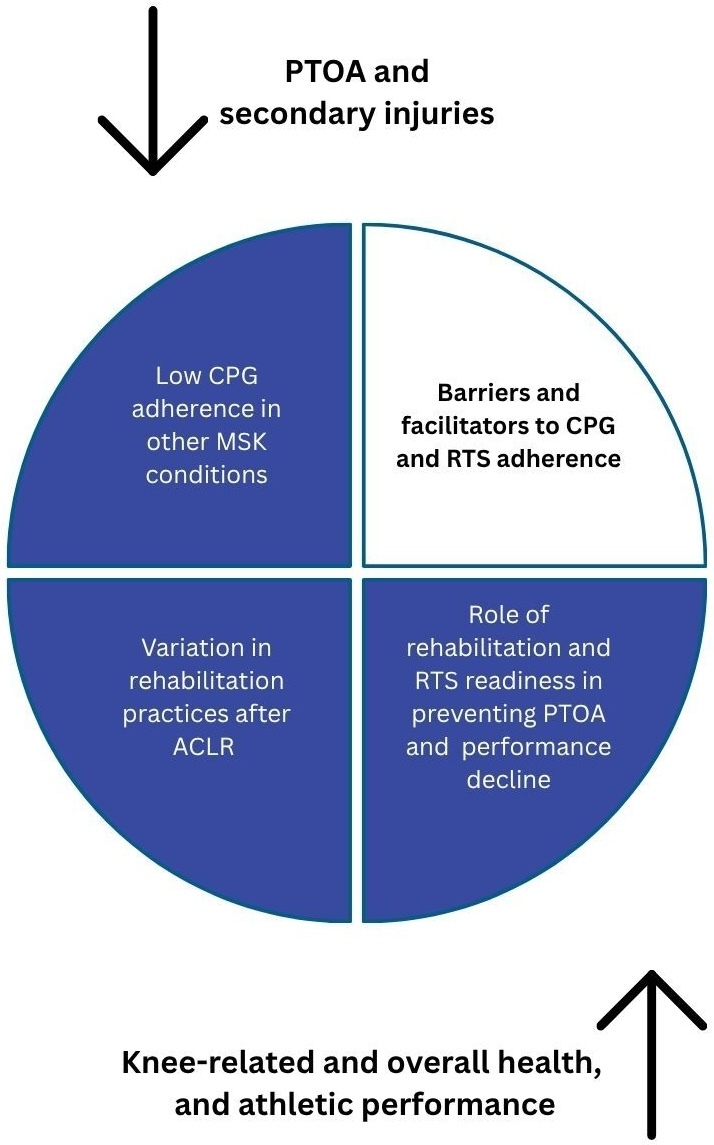
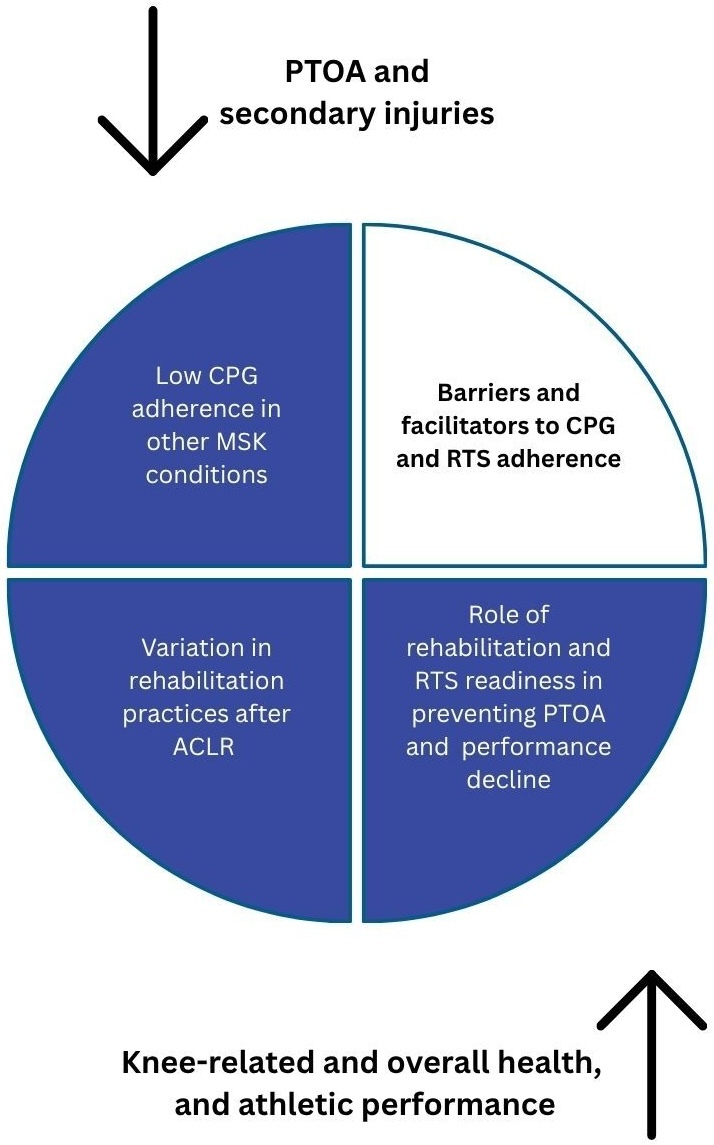
As illustrated in Figure 1, this study addresses critical gaps at the intersection of long-term patient outcomes and current rehabilitation practice. While PTOA, secondary injuries, and diminished knee-related health and athletic performance remain prevalent following ACL injury, physiotherapists demonstrate low adherence rates to clinical practice guidelines in musculoskeletal rehabilitation generally and considerable variation in rehabilitation practices following ACLR specifically. Despite evidence supporting the importance of adequate rehabilitation and evidence-based RTS decision-making in optimizing patient outcomes, the barriers and facilitators affecting physiotherapists’ adherence to CPGs and RTS criteria in ACLR rehabilitation remain poorly understood. The purpose of this study was to explore barriers and facilitators influencing Austrian physiotherapists’ adherence to CPGs and RTS criteria during rehabilitation after ACLR.
METHODS
Study Design and Setting
This qualitative study employed an interpretative research approach using semi-structured interviews and was reported in accordance with the Consolidated Criteria for Reporting Qualitative Research (COREQ) checklist. Data collection was conducted over a four-month period in 2024 in a mixed urban and regional setting within Austria. Participants were physiotherapists working in private practice settings, where later-phase ACLR rehabilitation and RTS decision-making commonly occurred. Austria’s healthcare system provides physiotherapy services through a combination of statutory social health insurance and private-pay arrangements. For ACLR rehabilitation, physiotherapists may have additional training through postgraduate specialization in sports physiotherapy at master’s level, as well as shorter postgraduate courses specifically focused on ACL rehabilitation, although such specialization is not mandatory for providing ACLR rehabilitation.21,22
Ethics
The study was conducted in accordance with the University College Cork Code of Research Conduct.23 Ethical approval was obtained from the University College Cork Social Research Ethics Committee (January 31, 2024). The Ethics Committee of Salzburg, Austria, confirmed that no additional ethical approval was required under the Salzburger Krankenanstaltengesetz 2000 (registration number ECS 1161/2023). All participants provided written and verbal informed consent prior to participation.
Participants and Sampling
Participants were licensed physiotherapists with clinical experience in the rehabilitation of individuals following ACLR. Purposive sampling was used to recruit participants working across a range of clinical settings, including private practice and multidisciplinary rehabilitation environments, to capture diverse perspectives on clinical decision-making and guideline use. Potential participants were contacted via email and invited to participate in the study. Variation in professional experience, clinical focus, and patient populations was sought to enhance the richness of the data. Recruitment continued until data saturation was reached, defined as the point at which no new relevant information emerged. Saturation was achieved after nine interviews.
Data Collection
Semi-structured, face-to-face interviews were conducted at participants’ workplaces by a female researcher. At the time of the study, the researcher worked as a physiotherapist with a Bachelor of Science in Health Studies (Physiotherapy) while concurrently pursuing a postgraduate degree in sports and exercise medicine. The researcher had clinical experience in post-surgical rehabilitation, particularly in ACLR management, and had received training in qualitative research methods, including conducting semi-structured interviews.
No prior relationship was established between the researcher and participants before study commencement. Participants were informed that the researcher was a physiotherapist and postgraduate student with an interest in rehabilitation following ACLR, and that the purpose of the study was to explore barriers and facilitators to CPG adherence. Interviews were conducted in a private setting with only the researcher and the participant present.
The researcher acknowledged her clinical background and interest in ACLR rehabilitation as potential influences on data collection and interpretation. To address this, she engaged in reflexive practice through maintaining field notes that documented assumptions, decision-making processes, and potential biases throughout the study.
Interviews lasted approximately 45—75 minutes and were audio-recorded. No repeated interviews were conducted. The interview guide (Appendix 1) was pilot-tested in three interviews, which were not included in the analysis. The interview comprised two parts. First, participants were asked to describe their diagnostic and therapeutic decision-making using two hypothetical patient cases (an activities-of-daily-living patient and a professional athlete). Second, participants reviewed three high-quality ACLR CPGs identified by Andrade et al14: the American Physical Therapy Association guideline,24 the Royal Dutch Society for Physical Therapy guideline,25 and the Multicenter Orthopedic Outcomes Network guideline.26 This aimed to explore factors influencing adherence to CPGs and RTS criteria.
Participants were offered the opportunity to review their transcripts for accuracy as a form of member checking; no changes were requested. While formal member checking of interpretations was not conducted, this transcript review process ensured factual accuracy and provided participants with the opportunity to clarify or elaborate on their responses. Participants did not provide feedback on the study findings or thematic interpretations. No participants refused to participate or withdrew from the study after enrolment.
Data Handling
Interviews were transcribed verbatim and anonymized prior to analysis. Audio files were deleted after transcription. All data were stored securely on encrypted, University College Cork-approved cloud storage with access restricted to the research team, in accordance with applicable data protection standards.
Data Analysis
Data were analyzed using reflexive thematic analysis following Braun and Clarke’s six-phase framework.27 The analysis was conducted by a single researcher. Transcripts were repeatedly reviewed to achieve familiarization, after which open coding was performed using an inductive approach to capture patterns relevant to barriers and facilitators of CPG and RTS adherence, with themes derived from the data rather than predefined.28 Codes were iteratively grouped into subthemes and overarching themes aligned with the study aim.
The NVivo12 software (QSR International Pty Ltd, Doncaster, Victoria, Australia) was used to support data organization and analysis. Representative quotes were selected to illustrate each theme. Themes were categorized as barriers or facilitators based on their influence on adherence. Throughout the analysis process, the researcher maintained a written trail documenting coding decisions, theme development, and interpretive choices to enhance transparency and trustworthiness.
RESULTS
Participant Characteristics
Nine physiotherapists met the inclusion criteria and participated in this study (response rate: 13%). Participants were predominantly male (78%), self-employed (100%), and had a mean clinical experience of nine years (range: 5—14). Most participants specialized in sports physiotherapy (78%). Detailed demographic characteristics are presented in Table 1.
Overview of Themes
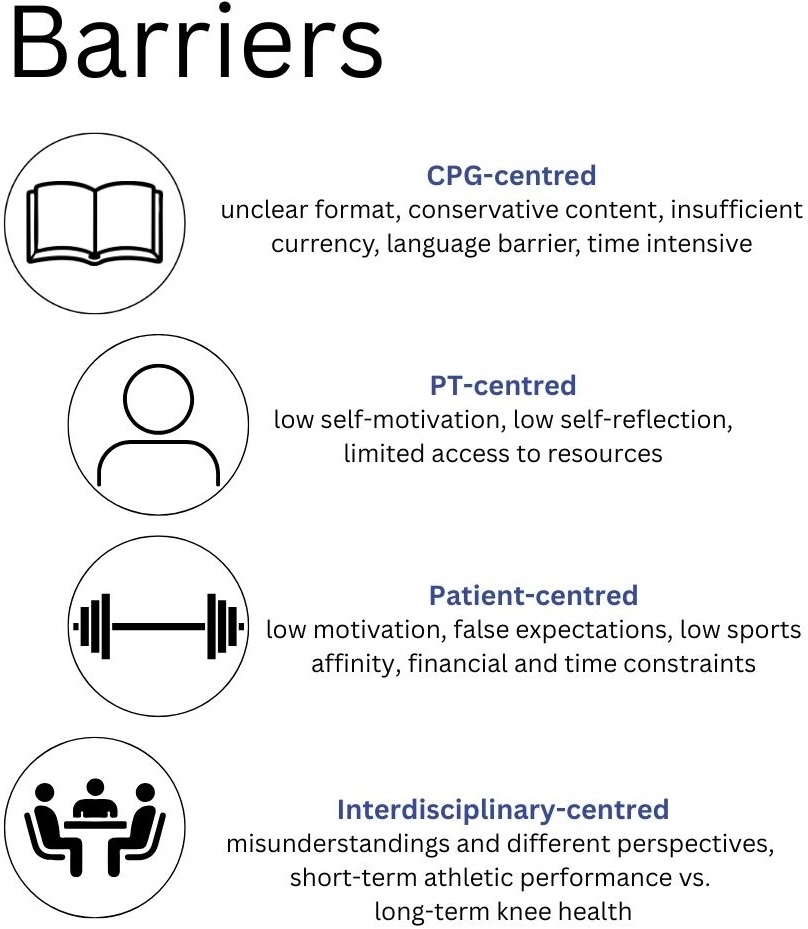
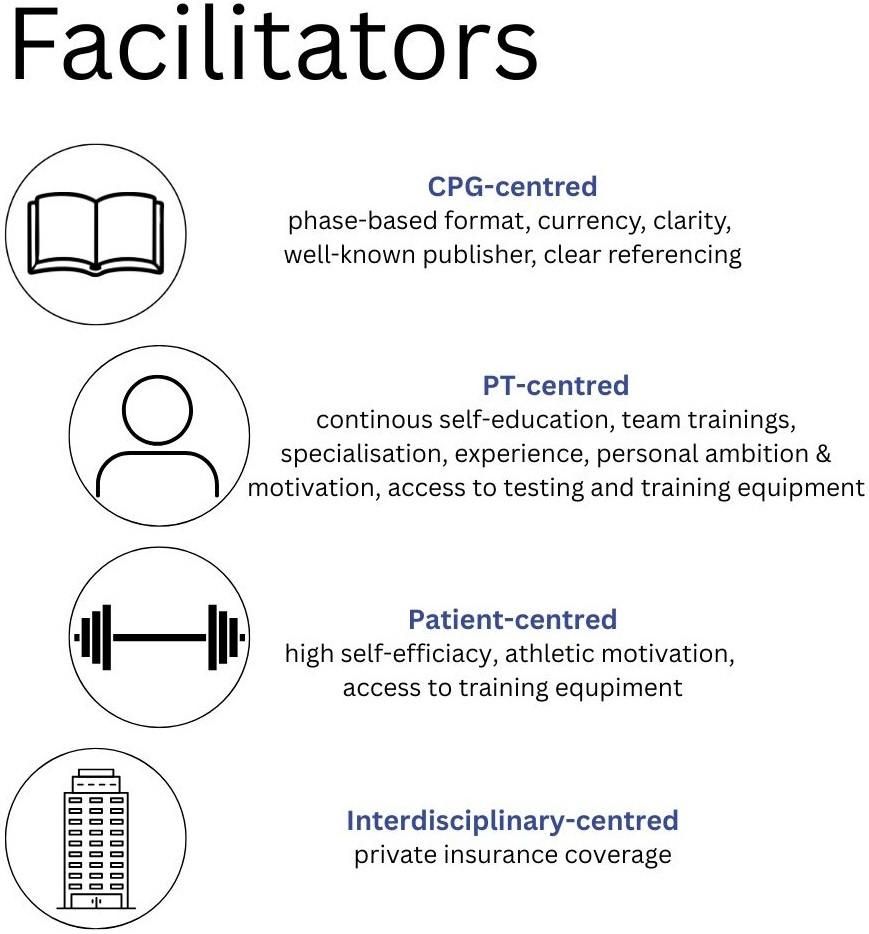
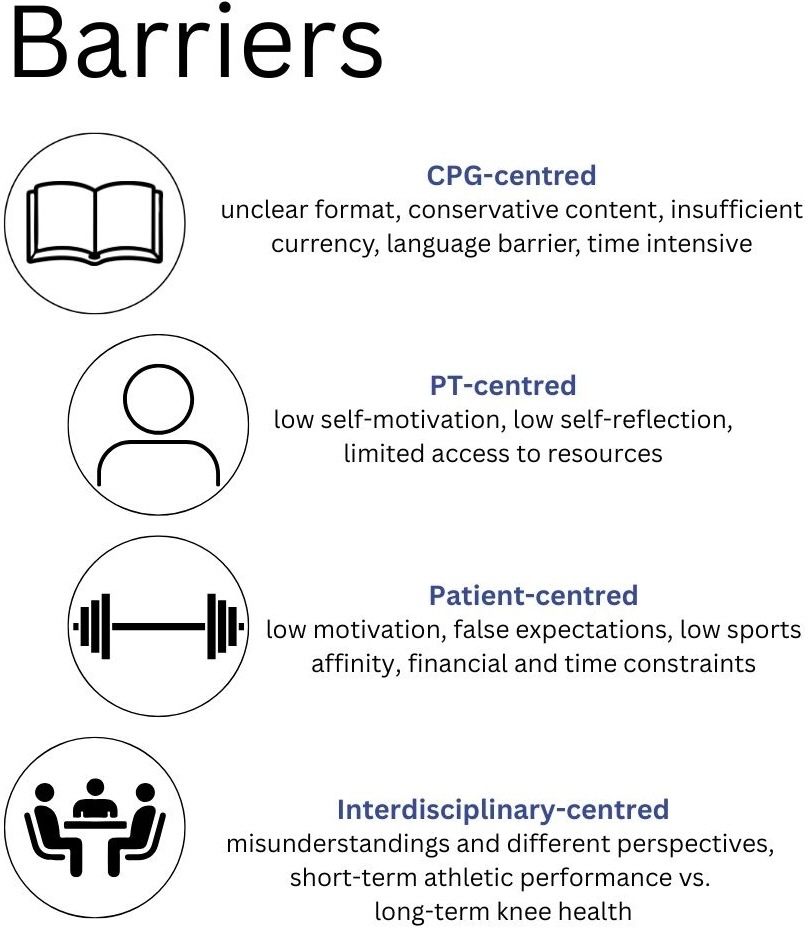
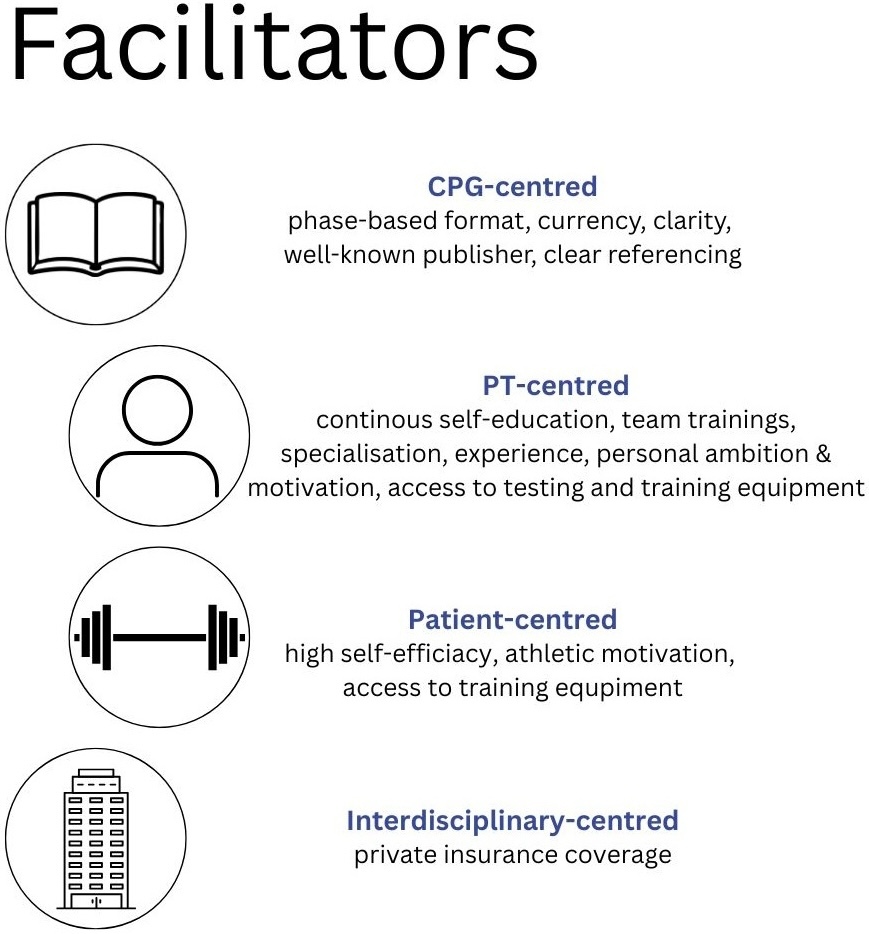
The reflexive thematic analysis identified four key themes describing barriers and four key themes representing facilitators influencing physiotherapists’ adherence to ACLR CPGs and RTS criteria. These themes reflected guideline usability, patient expectations and engagement, physiotherapist-related factors, and interdisciplinary dynamics within the rehabilitation process.
An overview of themes and subthemes is presented in Table 2 (Barriers) and Table 3 (Facilitators), which complete the narrative findings below. A visual summary of the barrier and facilitator themes is provided in Figure 2 and 3, respectively.
Barriers to CPGs and RTS Adherence
Limited Usability of ACLR CPGs
Participants frequently described difficulties using existing ACLR CPGs in daily clinical practice. Limited familiarity with the reviewed guidelines was commonly reported. Participants indicated that guideline structure and layout often complicated their clinical application. Most physiotherapists noted that recommendations were not clearly organized according to rehabilitation phases, and that evidence levels or supporting references were sometimes difficult to identify. Additional representative participant quotations are presented in Table 4.
Additionally, some participants perceived the intervention recommendations as overly conservative or outdated. Traditional physiotherapeutic exercise approaches were described as insufficiently progressive, with limited emphasis on higher-load strength training or contemporary rehabilitation strategies.
Time constraints in routine clinical practice were also described as restricting the implementation of guideline-recommended assessments and standardized questionnaires.
One participant summarized the difficulty of integrating guideline documents into daily practice:
“You would need a lot of time to read into it, so it’s difficult for daily use.” (PT6)
Patient Expectations and Engagement influence Guideline Implementation
Patient-related factors were frequently described as influencing guideline adherence. Participants reported that unrealistic expectations regarding rehabilitation duration following ACLR were common, with some patients anticipating recovery timelines that were not consistent with evidence-based rehabilitation processes.
Low sports affinity and limited baseline physical activity were also described as barriers, as some patients struggled to understand the relevance of sport-specific rehabilitation components such as jumping or running tasks.
“Patients think they’ll be done after one or two months post-surgery.” (PT2)
Participants further noted that rehabilitation was sometimes discontinued prematurely once patients experienced functional improvement, often due to time constraints, financial considerations, or reduced perceived necessity for continued therapy.
Professional Attitudes and Resource Limitations shape Guideline Adherence
Participants described several physiotherapist-related factors that may influence adherence to ACLR CPGs and RTS criteria. Personal attitudes toward evidence-based practice, including limited self-reflection or reduced motivation for continuing professional development, were perceived as potential barriers (Table 4).
In addition to personal factors, practical limitations within physiotherapy clinics were frequently mentioned. Participants described restricted clinic space and limited access to appropriate testing equipment as barriers to implementing objective strength testing and functional performance assessments, particularly during later rehabilitation phases.
One participant emphasized that barriers to guideline adherence may extend beyond structural constraints:
“Often the barriers are not technical but personal.” (PT8)
Language barriers were also described as a potential limitation, as many ACLR CPGs are primarily published in English, which may reduce accessibility for clinicians whose primary language is not English.
Interprofessional Misalignment Influences Rehabilitation Decisions
Participants described interdisciplinary factors as influencing the implementation of guideline-based rehabilitation. Differences in evidence-based understanding between medical doctors and physiotherapists were perceived as a barrier to consistent rehabilitation strategies. Participants reported that differing perspectives on rehabilitation timelines and RTS decisions could influence treatment approaches and patient outcomes (Table 4).
One participant emphasized the importance of shared understanding between healthcare professionals involved in ACLR rehabilitation:
“The doctor should have the same understanding of ACL rehabilitation as the physiotherapist.” (PT1)
In elite sports environments, participants additionally described financial pressures and performance expectations as factors that may influence RTS decisions. In such contexts, participants reported that competitive demands may sometimes outweigh long-term knee health considerations.
Facilitators to CPGs and RTS Adherence
Structured and Transparent Guidelines Support Clinical Implementation
Participants reported that clear guideline structures facilitated the implementation of ACLR CPGs in clinical practice. Guidelines that presented rehabilitation in clearly defined phases, with explicit treatment goals and transparent referencing of evidence, were perceived as easier to use. Participants noted that structured layouts, highlighted sections, and consistent formatting improved readability and supported efficient clinical decision-making (Table 4).
One participant emphasized the importance of guideline design for daily clinical usability:
“If the layout is good, including phases and clear goals, it becomes easy to use.” (PT8)
Professional Development and Resources Enable Guideline-Based Practice
Participants described ongoing professional development as a key facilitator of guideline adherence. Continuous self-education, specialization in sports rehabilitation, and engagement with current research were reported to support the integration of evidence-based practices into clinical decision-making (Table 4).
Team-based knowledge exchange and collaboration with colleagues were also described as valuable mechanisms for staying up to date with evolving rehabilitation approaches.
In addition, access to appropriate testing and training equipment was perceived as an important structural facilitator that allowed clinicians to implement objective assessments and guideline-recommended rehabilitation strategies.
As one participant noted:
“If you are well-equipped with resources and testing equipment, it’s easier to adhere to guidelines.” (PT2)
Patient Motivation and Engagement Facilitate Rehabilitation Progression
Participants reported that patient-related factors could strongly support guideline-based rehabilitation. In particular, high levels of athletic motivation and strong self-efficacy were perceived as facilitating adherence to structured rehabilitation programs.
Physiotherapists described that motivated patients were more willing to engage in progressive strength training and sport-specific exercises required during later rehabilitation stages (Table 4).
One participant explained how individualized training plans can further support patient engagement:
“Their athletic motivation is high because they are sports enthusiasts. […]. I also create an individualized training plan for each patient to minimize the hurdle of independent training.” (PT8)
Financial Support Enables Sustained Rehabilitation
Participants also described institutional factors that facilitated long-term adherence to rehabilitation recommendations. In particular, the availability of private accident insurance in Austria, which provides additional coverage beyond statutory health insurance for accident-related care, was perceived as reducing financial barriers and allowing patients to complete longer rehabilitation programs.
This financial support was described as enabling continued physiotherapy sessions beyond the early postoperative phase, thereby facilitating adherence to guideline-recommended rehabilitation timelines.
As one participant explained:
“Most of our patients have [private] accident insurance, so finances are not a problem.” (PT2)
Application of RTS Criteria
Most participants (7/9) reported routinely applying RTS criteria before clearing patients for RTS. Several physiotherapists described using structured testing batteries and differentiating between stages of return to activity, such as return to running, return to training, and full RTS.
“Strength values are very relevant; the H/Q ratio, maximal strength, and the jumping battery should show an LSI of at least 95%.” (PT4)
However, some participants reported relying stronger on individualized clinical judgment rather than strictly applying standardized RTS criteria. These clinicians described evaluating patients based on their overall rehabilitation progression and functional performance during therapy.
“I do not test every patient according to RTS criteria; I base my decision on how they performed during rehabilitation.” (PT3)
DISCUSSION
This qualitative study explored barriers and facilitators influencing physiotherapists’ adherence to CPGs and RTS criteria following ACLR. Adherence was shaped by the complex interaction of guideline usability, patient expectations and engagement, physiotherapist-related factors, and interdisciplinary dynamics. Identifying barriers and facilitators across these multiple levels aligns with implementation science literature, which emphasizes that successful guideline implementation requires addressing determinants at clinician, patient, and system levels. Although most participants perceived themselves as guideline-adherent, contextual and personal factors frequently influenced consistent implementation of evidence-based recommendations.
Main Findings
A key finding of this study is that adherence to ACLR CPGs and RTS criteria is not determined by knowledge alone but by the usability of the guidelines, available resources, patient-related constraints, and interdisciplinary dynamics. Similar to previous research, barriers were identified across multiple levels rather than within a single domain.11,14,17 Implementation science research confirms that multifaceted implementation strategies, which target barriers at the clinician, organizational, and system levels, are more effective than isolated educational interventions alone.29,30 This indicates that interventions targeting knowledge alone are unlikely to improve adherence. Instead, strategies must address structural constraints, patient-related barriers, and interdisciplinary alignment to be effective in clinical practice.
Furthermore, the application of RTS criteria varied considerably between physiotherapists. While most participants reported routine use of RTS testing, others relied on subjective assessments or individualized goals, reflecting a persistent evidence vs. practice gap previously described in ACLR rehabilitation.10,31 Recent evidence confirms this variability persists globally, with surveys and cohort studies showing inconsistent use of objective RTS testing and premature return timelines in clinical practice.32–34
From a clinical perspective, this suggests that improving adherence is not solely dependent on individual clinician behavior but requires supportive organizational and system-level conditions.
Limited Usability of ACLR CPGs
Guideline format, structure, and clarity emerged as central determinants of adherence. Participants consistently favored CPGs with clear phase-based organization, explicit rehabilitation goals, and visually supportive layouts. These findings align with Andrade et al.,14 who identified “applicability” as a critical quality domain influencing guideline uptake. Research on guideline implantation confirms that format features – including visual clarity, adaptability, and actionable recommendations – significantly impact clinician uptake and adherence.35,36 Poorly structured or text-heavy guidelines were perceived as impractical for daily clinical use, particularly under time constraints.
A lack of transparent evidence grading and referencing further reduced trust in some CPGs. This mirrors previous concerns that unclear reporting of evidence levels may undermine clinicians’ confidence in guideline recommendations.11 Additionally, some recommendations were perceived as outdated or overly conservative, highlighting the need for regular updates to reflect evolving evidence in strength and conditioning-based ACLR rehabilitation. Guidelines should be updated every 3-5 years to maintain relevance and credibility, as delays in updating can lead to recommendations becoming misaligned with current evidence.37,38
Language accessibility also influenced adherence. The absence of diverse-language ACLR CPGs may limit usability in non-English-speaking contexts, raising questions about the global applicability of international guidelines. Research on guideline adaptation demonstrates that linguistic and cultural adaptation is essential to maximize uptake in diverse healthcare contexts.39,40
These findings highlight that guideline developers should prioritize the implementation potential alongside methodological rigor, as even high-quality guidelines may remain underutilized if they are not easily applicable in routine clinical settings.
Patient Expectations and Engagement influence Guideline Implementation
Patient compliance, expectations, and psychosocial factors played a decisive role in guideline implementation. Unrealistic expectations regarding rehabilitation duration and effort were frequently cited barriers, consistent with broader evidence showing that patient outcome expectations significantly influence treatment adherence and recovery,15 and with prior research highlighting the psychological and behavioral challenges specifically following ACLR.16 Patient education and shared decision-making are recognized as core components of evidence-based rehabilitation, improving adherence, satisfaction, and outcomes.39–41 Structured educational interventions that address patient knowledge gaps and align expectations with evidence-based timelines have been shown to improve treatment decision-making and rehabilitation adherence after ACL injury.42,43
Financial and time-related constraints further influenced adherence. Participants reported that prolonged rehabilitation periods recommended by CPGs were difficult to sustain without sufficient insurance coverage, echoing findings by Grindem et al.17 Home-based rehabilitation programs and telehealth interventions may offer feasible alternatives to address financial and occupational barriers while maintaining treatment effectiveness, as demonstrated in both ACLR and related lower-limb surgical populations.44–47 Recent randomized controlled trials have demonstrated that telerehabilitation after ACLR achieves similar clinical outcomes to in-person care while being significantly more cost-effective, supporting its use particularly in early-phase rehabilitation.47,48
These findings reinforce that aligning patient expectations with evidence-based rehabilitation timelines is a critical prerequisite for successful guideline implementation.17 Clinicians may need to invest additional time in early-stage education and expectation management to improve long-term adherence to rehabilitation protocols.
Professional Attitudes and Resource Limitations shape Guideline Adherence
Physiotherapists’ personal motivation, self-reflection, and commitment to continuous professional development strongly influenced adherence. These findings are consistent with previous literature emphasizing the role of individual clinician factors in guideline uptake.9 Participants highlighted that evidence-based ACLR rehabilitation is insufficiently addressed in entry-level education, reinforcing the importance of postgraduate training, specialization, and peer learning. Clinician-level factors, including motivation for ongoing learning and engagement with evidence-based practice, have been consistently identified as important determinants of guideline adherence.49,50 Postgraduate training and specialization in sports rehabilitation may therefore represent important leverage points for improving adherence in ACLR rehabilitation.
Access to testing equipment and training facilities was another critical factor. Limited resources constrained the implementation of guideline-recommended strength and functional testing, particularly in later rehabilitation phases. Low-cost alternatives, such as portable dynamometry, and adaptable home-based protocols may help mitigate these barriers.45,51
This suggests that barriers to adherence are not only knowledge-based but also related to clinician attitudes and professional identity, which may limit the adoption of evidence-based practices.
Interprofessional Misalignment influences Rehabilitation Decisions
Interdisciplinary discrepancies between medical doctors and physiotherapists were perceived as a major barrier to guideline adherence. Inconsistent messaging regarding rehabilitation timelines and RTS readiness may undermine patient confidence and compliance, a finding consistent with previous reports of limited consensus across healthcare professionals.11 Enhanced interdisciplinary communication, interprofessional education, and collaborative care models may therefore be essential to improve alignment and adherence.52,53
In elite sports settings, economic and performance pressures were reported to override long-term knee health considerations, raising ethical concerns regarding premature RTS. The pressure to expedite RTS in professional athletics has been documented internationally, with evidence suggesting that financial incentives, contractual obligations, and team-level pressures can compromise adherence to evidence-based rehabilitation timelines, raising ethical concerns for treating clinicians.54 This highlights the need for context-specific guidance and stronger advocacy for evidence-based decision-making in professional sports environments.
Institutional factors, particularly insurance coverage, further influenced adherence. Participants perceived fewer barriers among patients with comprehensive insurance, underscoring broader issues of health equity and access to optimal rehabilitation. Health policy research demonstrates that reimbursement structures, healthcare financing models, and institutional support significantly impact access to evidence-based rehabilitation services.55,56 Institutional support through adequate reimbursement, appointment duration, and access to resources may facilitate guideline implementation.
This highlights that improving adherence may require system-level interventions, such as standardized communication pathways and shared decision-making frameworks across disciplines.
Applicability of RTS Criteria
Although most physiotherapists reported using RTS criteria, substantial variation existed in their interpretation and application. This aligns with evidence indicating inconsistent RTS decision-making and premature RTS following ACLR.11,31 Given the association between insufficient rehabilitation, re-injury risk, and post-traumatic osteoarthritis,7,57–60 clearer guidance and education on standardized RTS criteria are warranted. Recent reviews have reported that approximately half of individuals undergoing ACLR develop PTOA within 12–14 years of surgery,57 while cohort data indicate that degenerative joint changes occur early even in young athletes following knee injury,60 underscoring the importance of comprehensive rehabilitation to mitigate long-term consequences. Future research should explore adaptable RTS frameworks that integrate objective testing with individual patient contexts.
Without consistent application of objective RTS criteria, patients may be exposed to the increased risk of reinjury despite completing rehabilitation.
Clinical Relevance
Improving adherence to ACLR CPGs and RTS criteria requires a multilevel approach addressing guideline design, clinician education, interdisciplinary communication, and healthcare polices. Guideline developers should prioritize user-friendly formats with transparent evidence grading and regular updates. Educational initiatives should target both entry-level and continuing professional development to strengthen clinician competence in evidence-based ACLR rehabilitation. Enhanced interdisciplinary communication protocols and institutional support through adequate reimbursement and resource access may facilitate implementation. Clinicians should prioritize the use of objective RTS testing, structured rehabilitation phases, and early patient education to improve adherence in daily practice.
Addressing these multilevel determinants may reduce premature RTS, improve long-term knee health, and optimize patient outcomes following ACLR.
Strengths and Limitations
This study represents the first qualitative exploration of physiotherapists’ perspectives within an Austrian private-practice rehabilitation context on adherence to ACLR CPGs and RTS criteria. Methodological strengths include adherence to COREQ reporting guidelines, reflexive thematic analysis, pilot testing, and achievement of data saturation. The purposive sampling of predominantly sports-specialized physiotherapists (78%) ensured relevant clinical expertise in ACLR rehabilitation and RTS decision-making. The absence of pre-existing relationships between researchers and participants likely supported open discussion. The use of illustrative quotations and transparent theme development enhances the credibility and trustworthiness of the findings.
Limitations include the involvement of a single researcher in data collection, analysis, and translation, which may introduce interpretive bias. The predominance of sports-specialized participants, while ensuring expertise, may limit transferability to general physiotherapy settings. Additionally, the focus on physiotherapists practicing within an Austrian healthcare context may limit generalizability to systems with different organizational structures or reimbursement models. Future studies incorporating multiple researchers, analyst triangulation, and broader international samples representing diverse practice settings are recommended.
CONCLUSION
Physiotherapists described adherence to CPGs and RTS criteria after ACLR as influenced by multiple interacting factors spanning guideline design, patient characteristics, clinician resources, interdisciplinary dynamics, and institutional support. While most physiotherapists perceived themselves as guideline-adherent, contextual barriers frequently limited consistent implementation of evidence-based recommendations.
Guideline usability emerged as a key determinant of adherence. Physiotherapists favored CPGs with clear phase-based organization, explicit goals, and accessible formatting, reinforcing the importance of guideline “applicability” for clinical practice. Patient-related factors including expectations, compliance, time constraints, and financial resources substantially influenced the feasibility of guideline-recommended rehabilitation protocols. Clinician motivation, access to specialized equipment, and commitment to ongoing professional development were essential facilitators, though gaps in entry-level education and resource limitations created persistent barriers. At a system level, interprofessional misalignment, institutional constraints, and reimbursement structures further shaped the extent to which evidence-based rehabilitation pathways could be implemented in practice.
Addressing these multilevel factors is essential to bridge the evidence-practice gap in ACLR rehabilitation. Interventions targeting guideline design, clinician education, interdisciplinary alignment, and healthcare system structures may improve adherence to CPGs and RTS criteria, which have been associated with reduced reinjury risk and improved long-term patient outcomes in previous literature. However, this study did not directly assess reinjury or long-term outcomes, and this association warrants confirmation through future outcome-focused research.
DISCLOSURE STATEMENT
The authors declare no conflicts of interest and received no funding for this study.
ACKNOWLEDGEMENTS
The authors thank all physiotherapists who generously gave their time to participate in this study.
FUNDING DETAILS
No external funding was received for this research.