INTRODUCTION
Overhead movements in sport, whether throwing or spiking a ball, or hitting it with a racket, are large full-body movements characterized by coordinated and sequenced use of multiple joints and segments.1 Trunk rotation (TR operationally defined as upper trunk with or without pelvis rotation), has been shown to play a particularly important role in overhead sports for sport-specific performance and injury risk-reduction,2–5 as forces during rapid movements are generated in the lower extremities, and transferred through the pelvis and the upper trunk, and to the arm.6
In handball, greater TR strength,7 TR power,5 and angular velocity of TR when throwing3 have been associated with increased ball velocity among both female and male players. In baseball, the sequence of events when throwing has been well studied within the context of performance and injury-risk. In more detail, optimal timing of upper TR (initiated late in the pitching cycle) has been linked to decreased shoulder internal rotation torque in the throwing shoulder among professional male pitchers.4 In line with this, suboptimal timing (reaching peak upper TR velocity earlier than peak pelvis rotation velocity during pitching), has been linked to a larger shoulder external rotation angle and increased shoulder proximal forces among high school baseball players.8 In other overhead sports, a greater TR range of motion (ROM) has been positively associated with increased racket velocity during the acceleration phase of the tennis serve.9
Despite an abundance of evidence pointing towards the importance of TR strength, power, and timing for performance and injury risk-reduction in various overhead sports, limited information is available regarding reliable and valid TR outcome measures. Good to excellent reliability has been found for dynamic measurements of TR power in a seated position using a pulley system,2,10 and this dynamic test has been found a useful pre-season indicator of shoulder problems later in the handball season.2 Such findings highlight the importance of TR power for shoulder health. However, the measurement equipment used to measure TR power in previous studies, such as a pulley system and inertial sensors, is not always available to researchers or clinicians working with overhead athletes. Moreover, no study has described a reliable and valid method to measure TR isometric strength. With muscle strength being important element of muscle power generation, there is a need for a convenient and practical clinical test with acceptable measurement properties to quantify TR isometric strength, a potential indicator of other important TR variables, such as power.
The purpose of this study was therefore to assess:
-
The test-retest reliability of a novel isometric TR strength test, performed in a half-kneeling position.
-
The convergent validity of the isometric TR strength test by assessing its correlation with a seated dynamic TR power test.2
The study hypothesis was that the novel isometric TR strength test would display good to excellent test-retest reliability and strong correlation with the dynamic TR power test, indicating the applicability of the isometric test in injury prevention screening among overhead athletes.
MATERIALS AND METHODS
This cross-sectional study included a convenience sample of twenty healthy male and female participants, recruited from the general public. All measurements took place in January 2026 at the Research Center of Rehabilitation and Movement Science, University of Iceland. Prior to the data collection, all participants received information about the study and its purpose and consented to participate. The study was approved by the National Bioethics Committee.
Data collection was conducted in two parts over two consecutive days. Day one included a dynamic TR power test and an isometric TR strength test in a half-kneeling position. On day two, the isometric TR strength test was repeated approximately 24 hours later. Exclusion criteria were any injury or pain interfering with the participants’ ability to do the tests as requested. Further, the participants were asked not to engage in strengthening exercises targeting the abdominal muscles between the two trials.
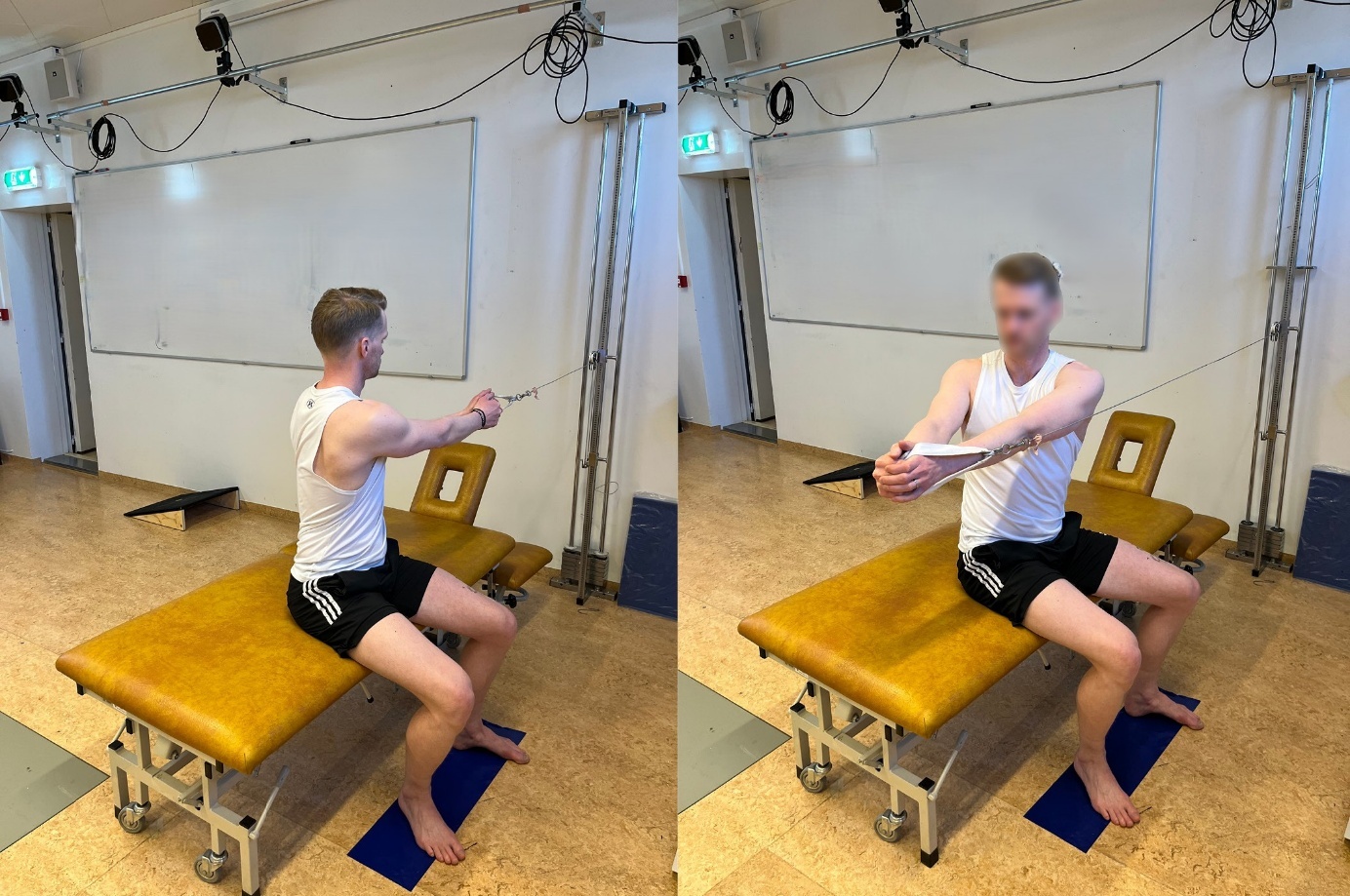
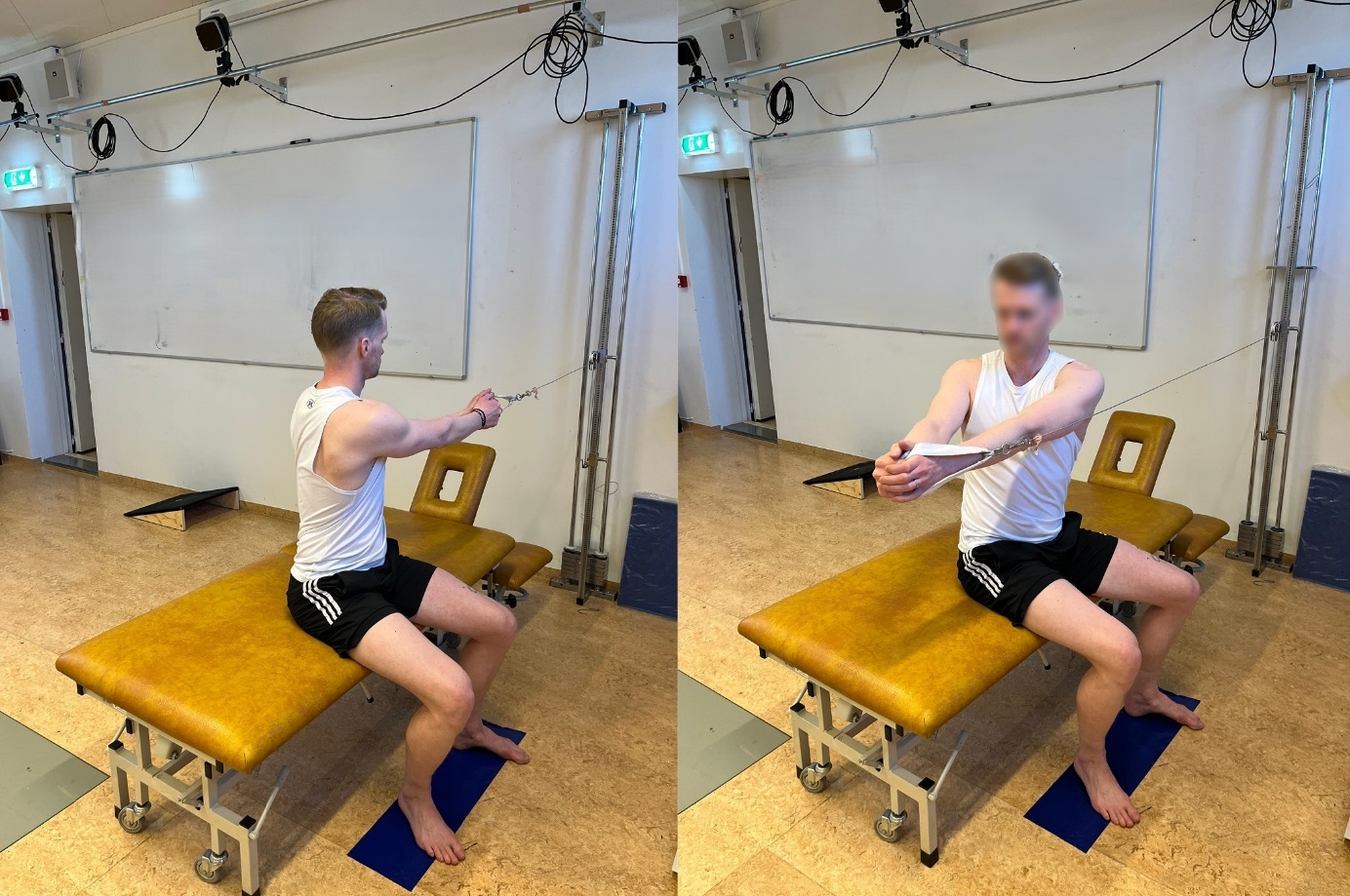
The dynamic TR power was measured in a seated position, with a pulley machine (Figure 1), using a testing protocol previously shown to be reliable for TR power testing in handball players.2 The participants were seated on a treatment plinth, with hips and knees in a 90° flexed position, with non-slip material under the feet and buttocks to prevent excessive sliding on the plinth. With their shoulders flexed to 90°, they were instructed on cue to rotate a weight equal to 5% of their body weight (BW) through 180°, as fast as possible, keeping their elbows extended throughout the movement, and to return in a controlled manner to the starting position (Figure 1). Inertial sensors (Movella dot, Henderson, Nevada, USA) were placed on the top of the weights in the pulley machine to measure the acceleration of the weight. Prior to the dynamic TR power testing, the participants performed a standardized warm up routine, including two sets of 10 repetitions of seated TR using a weight equal to 2.5% of their BW, followed by two familiarization trials at 75% and 100% perceived effort with 60 seconds in between. Following the familiarization trials, three measurements were conducted with approximately 30 seconds rest in between. Only rotation towards the non-dominant side was measured (left rotation for right-handed participants and right rotation for left-handed participants). Raw data were collected through the Movella dot app (Movella dot, Henderson, Nevada, USA) and exported into Microsoft Excel (2025) for further analysis. Acceleration data were used to calculate power output with the formula: (W=(a+g)*t*F), where W = power, a = the measured acceleration (m/s2), g = gravitational constant (9.82 m/s2), t = time (in seconds) over which the force is applied, and F = the applied force in newtons. The highest peak TR power value was used for data analysis.
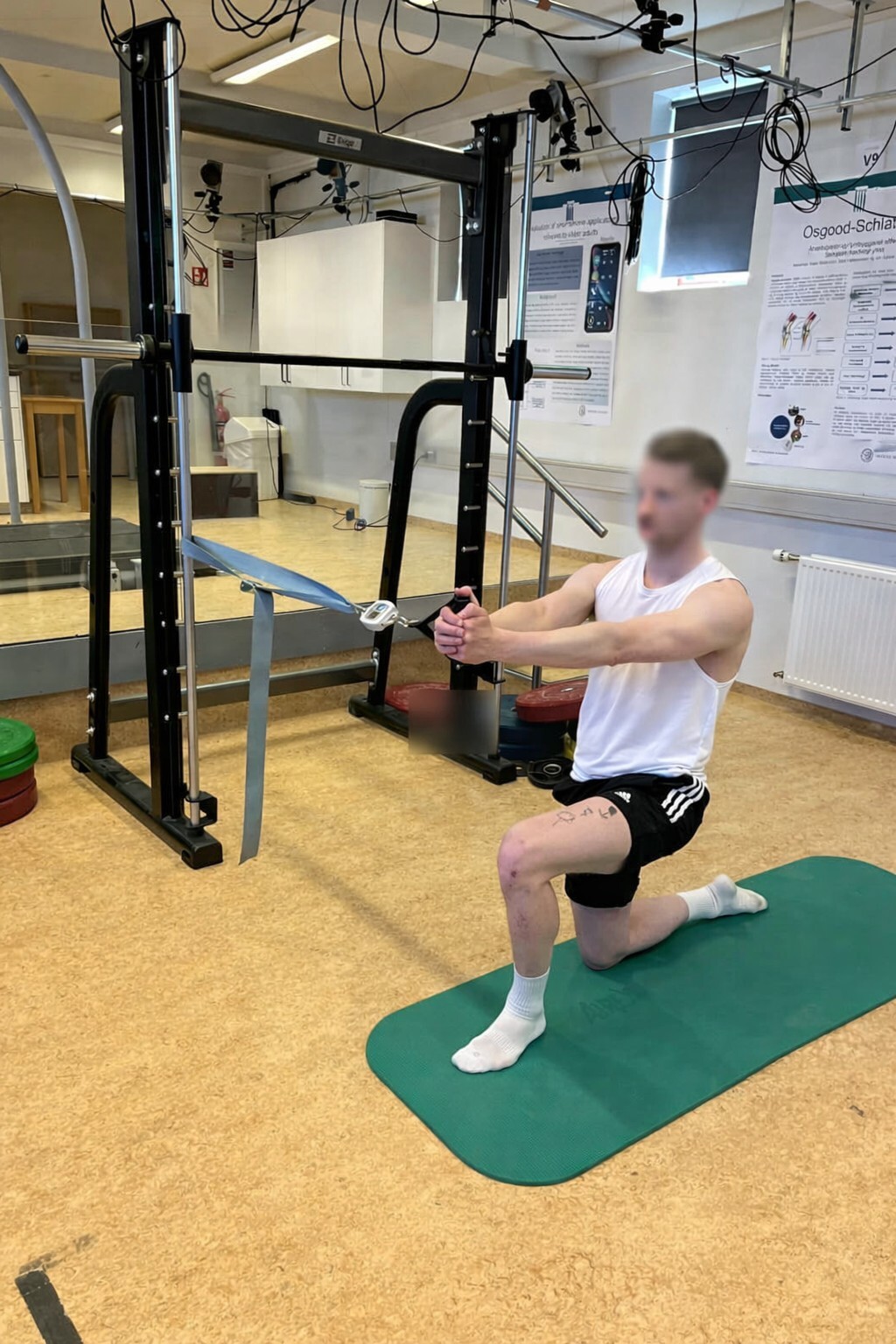
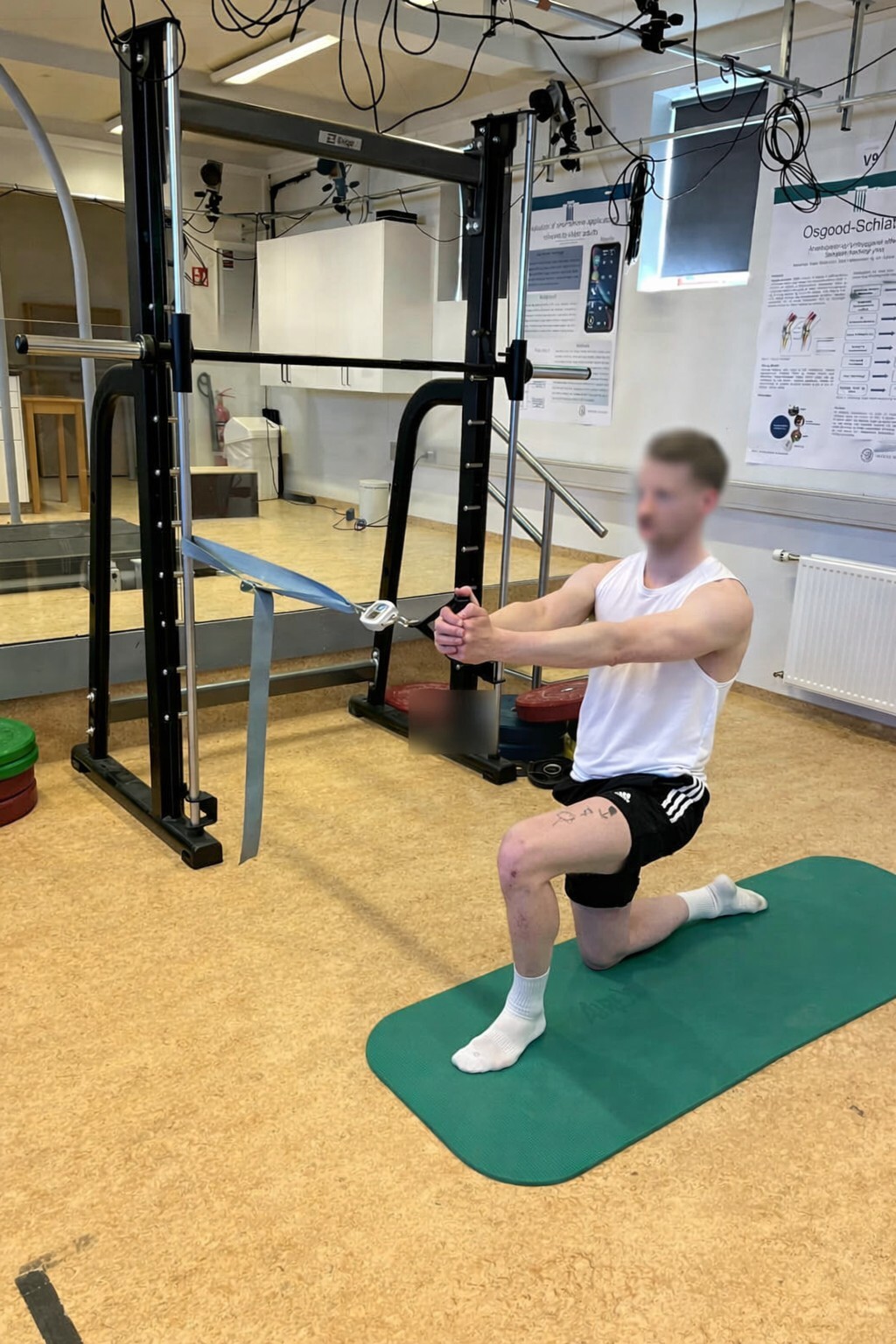
Following the dynamic TR power testing, the isometric TR strength was measured in a fixed position using a commercially available digital dynamometer (“Easy Force”, Meloq AB, Stockholm, Sweden). The participants were placed in a half-kneeling position with the non-dominant leg in front for stability (left leg for right-handed and right leg for left-handed participants (Figure 2). Consistent with the dynamic test, both shoulders were positioned in front of the body at 90° flexion and elbows fully extended. Participants held a handlebar attached to a dynamometer that was hooked to a strap, which was further attached to a weightlifting rack. Prior to the isometric TR testing, the participants finished two familiarization trials at 50% and 75% perceived effort with 30 seconds in between. Following the familiarization trials, three trials with absolute peak force (PF) effort were conducted for each participant with approximately 30 seconds rest between each measurement. The PF from each trial was used for reliability analysis.
Statistical Analysis
Microsoft Excel (2025) and Jamovi (2025) were used for data analysis. Normal distribution of raw data was assessed using the Shapiro-Wilk test. Test-retest relative reliability of the isometric TR strength test was assessed with the Intraclass Correlation Coefficient (ICC) 3.3 and the standard error of measurement (SEM) to assess the absolute reliability, while the minimal detectable change (MDC) was calculated using the formula MDC90 = SEM*1.65*√2. To interpret convergent validity between the two tests, the correlation between their peak outputs (measured during day one of data collection) was assessed using the Spearman’s rho correlation coefficient. The interpretation of the correlation was based on following definition: 0–0.1 = negligible, 0.2–0.39 = weak, 0.4–0.69 = moderate, 0.7–0.89 = strong, and 0.9–1 = very strong.11 The interpretation of the ICC was based on the following definition: ICC >0.90 = excellent reliability, ICC 0.75 - 0.89, = good reliability, 0.70 - 0.75 = moderate reliability and <0.70 = low reliability.12 Statistical significance levels were set at p < 0.05.
RESULTS
Twenty participated in this study but two were excluded as they engaged in a session of abdominal strengthening exercises between the two trials, leaving data from 18 participants (50% male) available for data analysis. Their mean +/-SD age, height and weight were 29 +/-11.8 years (range 19-56), 177 +/-11.0 centimeters, and 76.9 kilograms +/-14.5, respectively.
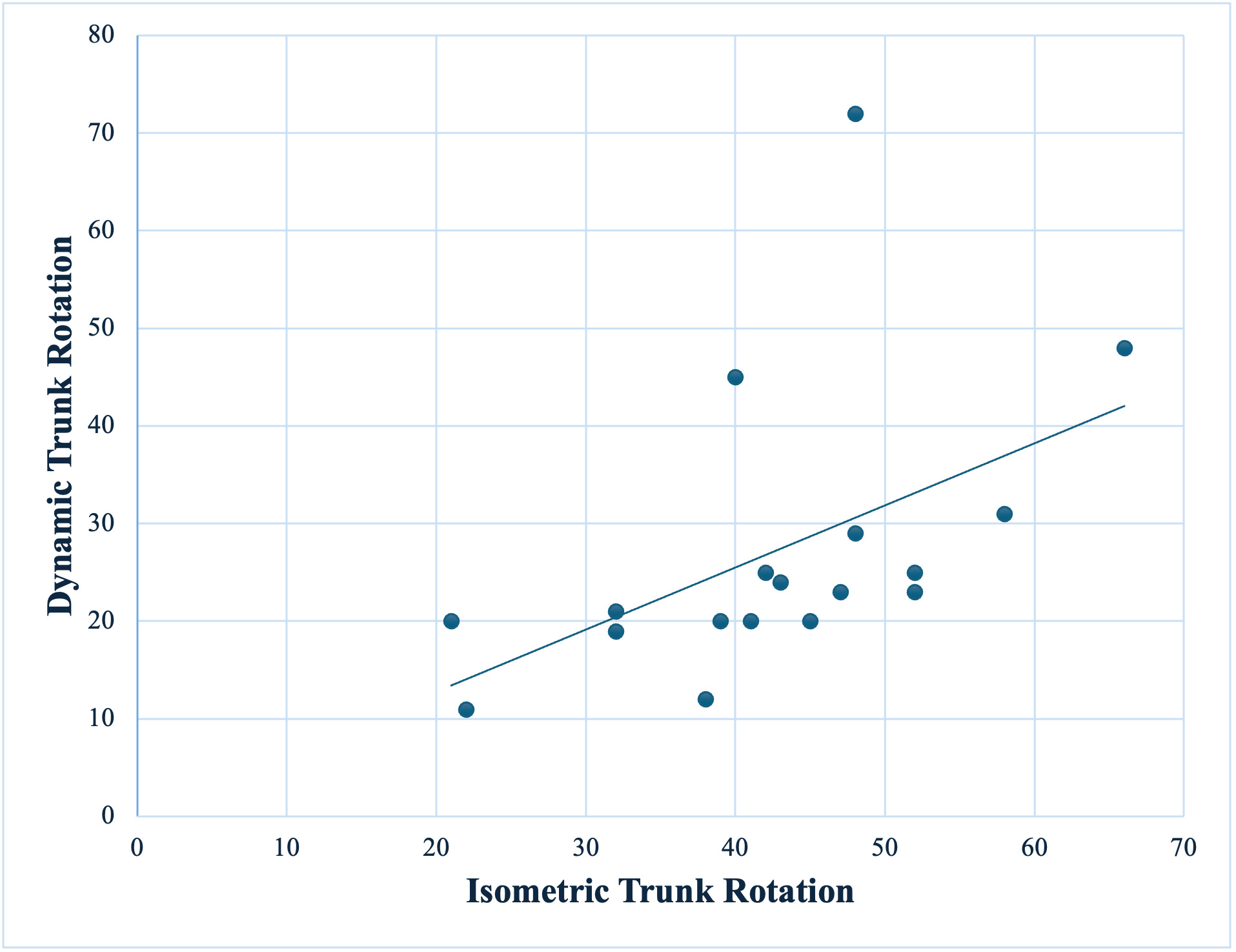
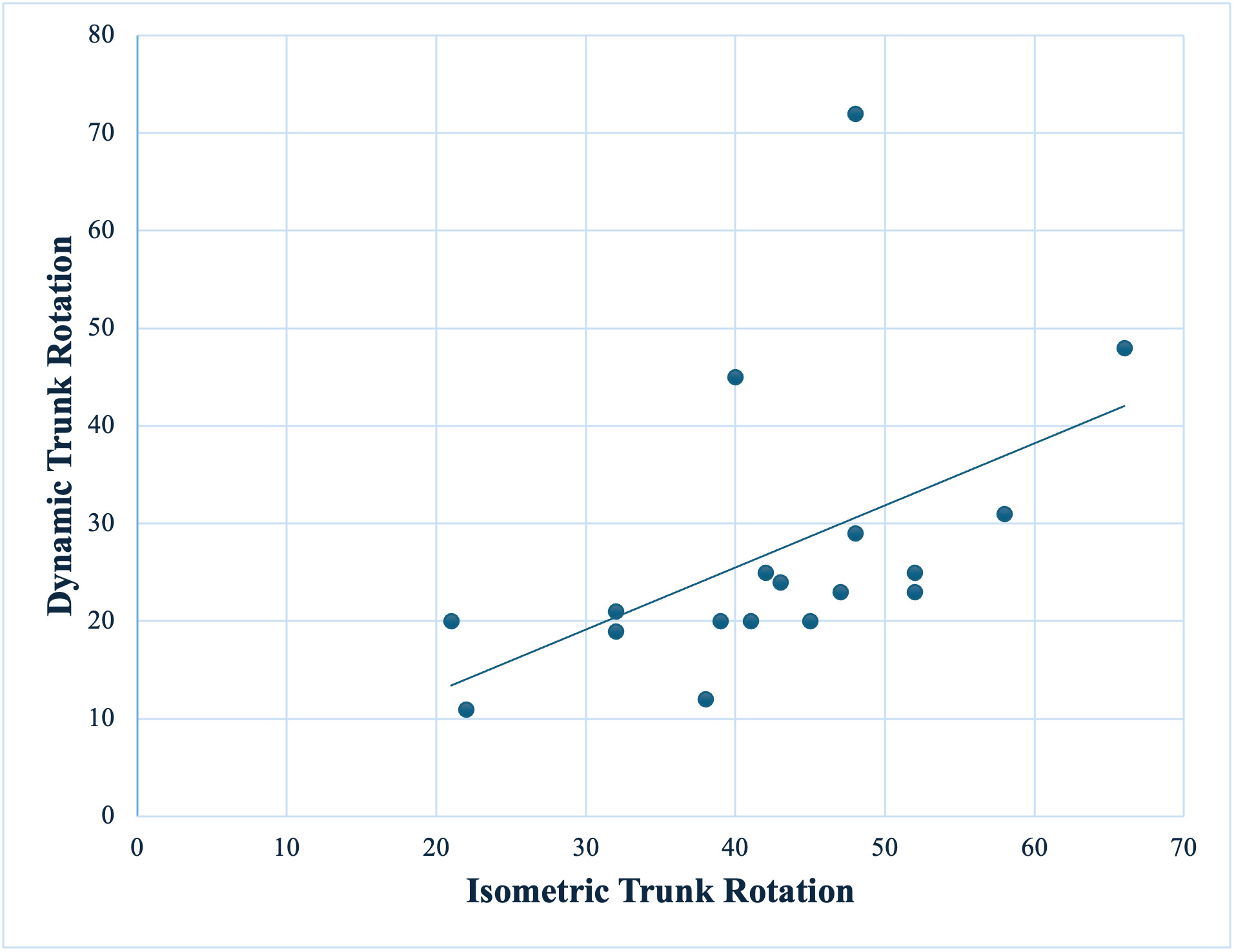
The isometric TR strength test demonstrated excellent relative test-retest reliability (ICC 3.3 = 0.95, 95% CI 0.91-0.98). Absolute reliability (SEM) was shown to be 6.7 N (%SEM = 18% of the mean), the MDC90 was 15.6 N (%MDC90 = 42% of the mean) and coefficient of variation (CV) was 17%. A strong and statistically significant correlation was found between the peak dynamic TR power value and the peak isometric TR strength value (rs = 0.73, p < 0.001, 95% bootstrap CI 0.40- 0.89), indicating acceptable convergent validity (Figure 3). Raw isometric strength and power data for each participant can be found in Table 1.
DISCUSSION
The key findings of this study indicate excellent test-retest reliability and acceptable validity of a novel isometric TR strength test, performed in a half-kneeling position. The results support the applicability of gym-based measurements, considering the minimal equipment required to conduct the isometric TR strength test, and support a culture of ‘easy-to-do’ injury screening and injury prevention among overhead athletes.
This is the first study to investigate the reliability of an isometric TR strength measurement so no direct comparison to previous studies is available. However, the results of this study, showing excellent test-retest reliability, are consistent with multiple previous studies showing moderate to excellent reliability of isometric strength measurements for various body parts (e.g. shoulder,13,14 hip,15,16 and knee16). Due to the novelty of the isometric TR strength test, direct comparison to previous studies regarding the absolute reliability (SEM, CV and MDC90) is limited. However, for the sake of comparison across similar studies with results of different scales, relevant numbers can be presented as a percentage of the mean. In terms of absolute reliability, the SEM and the MDC90 in this study were 6.7 N and 15.6 N, respectively or 18% and 42% of the mean isometric peak TR strength values. The MDC90, when analyzed as a percentage of the mean, is higher compared to results from Ashworth et al.13 and Ishoi et al.15 Ashworth et al. showed the MDC90 of the Athletic Shoulder Test, an upper body isometric strength test, measured in prone with the arm in three different elevated positions, to be between 11.1% - 20.2%,13 while Ishoi et al. reported the MDC95 of isometric hip adduction/abduction strength measurements to be between 15.8-17.1%.15 That difference might be explained by the different test positions of the studies and by the fact that the study by Ashworth et al. included only male elite rugby players13 and Ishoj et al. included only male sub-elite athletes,15 whereas the cohort in the present study consisted of a convenience sample of the general public. A wide range of age (19-56) and BMI index (range 19.2 – 32.1) in this study introduces a larger variability of the raw isometric strength values, subsequently increasing the size of the standard deviation of mean, and therefore leading to larger SEM and MDC90. The presented measurement error of the isometric TR strength test should therefore be interpreted with that in mind.
The strong correlation between the isometric TR strength test and the dynamic TR power test, previously shown to be a useful pre-season indicator of shoulder problems in handball,2 suggests that the isometric test captures in essence similar construct as the dynamic TR power test. The half-kneeling isometric TR strength test can therefore be considered a convenient and valuable addition to the various injury screening and prevention measurements conducted among overhead athletes. Although isometric tests do not fully capture force generated during dynamic, multi joint athletic movements, such as spiking or throwing a ball, they do provide some indication of the athlete’s ability to generate forces necessary for such complex movements. Also, as they are generally considered to be safe and feasible to do in a clinical setting, the isometric TR strength test may be recommended as a suitable gym-based measurement, although this needs confirmation in future prospective studies involving athlete cohorts. Moreover, the set-up for the isometric TR test does provide more control than the dynamic test in terms of unwanted shoulder movements, such as horizontal ab-/adduction that may be difficult to prevent during the dynamic test.
This study has some limitations. Engagement in any abdominal strengthening exercises prior to day one of data collection was not monitored. Such an engagement might therefore have affected the results. Both tests provide an indirect measure of TR performance, as they are conducted via the convenient lever arm of the upper extremities, which could be a limiting factor for some populations. The isometric TR strength test was conducted in a half-kneeling upright position which can introduce compensatory trunk movements, e.g. lateral flexion. This was addressed by queuing the participants to avoid all trunk lateral flexion during the test performance, but no other specific training for ‘correct’ test technique was provided prior to the data collection. For future use of the test, it is recommended to repeat the trial if obvious trunk lateral flexion is observed during the measurement.
Although the isometric TR strength test is primarily considered for overhead athletes, a convenience sample from the general public was recruited for this study for the sake of testing its initial measurement properties. The expectation was to see variability in the data which would benefit demonstration of reliability and validity. This approach may, however, contribute to a higher estimate of absolute reliability (SEM and MDC), which could be lower in a more homogeneous cohort, such as a group of overhead athletes.
The small sample size in this study must also be acknowledged and the fact that no previous sample size estimation was made, due to a strict timeline the investigators had to follow. Future studies investigating the measurement properties of this novel test for specific cohorts should therefore consider estimating the sample size needed for the desired statistical power. To increase the clinical applicability of the isometric TR strength test, future studies should also focus on collecting normative data for various groups of uninjured male and female overhead athletes. This would provide clarity regarding measurement error in a more homogenous cohort, and reference values would also serve to aid interpretation of pre-season screening results.
CONCLUSION
The results of this study indicate excellent reliability and acceptable validity of a novel isometric TR strength test in a half-kneeling position. These results address a gap in the literature regarding feasible and reliable methods to assess isometric TR strength. The test provides professionals working with overhead athletes with a convenient and practical test to measure isometric TR strength, which is related to a measure of TR power, known to be important for injuries and performance in overhead sports. The results of this study support the clinical applicability of the test and its potential as a screening tool within the context of reducing injury risk among overhead athletes. Future studies should consider collecting normative data and assess the measurement properties among various groups of overhead athletes to further increase the test’s utility.