INTRODUCTION
Low back pain (LBP) accounts for 20–30% of musculoskeletal complaints, with over 80% of people experiencing it during their lifetime.1,2 Common risk factors include high physical activity, spinal loading, and repetitive lifting or twisting.1 Furthermore, the prevalence of LBP is especially high among athletes, with as many as two-thirds of them reporting symptoms.3 Similar rates of LBP also are seen in U.S. soldiers.4 For active young adults, such as athletes and soldiers, high training volume is considered the primary risk factor for injury.5 Although many recover functionally, these active young adults or athletes often display altered or compensatory spinal kinematics during movement.6–8 Such deviations are linked to strength or mobility deficits, leading to spinal instability that can further cause abnormal loading, tissue degeneration, and recurrent pain.9–15
Therefore, spinal stabilization and strengthening are essential for LBP management to restore function and facilitate return to sport.16–18 Isometric exercises, such as planks, are widely prescribed because they elicit high levels of trunk stabilizer activation.19–21 Both forward- and side-planks have not only been used as treatment, but they are also used as assessment tools to evaluate spinal stability and trunk muscle endurance.22 Furthermore, decreased endurance in the forward-plank test has been shown to be a strong predictor for overuse injuries in active individuals.23
When a plank is used to assess spinal stability, the most common measurement is time to fatigue (TTF). However, TTF does not capture compensatory strategies, such as lumbar extension or hip flexion.22,23 Although electromyography (EMG) can assess muscle activation over time, EMG data does not isolate the muscle activity associated with compensations during a plank.19,20 Clinicians often use visual observation for aberrant motions, but the reliability of this method has been shown to be poor.24 Currently, an objective method for measuring compensations or altered spinal kinematics during a plank is not readily available. Although 3D motion capture systems can provide precise kinematic data, they are costly and complex. In contrast, inclinometers are inexpensive and reliable for measuring trunk angles but have not been applied to assess movement deviations.25
An objective method, using a digital inclinometer, was designed by the authors to continuously measure the amount of trunk deviation during a plank test. Therefore, the primary purposes of this study were to determine the inter-rater and intra-rater reliability of the maximum amount of trunk deviation (MOTD), measured using a digital inclinometer during forward- and side-plank testing, and to compare MOTDs and TTF between active adults with and without low back pain.
METHODS
Participants
An a priori power analysis using G*Power 3.1.3 was performed to estimate the required sample size for between-group comparisons.26 Based on prior literature reporting very large effect size (d = 1.5) in plank TTF between individuals with and without LBP, a conservative effect size of d = 1.0 was selected.22 Consequently, 34 participants (17 with LBP and 17 without LBP) were required to achieve a power of .80 with an α level of .05.
Eligible participants were active young adults between the ages of 18−40. Active adults were defined as those who participated in weekly vigorous activity. According to the CDC, vigorous activity was defined as when an individual cannot say more than a few words without pausing for a breath while performing a vigorous-intensity activity. Such activities include jogging, running, swimming laps, bicycling, aerobic dancing, and competitive sports.27 In addition, individuals were eligible for the asymptomatic control group if they had not had LBP within the three months prior to enrollment. Individuals were eligible for the LBP group if their LBP was rated 2/10 or greater on the Numeric Pain Rating Scale (NPRS) within the week of enrollment. Individuals were excluded if they had LBP due to an infection, tumor, spondylolisthesis greater than Grade I, fracture, osteoporosis, structural deformity, an inflammatory disorder, neurological disorders or recently had surgery within the prior six months. Lastly, the two groups of participants were sex-matched, as plank performance has been shown to be significantly different between males and females.22,28
Prior to participant recruitment, approvals were obtained from Institutional Review Boards of the investigators affiliated institutions. Participants were recruited from the principal investigator’s academic and clinical affiliations and local communities. Once the potential individuals were determined to be eligible, they were enrolled in the study and scheduled for an on-site testing visit. At the beginning of the on-site visit, a research team member informed each participant of the procedures, risks and benefits and asked the participant to sign a written informed consent form for study participation.
Digital Inclinometer
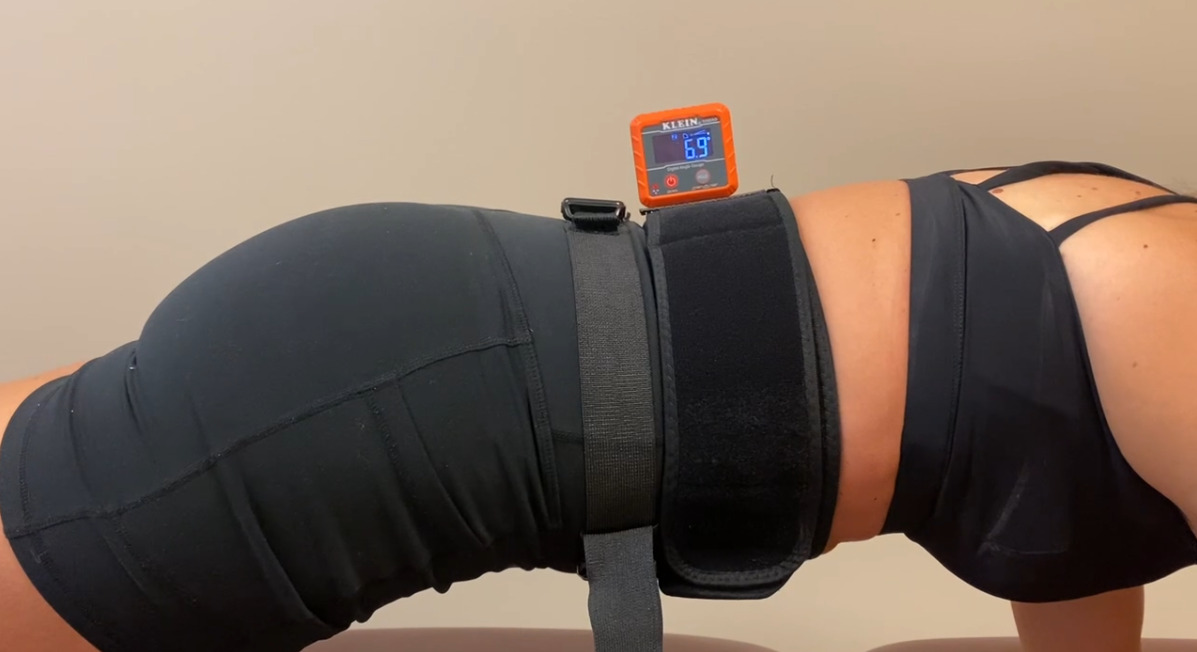
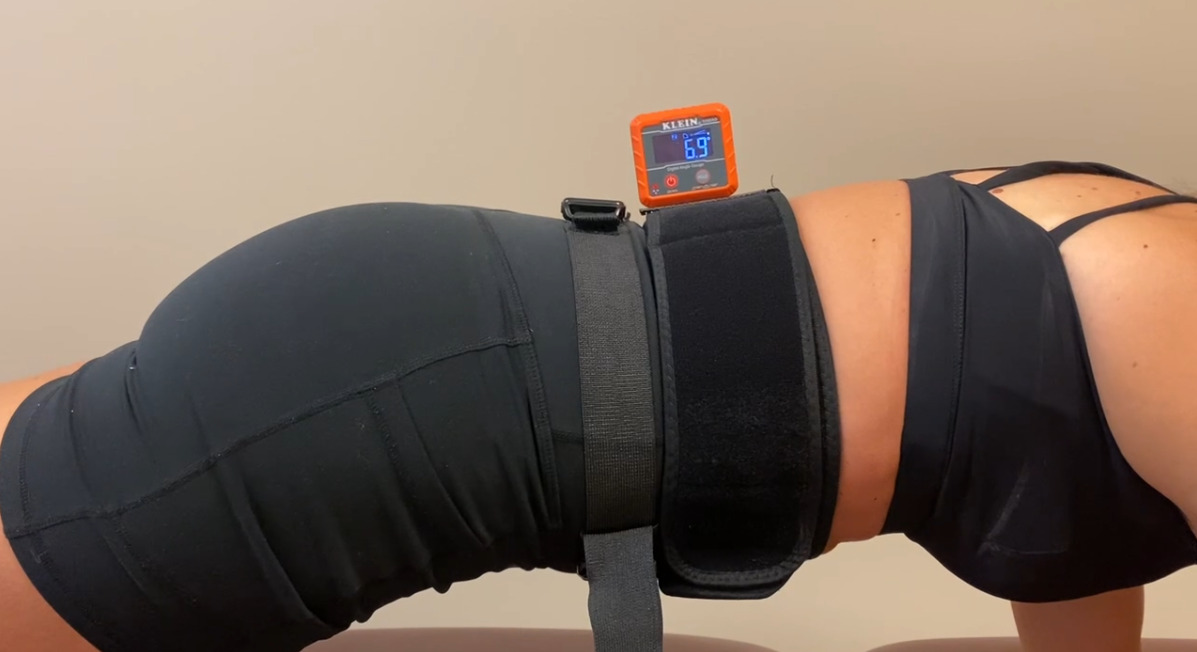
A digital inclinometer (Digital Electronic Level and Angle Gauge, Klein Tools, Inc., Lincolnshire, IL) was used to measure the MOTD. The inclinometer was attached to a Velcro harness that was wrapped around the participant’s trunk at approximately the L4-L5 level (Figure 1). Although a digital inclinometer had not been used in this exact manner, digital inclinometry has been shown to have good inter-rater, intra-rater, and test-retest reliability for measuring curvatures of the lumbosacral spine and pelvis expressed in degrees.29,30
Digital Video Camera
An iPhone 11 (Apple Inc., Cupertino, CA) was placed on a tripod perpendicular to the participant and was used to record the plank testing procedure. An iPhone 11 camera is able to record full high-definition video (1,080p) at 60 frames per second and was readily available. Research has shown that 2D video recording is reliable in measuring pelvis and trunk movement.31 For this study, the primary purpose of the camera was to record the readings of the digital inclinometer during the plank tests.
Investigators
Three investigators were responsible for data collection, including the principal investigator (PI), who had 10 years of experience treating patients with orthopedic and sports injuries at the time of the study, and two novice investigators who were doctoral physical therapy (DPT) students. The PI also completed data processing of the measures. Before the commencement of data collection, the PI standardized the testing procedures, and all investigators practiced the testing procedure for approximately two hours.
Procedures
Prior to plank testing, participants’ demographics and characteristics were collected, including the type and amount of vigorous exercise, the Modified Oswestry Disability Index (MODI) score, as well as current pain level using the NPRS, and duration and the side of pain, if applicable. To determine inter-rater reliability of MOTD, two testers (i.e., PI and student physical therapist) assessed the plank performance independently at two different times within the same day. A minimum 10-minute rest break was given to each participant between the two testing sessions to minimize fatigue. The order of the testers was randomized. Therefore, the tester assigned to administer the test first demonstrated how to perform the forward plank and side plank prior to the beginning of the testing.
The first tester also was responsible for inclinometer setup. The investigator wrapped a Velcro harness around the participant’s trunk so that the most distal end of the harness was juxtaposed to the participant’s iliac crests and then placed the digital inclinometer on the Velcro strap, approximately at the L4-L5 level with the distal end at the L5-S1 level. Trunk deviations from the neutral position were monitored and recorded using a digital inclinometer during plank testing. A camera aimed at the trunk and digital inclinometer readings were used to record trunk position during each plank test (Figure 1). Only plank performances administered by the PI were used for intra-rater reliability analysis. Testers were not blinded to participant group assignment because participants self-reported their LBP status during testing.
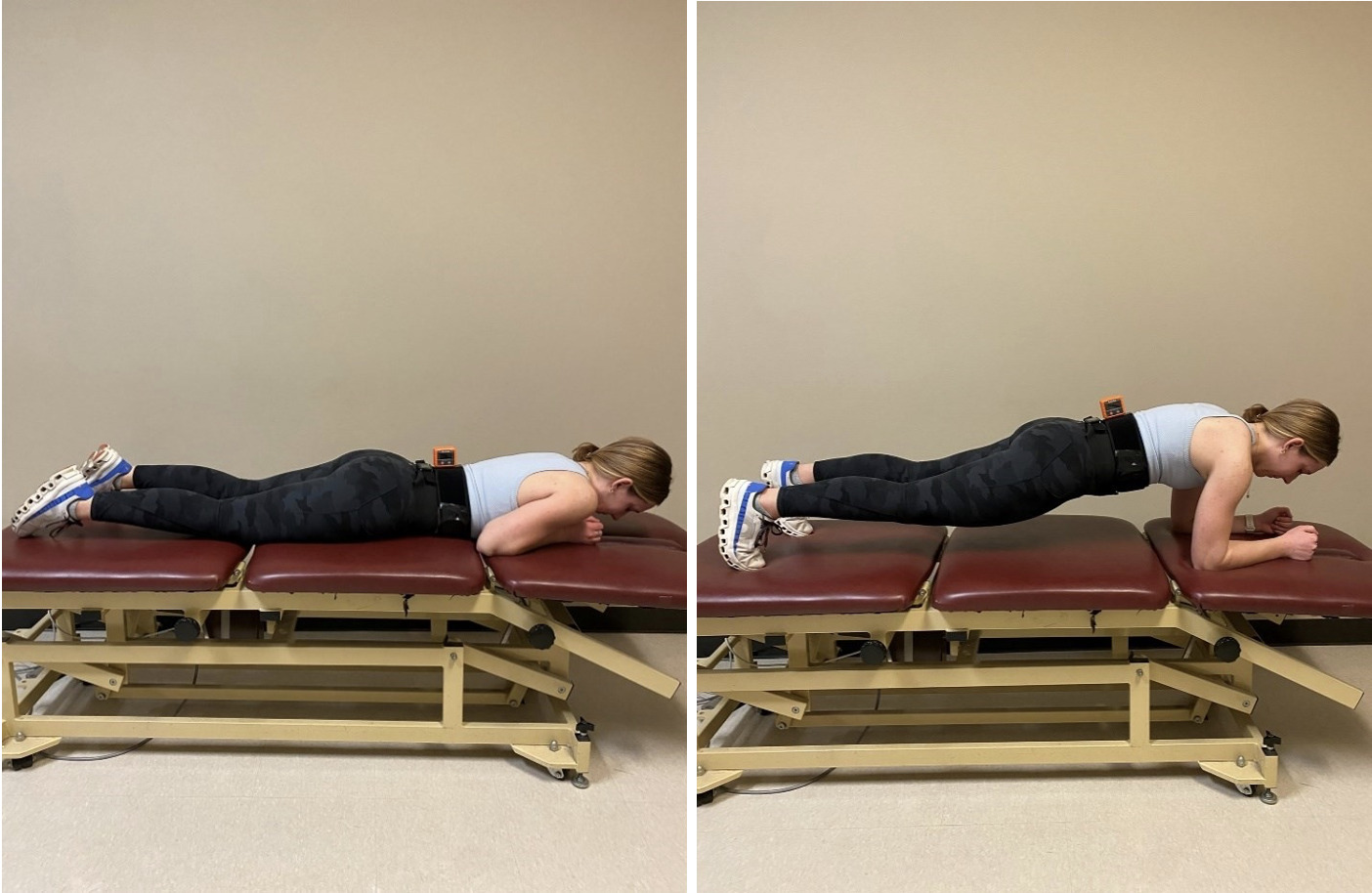
For the forward-plank test (Figure 2), each participant started by lying prone with their elbows flexed, forearms resting on the table, and feet shoulder-width apart. Participants were then instructed to raise their trunk from the starting position, make their back as straight as possible, and to maintain this position as long as possible. The investigator instructed the participant that once they felt their back was straight, they should verbalize so by saying “now” and to say “stop” when they could no longer hold the plank. Further, participants with LBP were instructed that they could stop the test if their pain became too uncomfortable to continue the plank test. Once the participant understood the test requirements, the investigator asked each participant to lie prone on the table, at which time the investigator zeroed the inclinometer and started the video recording. The investigator then instructed the participant to assume a forward-plank position. Once the participant indicated that their neutral spine position had been achieved, the inclinometer reading was recorded as the reference value for MOTD, and TTF also began at this point. The time required to achieve the self-perceived neutral spine position prior to initiating TTF was not recorded, as TTF was operationally defined as beginning only after the participant verbally indicated that the neutral spine position had been achieved. During plank testing, the investigator continuously monitored the MOTD, which was the greatest angular deviation from the participant’s self-perceived neutral spine position. The digital inclinometer measured trunk position in 0.1° increments; therefore, the minimum measurable trunk deviation was 0.1° (Figure 1). The test was terminated when the participant voiced an inability to maintain the plank position. For participants in the LBP group, the test was also discontinued if pain increased beyond tolerable levels.
_prone_starting_position_with_the_elbows_flexed__forearms.png)
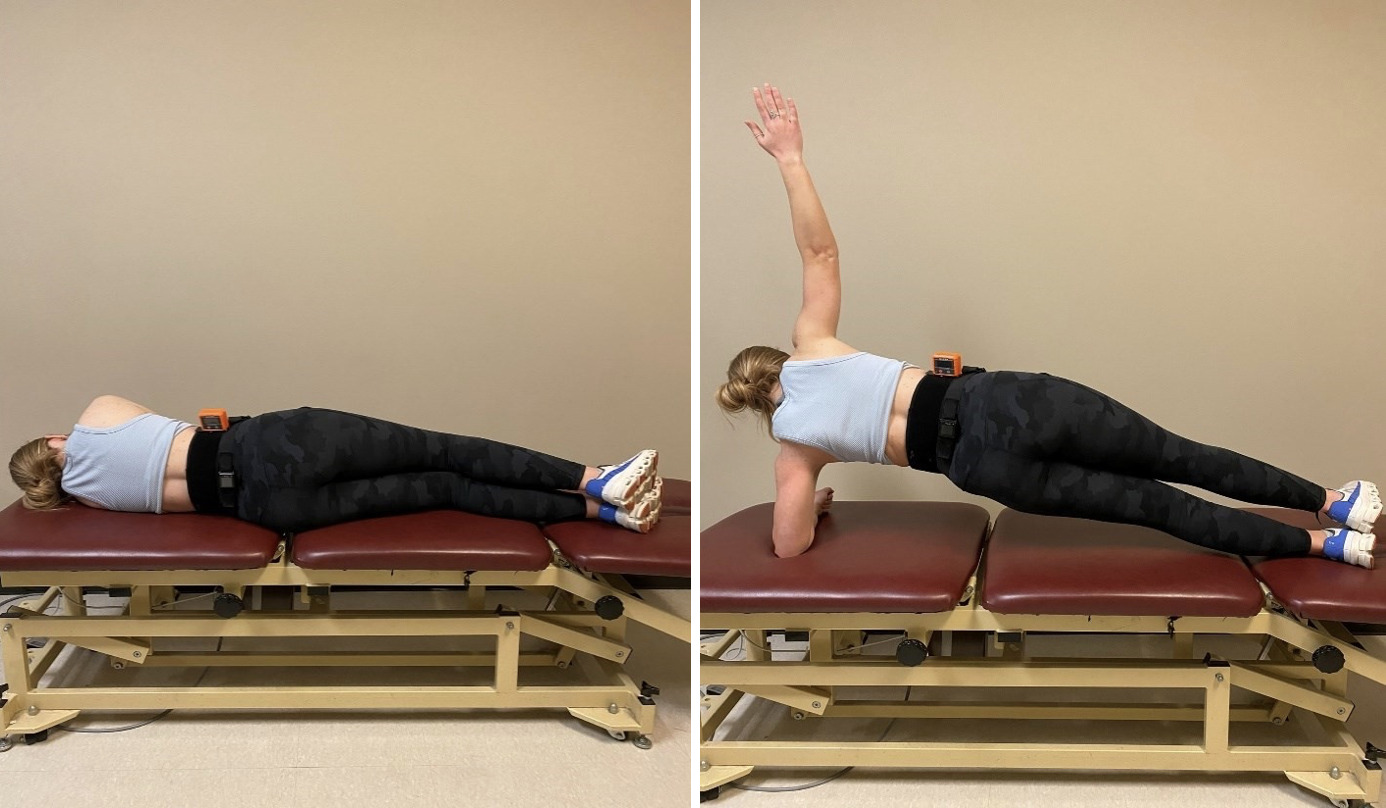
This standardized method was applied to the side-plank test (Figure 3) except participants began in a side-lying position with the testing elbow flexed and positioned directly under their shoulder. The legs were extended with feet stacked. In addition, the digital inclinometer was placed on the participant’s contralateral flank at the L4-L5 area with the distal end of the inclinometer reaching the L5/S1 level. Participants were instructed to raise their trunk into a position in which the spine was straight, supported by their feet and bent elbow while their contralateral upper extremity was raised into an abducted position. Once the participant indicated that their neutral spine position had been achieved, the inclinometer reading was recorded as the reference value for MOTD, and TTF was initiated.
_side-lying_starting_position_with_the_testing_elbow_flexed_.png)
For participants with unilateral LBP, the side plank was performed on the symptomatic side, with the symptomatic side positioned inferiorly against the treatment table. Participants with bilateral, central, or no LBP performed the test on their dominant arm side. The dominant arm was operationally defined as the arm with which they would choose to throw a ball. The participants were allowed a minimum of 10 minutes of rest between each of the two plank tests. After one investigator completed the two plank tests, each participant was given another 10-minute rest break before performing the same plank tests with the second investigator, following the same procedure. Two investigators independently assessed MOTDs to determine inter-rater reliability. For intra-rater reliability, the PI re-assessed MOTDs by reviewing video recordings of the live plank tests at least 2 weeks after the live assessment. In addition, TTF was extracted from the video recordings at two time points: the timepoint when the participant gave the verbal “now” (i.e., beginning of the test) and the timepoint when the participant gave the verbal “stop” (i.e., end of the test). TTF is the difference between these two timepoints.
Data Analysis
IBM SPSS Version 28.0 (IBM Corp., Armonk, NY, USA) was used to analyze data. ICCs(2,1) were calculated to determine inter-rater reliability of the MOTDs collected from the two investigators during the live plank tests. ICCs(3,1) were calculated to determine the intra-rater reliability of the MOTD, collected from the live plank tests and viewing video recordings of the same plank tests performed by the PI. Independent t-tests were used to compare the MOTD (degrees) and TTF (seconds) between the participants with and without LBP. The α level was set at 0.05 for all statistical analyses.
RESULTS
Participants
A total of 77 potential participants responded to the recruitment flyers and emails, and 66 met the inclusion criteria. Of these 66 potential participants, 36 completed eligibility confirmation. Two individuals were excluded due to comorbid conditions that could contribute to LBP. Enrollment concluded once sex-matched groups were achieved, resulting in a total of 34 participants (17 with LBP and 17 without LBP) who completed at least one testing session. To examine inter-rater reliability, a second testing session was conducted on the same day following a minimum 10-minute rest period. Two participants without LBP were unable to complete the second session due to scheduling constraints. Consequently, 32 participants included in the inter-rater reliability analysis. All 34 participants were included in intra-rater reliability and between-group comparison analysis.
Table 1 summarizes the characteristics of the 34 participants who completed at least one plank test session, including age, sex, the NPRS score, the MODI score, as well as the frequency (i.e., days per week) of vigorous activity and the type of activity. In addition, the side and duration of LBP are listed in Table 1.
Table 2 provides the measurements collected during the forward- and side-plank tests. The MOTD values collected during the live sessions are listed by investigators (PI and student investigator) and by the order of the testing (Attempt 1 and Attempt 2). MOTD measurements from Attempt 2 appeared to be higher than those collected from Attempt 1, suggesting that fatigue may have occurred due to repeated testing. Therefore, paired t-tests were performed to determine whether significant differences existed between the two attempts.
Intra-Rater Reliability
For intra-rater reliability, ICCs (Table 3) showed overall good intra-rater reliability for both the forward-plank and side-plank tests for all participants, ICC = .85 and .81, respectively. Furthermore, the intra-rater reliability was also good for both the LBP group and the no LBP group for both plank tests with the ICCs ranging from .74 to .86.
Inter-Rater Reliability
For inter-rater reliability (Table 4), ICCs showed overall moderate inter-rater reliability for both the forward-plank and side-plank tests for all participants, ICC = .66 and .61, respectively. However, the inter-rater reliability (ICC = .27 for the forward-plank test and ICC = .47 for the side-plank test) were poor-to-fair for the LBP group, as compared to those in the no LBP group (ICC = .75 for the forward-plank test and ICC = .66 for the side-plank test). Considering that fatigue might affect the MOTDs assessed during attempt 2, ICCs also were calculated to determine the test-retest reliability using the MOTDs collected from Attempt 1 and Attempt 2. The ICCs showed similar results with an overall moderate test-retest reliability for both the forward-plank and side-plank tests for all participants, ICC = .66 and .61, respectively. Consistent with the inter-rater reliability results, the test-retest reliability of the two attempts (ICC = .27 for the forward-plank test and ICC = .47 for the side-plank test test) was poor-to-fair in the LBP group, as compared to those in the no LBP group (ICC = .75 for the forward-plank test and ICC = .66 for the side-plank test).
Group Comparisons
Because fatigue may have influenced second-attempt performance, only data from the first attempt were used for comparison analyses. The results are listed in Table 2. Independent t-tests showed that the LBP group demonstrated significantly smaller MOTD values during the first side-plank test compared with the no LBP group (4.8° vs. 7.7°, p = 0.005), with a moderate effect size (Cohen’s d = .45). Interestingly, no significant between-group differences in MOTDs (5.6° vs. 6.4°, p = 0.462) was found for the second side-plank test. There were no significant between-group differences for the forward-plank test or for the TTF measurements (p > 0.05).
DISCUSSION
This study demonstrated good intra-rater reliability of MOTD measured using a digital inclinometer for both forward- and side-plank tests, for both young adults with and without LBP (ICC = .78 - .85). Good intra-rater reliability likely resulted from the use of video-recording the same plank performance and standardization of the MOTD assessments. The use of video to assess reliability could minimize the participants’ inherent variations, such as pain or fatigue from repeated measures. A systematic review also supported the use of 2D videos for reliably assessing running tasks with ICC ranging from .56 - 1.00.31 Although this study used 2D smartphone video primarily for inclinometer readings, the results demonstrated that the inclinometer method is reliable and feasible for assessing trunk deviations clinically.
However, ICC results showed moderate inter-rater reliability of the MOTDs assessed for the no LBP group, but only fair inter-rater reliability for the LBP group. The inter-rater reliability result for the no LBP group found in this current study was similar to those found in a study in which a digital inclinometer was used to assess pelvic tilt (ICCs of .65–.85).29 Despite differing positions (standing vs. prone), both studies support the use of inclinometers for trunk and lumbopelvic motion analysis. Lower ICCs in the LBP group suggest less consistency between testers and among participants, possibly due to the influence of pain, fatigue, or motor control. This finding is consistent with the results reported by a previous study that also found low reliability on symptomatic limbs (ICC = .67) compared to asymptomatic ones (ICC = .80).32 Fatigue may also have affected reliability, as plank performance involves muscular endurance. Although participants rested 10 minutes between trials, prior studies indicate 10–15 minutes may be more appropriate for muscle recovery for an endurance test, such as the plank.33,34 Performing repeat trials on separate days might have helped mitigate fatigue but could have introduced variability due to fluctuations of their LBP intensity. Furthermore, although the inter-rater reliability was lower in the LBP group, the intra-rater reliability remained good, suggesting that repeated assessments performed by the same clinician may provide more consistent measurements in individuals with LBP.
The study results showed a significant difference in MOTDs during the side plank, with participants with LBP exhibiting smaller deviations than those without LBP. The reduced trunk deviation observed in the LBP group during side-plank testing suggests a guarded stabilization strategy. Prior literature indicates that individuals with LBP frequently demonstrate reduced trunk movement and increased stiffness during functional tasks, and this adaptation may reflect altered proprioceptive input from the trunk muscles due to LBP.35,36 Although increased rigidity may reduce movement, it does not necessarily represent efficient motor control. Instead, it may indicate a protective motor strategy.
However, there was no between-group difference in MOTD assessed during the forward plank. The significant finding in the MOTDs during the side plank could be because the side plank is more demanding on lateral trunk stabilizers than the forward plank, enabling the participant to use a rigid trunk strategy. Evidence has shown that the side plank has higher activation of the external oblique, lumbar paraspinal, and quadratus lumborum muscles.37,38 In addition, the selection of the testing side during the side plank could have affected the results. Participants with unilateral LBP were instructed to perform the side plank on the symptomatic side, whereas participants with centralized pain or no LBP performed the task on their dominant-arm side. This a priori decision may have introduced variations to MOTDs measured from the LBP group.
The lack of significant findings in TTF may be due to the specific characteristics of the participants with LBP included in this study. As indicated by their low pain levels and low MODI scores, their LBP may not have been severe enough to affect their plank performance in TTF. The participants of this study were physically active adults who still were able to participate in weekly vigorous activity five days a week on average, and to complete the plank tests. Their high activity levels may have mitigated the impact of LBP on plank performance. Prior evidence has shown that highly active populations possess baseline physical attributes that can mask subtle differences in movements, potentially limiting the efficacy of the plank test in differentiating individuals with LBP from those without LBP.39
LIMITATIONS
The results of this study should be interpreted in light of several limitations. Firstly, criterion validity of the proposed method was not established against a gold-standard motion analysis system. Future studies should compare this method with three-dimensional motion analysis to further evaluate its validity. The second limitation of this study was the homogeneity of the study population. Participants were physically active young adults who engaged in vigorous physical activity an average of five or more days per week. Furthermore, participants in the LBP group demonstrated relatively low pain intensity and disability, indicating that these findings may not generalize to individuals with more severe or disabling LBP. Therefore, the results only can be generalized to the two specific populations. Another limitation of this study involved the placement of the digital inclinometer. The inclinometer was positioned at approximately the L4-L5 level (i.e., the iliac crest level) for both plank tests. However, the L5/S1 level displays the greatest amount of motion in the lumbar spine. This may have influenced the accuracy of the MODT measurements. Additionally, individual anatomical variations may have further contributed to variability in inclinometer placement. Although the procedure for inclinometer positioning was standardized, minor inconsistencies in placement may have influenced the results. Furthermore, the digital inclinometer measured movement in only one plane (i.e., sagittal or frontal) and therefore may not detect transverse plane or multiplanar compensatory movements during plank performance. Additionally, only one trial was performed for each ICC analysis. Although repeated measures could improve ICC values, repeated measures were not feasible due to fatigue and scheduling conflicts.40 Lastly, the examiners were not blinded to participant group assignment, which may have introduced observer bias.
CONCLUSION
The results of this study support the use of a digital inclinometer for measuring MOTD in active young adults with and without LBP. Specifically, intra-rater reliability of the MOTD using the proposed method was good for assessing the quality of forward-plank and side-plank performance. In addition, the inter-rater reliability was moderate for the asymptomatic controls. The low inter-rater reliability ICC values for the LBP group could be due to the presence of pain and/or fatigue. Overall, the results of the reliability analyses suggest that a digital inclinometer is a viable tool for assessing plank performance. Contrary to expectations, participants with LBP appeared to adopt a more rigid trunk strategy to perform the side-plank tests, likely due to guarding to avoid pain, resulting in a significant difference in MOTDs during the side plank compared to their asymptomatic counterparts.
ACKNOWLEDGMENTS
Financial support for publication was provided by the University of Oklahoma Libraries’ Open Access Fund.